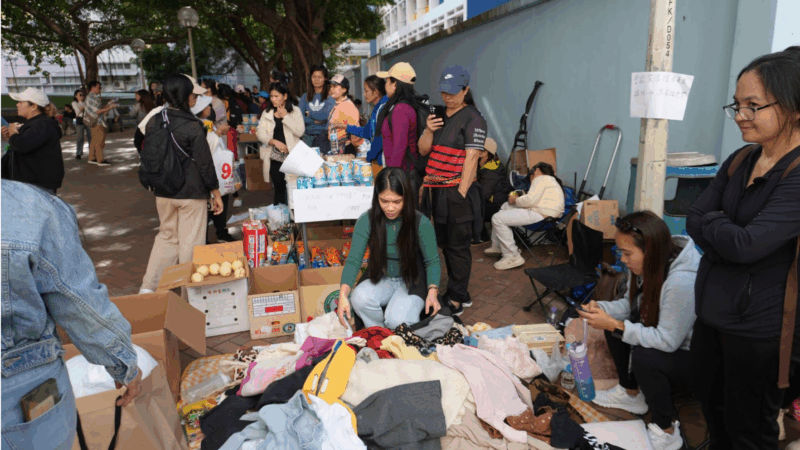
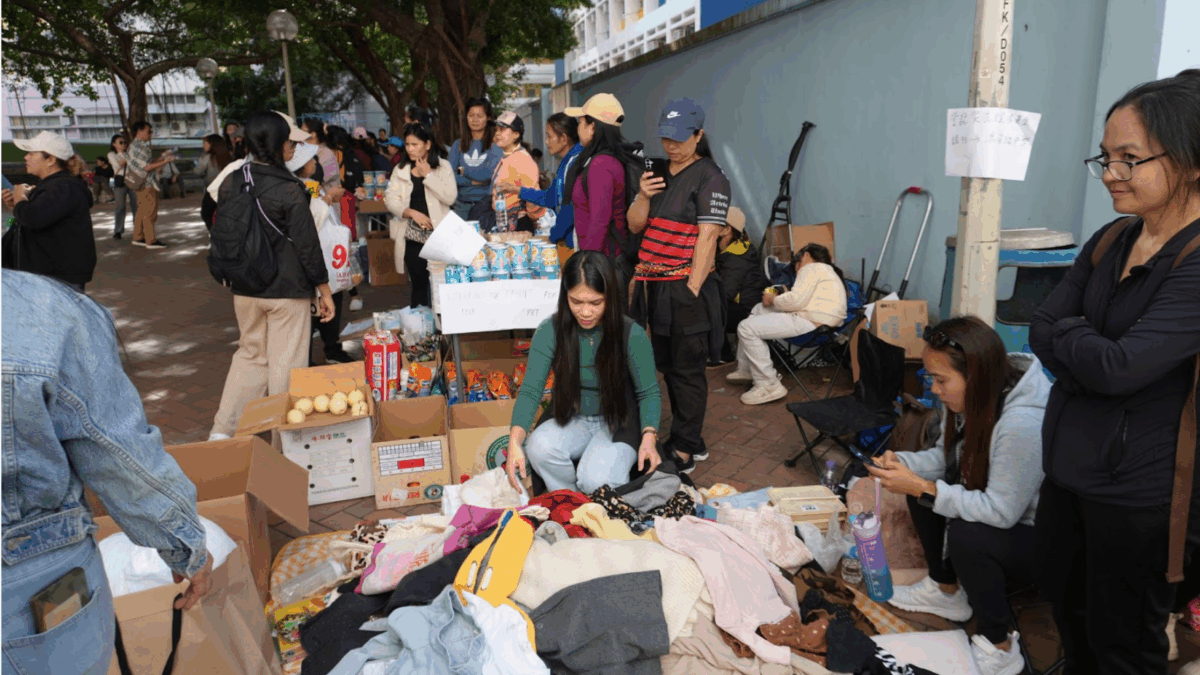
Many surviving helpers are already back at work with almost no time to grieve. Photo taken by Kelly Yu. Used with permission.
When rescuers reached the fourth-floor flat at Wang Fuk Court, they found Sri Wahyuni still embracing her 93-year-old employer. The 42-year-old domestic helper was among 10 migrant workers who perished in what has become Hong Kong’s deadliest fire in decades.
The blaze tore through the Tai Po housing estate on November 26, consuming seven of its eight residential blocks. At least 160 people were killed, and six remain missing. Among the dead were nine Indonesian helpers and one from the Philippines.
Preliminary investigations have pointed to foam boards and substandard scaffolding nets from a renovation project that had stretched on for more than a year — materials that investigators say accelerated the fire’s deadly spread.
“Up until the end, even at the cost of their own lives, they wouldn’t leave the people they were looking after, ” Esther Tse from the Association for the Rights of Industrial Accident Victims commented.
Tse has been accompanying Yayuk, Wahyuni’s sister, through hospitals and community halls during the four agonizing days searching for her sibling. Wahyuni had been the only breadwinner for a family of three children back in Indonesia, the youngest only six years old.
Language barriers, procedural hurdles, and scammers falsely promising help made the wait excruciating. Four days passed before a DNA test confirmed Wahyuni had died in the inferno. Tse said:
The emotional toll is devastating… It’s already hard enough to leave everything behind to work abroad. And then what comes back isn’t your loved one, but a body. For the family, that pain is unbearable.
The tragedy, Tse said, has exposed the vulnerable position of migrant domestic workers in Hong Kong and underscored the need for greater support and understanding from society. She added:
Even local workers who are injured or killed on the job face enormous difficulties. But for migrant workers, the challenges are ten times worse. Many people assume domestic workers are just at home doing housework, how dangerous could it be? But that’s simply not the case.
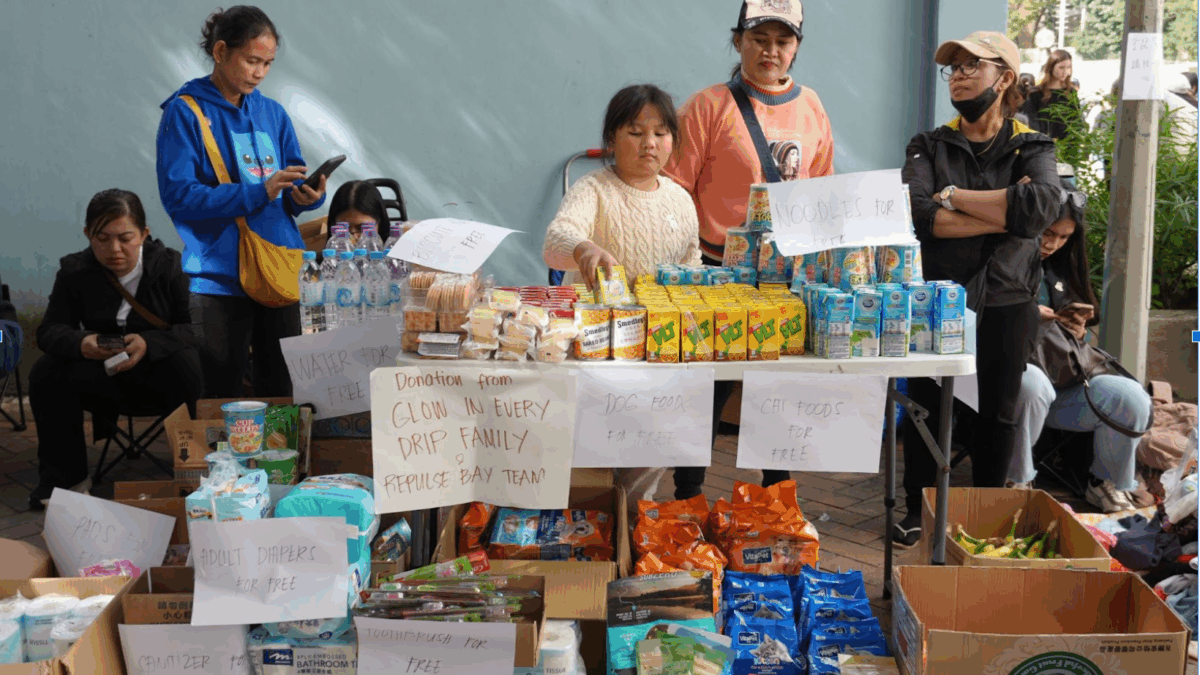
Volunteers sort donated water, sanitizer and clothes for displaced helpers in Tai Po. Photo taken by Kelly Yu. Used with permission.
“We want their bodies back by Christmas”
For Muslim families, the grief has been compounded by cultural and logistical challenges. Islamic tradition calls for burial as soon as possible after death, but many bodies were so severely damaged by the fire that identification has been difficult, delaying the process.
Transportation arrangements and funeral costs, which can take up to four weeks to organize, present additional financial burdens. Some families are now scrambling to apply for emergency funding just to bring their loved ones home.
The Hong Kong government has announced that families of migrant workers killed in the fire will receive about HKD 800,000 in total compensation, including more than HKD 500,000 in statutory compensation and HKD 250,000 in aid.
But Johannie Tong, a social worker with the Mission for Migrant Workers (MFMW), expressed concern about the lengthy approval process and how the money will reach families abroad. She said:
We know migrant workers who worked here may be supporting not just one family. They may be supporting extended family, and multiple family members depend on their remittances. So we hope the money will really be able to support the children’s education and the daily needs of family members.
“Many families are very concerned because they want the bodies back before Christmas or as soon as possible,” Tong said, adding that the Indonesian and Philippine consulates in Hong Kong are working to repatriate the remains of fire victims.
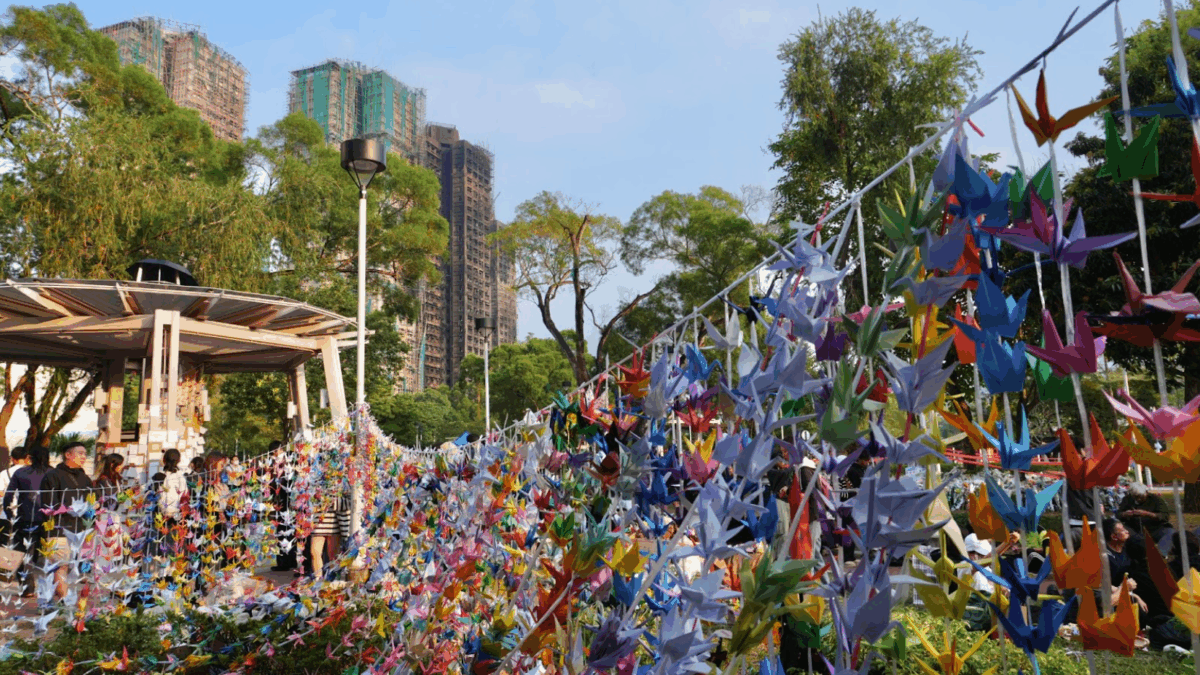
A paper crane corner for the public to mourn for the 160 victims of the Wang Fuk Court fire. Photo taken by Kelly Yu. Used with permission.
No time to grieve
While Hong Kong mourns, the surviving domestic helpers have been given little time to grieve. Most have already returned to work or face pressure to resume their duties within days, despite having lost friends, passports, and belongings overnight.
Fita, a 49-year-old Indonesian domestic helper, described the chaos of escaping the inferno. Amid the wail of sirens, falling debris, and the acrid smell of smoke, she tried to warn her employer that the building was on fire, but her boss initially brushed it off. She told Global Voices:
I heard a lot of sirens. After my employer opened the window, we smelled something burning. I was so panicked because so many people were running, and I was going to cry.
While the two made it out safely, Fita worried about her neighbors and fellow helpers who were unaware of the flames because the fire alarm had failed to sound:
That’s what makes me regret… we didn’t hear anything. Not even something that could give us some warning. There’s something they have to tell us, a dangerous situation, but there’s nothing. Because if so, we could just help others, right?
The interview ended abruptly as Fita had to rush to a nursing home to care for her elderly employer.
Tong, whose organization has been assisting around 90 domestic workers affected by the fire, said many have been thrust back into work while still processing the trauma:
They find it difficult to focus on their work because sometimes they remember what happened in the fire. They’re also working hard to pull themselves together because they’re still caregivers and they need to help calm the elderly, calm the children that are with them.
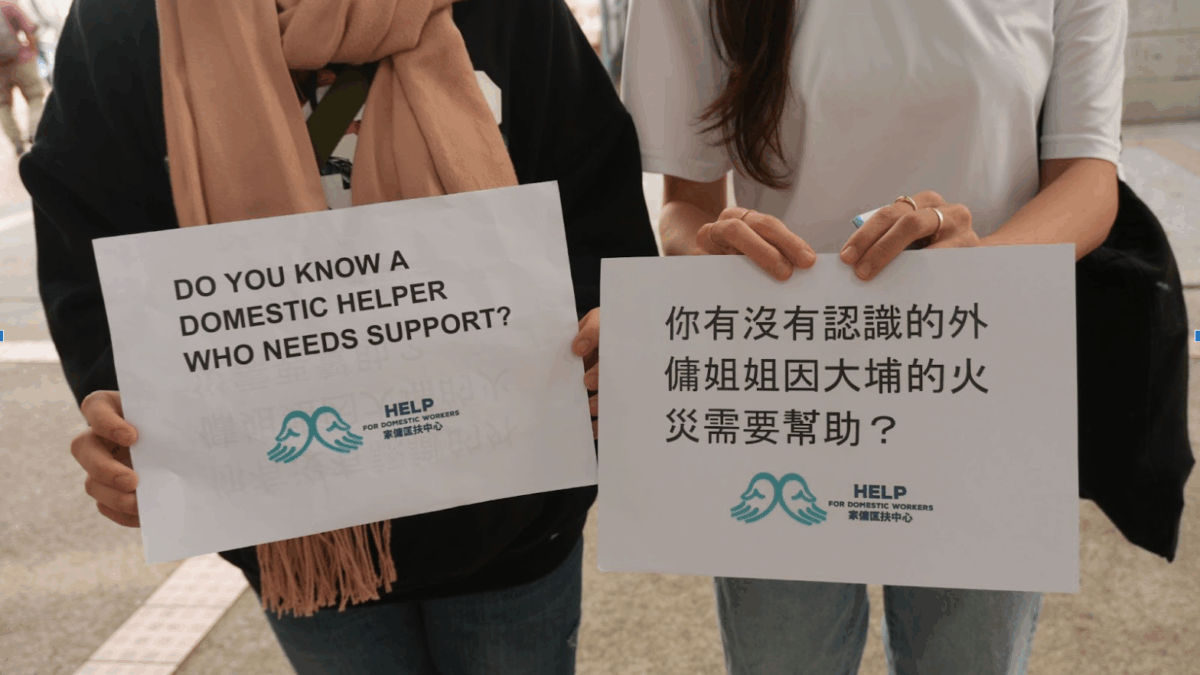
Advocates call for stay extensions for helpers whose contracts were terminated after the fire. Photo taken by Kelly Yu. Used with permission.
The ’double whammy‘
Vame Mariz Wayas Verador, a Filipino worker at Wang Fuk Court who saved a toddler and his grandmother as the towers burned, has had her contract terminated due to her employer’s financial difficulties.
Vame, a single mother of four, now has nowhere to go and is staying in a shelter provided by Tong’s organization. Tong explained:
After her contract was terminated, she was worried about where to stay. And beyond that, whether she can still stay here in Hong Kong for recovery and to look for work.
Under existing rules, foreign domestic helpers are required to leave Hong Kong within two weeks of contract termination. Tong is assisting Vame with an extension of stay and hopes the Labour Department will handle her case with flexibility.
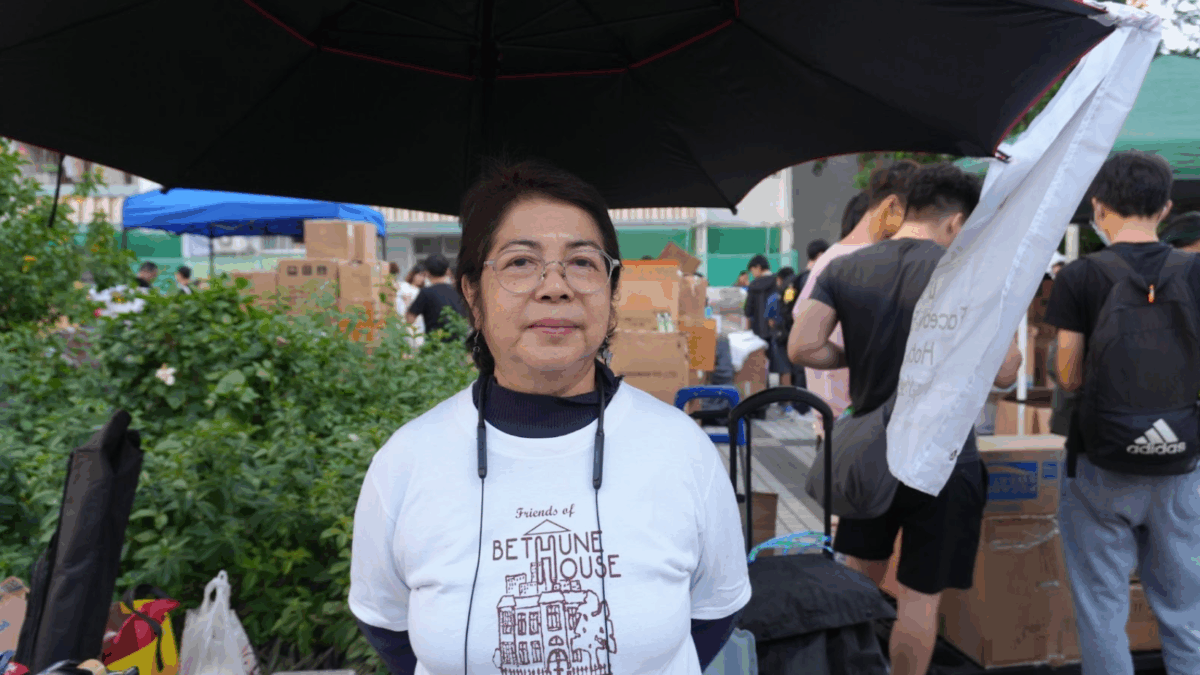
Edwina Antonio from Bethune House runs pop-up aid booths in Tai Po. Photo taken by Kelly Yu. Used with permission.
Edwina Antonio, executive director of Bethune House Migrant Women’s Refuge, who has been running pop-up aid booths at the site, urged employers not to abandon their workers during this crisis. She said:
It’s a double whammy. They already lost everything. And then they lost their jobs as well. That would really put them in a very difficult situation. Hopefully, employers would understand and let them continue working.
Long-term support needed
As Christmas approaches, survivors and bereaved families are calling for faster repatriation, live-out arrangements, and an end to the two-week termination rule. Tong explained:
We understand that in temporary shelters or housing where employers are staying, there may not be enough space for the domestic workers. So some of them have to sleep on the kitchen floor, in spaces that are unsuitable as accommodation.
Avril Rodrigues from HELP for Domestic Workers emphasized that while immediate emergency needs are being addressed, long-term support remains crucial.
Concerns persist about delays in compensation, clarity around employment contracts, personal injury claims, and medical insurance. Rodrigues said:
Right now we don’t have a lot of clarity on the legal situation. The quicker the information is passed on to us, the better we know how to act.
She stressed the importance of continued coordination with the Hong Kong Labour Department and immigration authorities to ensure that domestic workers affected by the fire receive the support and legal protections they need in the weeks and months ahead.