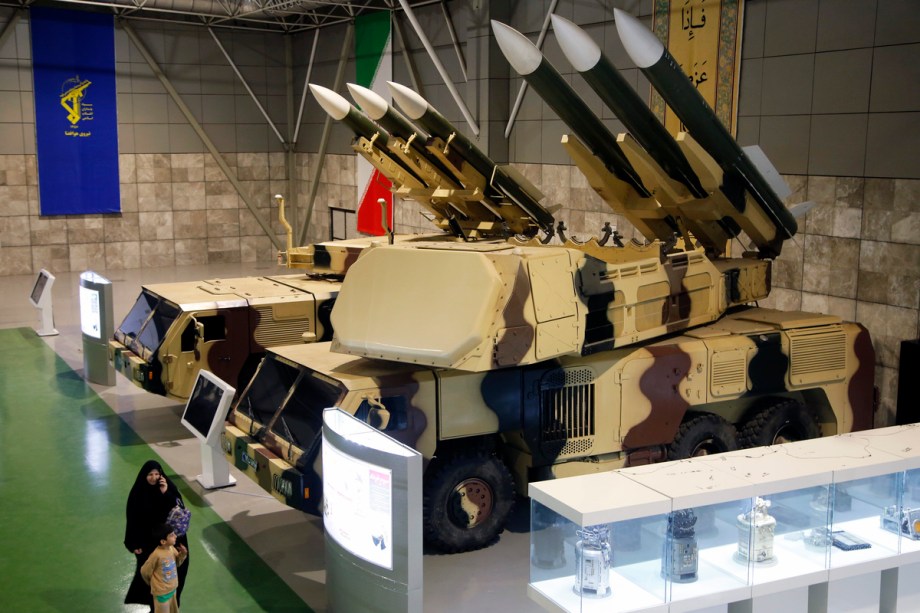
Iran has said it did not halt missile production after the last war and claimed that its missiles successfully penetrated Israeli air defence systems and struck their intended targets.
Brigadier General Abolfazl Shekarchi, spokesman for the General Staff of the Iranian Armed Forces, said on Thursday that Iranian missiles had destroyed what he described as vital targets inside Israel.
According to Mehr News Agency, Shekarchi made the remarks during a speech at Sharif University of Technology in Tehran. He said that “Iran’s missiles, manufactured by our elite, penetrated all of the occupation’s expensive air defence systems and destroyed vital targets in Israel”.
Shekarchi said that comprehensive defence against Israel extends beyond military action and includes security, political, economic and social dimensions. He argued that following this approach would inevitably lead to victory, adding that Iran has successfully pursued this path for more than four decades.
READ: US sanctions 29 vessels allegedly linked to Iranian oil
He said that “the Israeli occupation is constantly and perpetually hostile to the Iranian people, our youth and our country”, describing opposition to Iran’s independence as the main driver of that hostility. He added that “the enemies of the world’s free peoples cannot tolerate Iran’s independence, and they do not want an independent Iran”.
Shekarchi also said Iran’s aerospace industries had successfully developed and launched the Fatah missile, claiming it was able to penetrate some of the world’s most advanced air defence systems and strike designated targets in Israel with high precision.
He added that Israel has increasingly shifted its hostility towards what he described as the “soft and knowledge-based arena”, arguing that Iran possesses the expertise, experience and capabilities to manage both soft and knowledge warfare, and to turn threats in this field into opportunities.
On 13 June 2015, Israel carried out surprise air strikes under an operation it dubbed “Rising Lion”, targeting Iranian military sites and nuclear facilities, including the Natanz uranium enrichment facility.
OPINION: Iran’s shadow diplomacy: The art of winning without showing