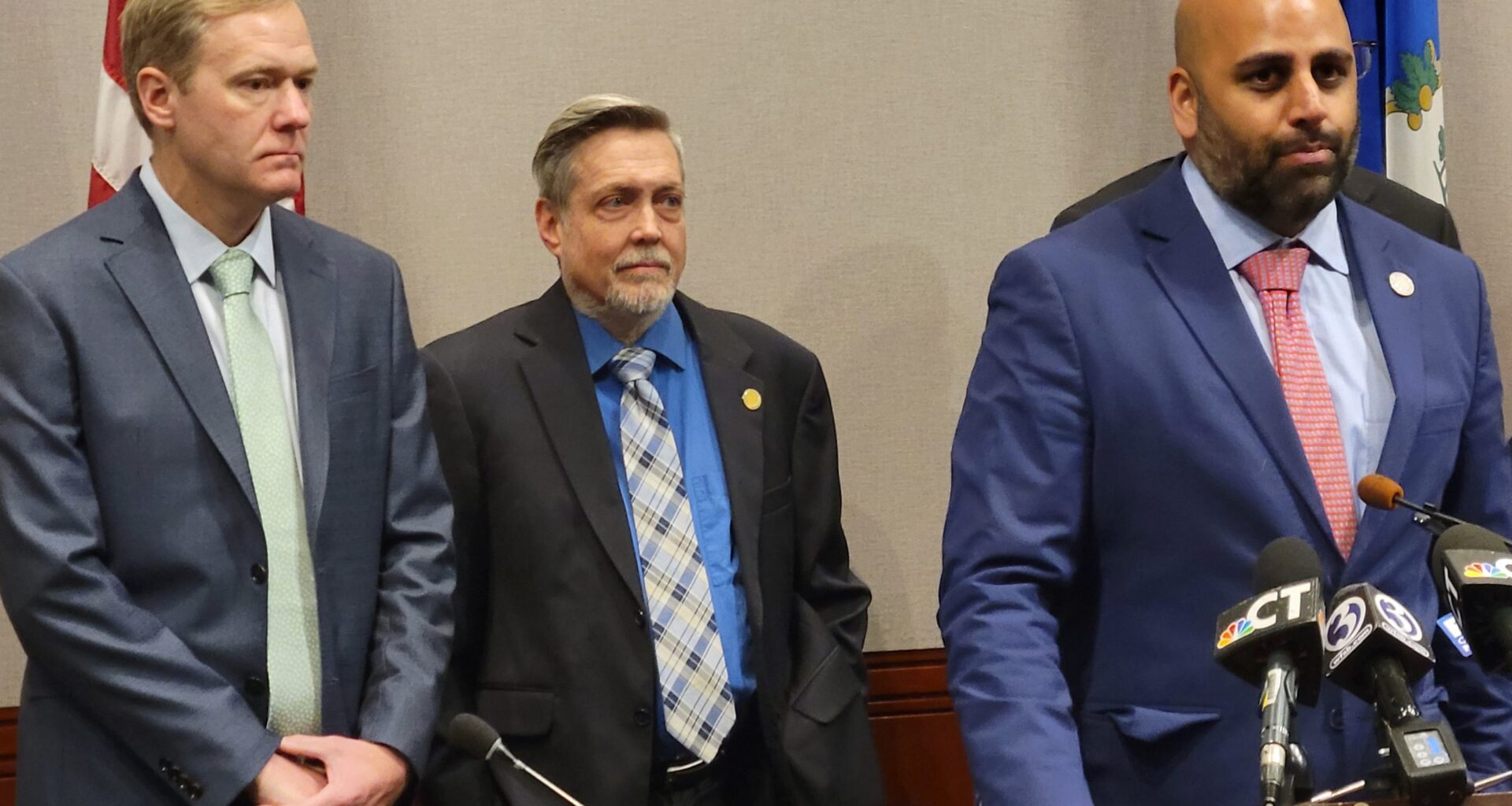
Hartford Mayor Arunan Arulampalam announced Thursday a new infusion of $5.6 million into a grant program spurring new street-level retail and services businesses in neighborhood centers.
This funding expands the “Neighborhood Investment Fund Program” to two intersections, where Farmington Avenue meets Laurel Street, and where Farmington Avenue meets Sisson Avenue.
The initiative was announced in March. At that time, Arulampalam committed to spending $5 million to promote businesses along Albany Avenue, upper Main Street, Park Street and Maple Avenue. and entrepreneurs hoping to launch businesses in these areas, can apply for forgivable loans of up to $250,000 to renovate spaces and buy equipment.
The funding announced Thursday brings the total in the program up to $10.6 million, with the new funding targeted in new areas, according to officials.
Arulampalam stressed the city is making significant economic development investments in its neighborhoods, in addition to its high-profile efforts in its downtown.
“Look, we are going to continue to fight to build a strong downtown,” Arulampalam said during a press conference Thursday at the state Legislative Office Building. “That is the crown jewel of this capital city. …But cities can’t just be downtowns. They’ve got to be neighborhoods, too. The neighborhoods, in fact, are the lifeblood of this city.”
Hours earlier, the Connecticut State Bond Commission approved a bonding package that includes more than $33 million in funding for economic development initiatives in Hartford. That includes $2 million of the $5.6 million announced Thursday.
The remainder of the new Community Investment Fund Program dollars come from a mix of unused bonding dollars from a prior initiative and unspent federal Covid-relief funds.
House Speaker Matt Ritter, a lifelong Hartford resident, highlighted the state’s recent multi-million dollar investment in streetscape improvements along Farmington Avenue, one of the city’s major arteries.
“…now the street looks really good and it’s a lot safer for pedestrians,” Ritter said. “Now, we need activity on the street. Now we need the stores.”
Ritter waxed nostalgic about years past, when the neighborhoods targeted for investment had vibrant retail scenes, and then spoke of how it has gone downhill.
Ritter spoke of an “invasion” of smoke shops and tobacco shops, some of which have illegally sold marijuana.
“That’s not the kind of economic vitality we are looking for in any part of our group,” Ritter said.
So far, the city has allocated $1.6 million to help eight businesses along Albany Avenue, Park Street and Maple Avenue, mostly new restaurants with some service-oriented office space. That funding has been approved, but not yet applied. City officials expect it to be deployed early in the new year.