Scientists dove hundreds of feet into the ocean and found creatures no human has ever seen. Our trash beat us there
https://www.cnn.com/2025/12/19/climate/ocean-deep-dive-new-species-pollution-heat?utm_medium=social&utm_campaign=missions&utm_source=reddit
by cnn
1 comment
Only a scattering of light penetrates the deep water, more than 300 feet beneath the ocean surface off the coast of Guam. It’s like twilight to the human eye, even in the middle of the day.
This part of the ocean, known as the upper twilight zone, is one of the least explored ecosystems on Earth because it’s so difficult, expensive and dangerous to reach. It’s only accessible by submarine, remotely-operated vehicle or by specially trained technical divers.
But humans are starting to unravel the mysteries of life here. In November, a group of scientific divers from the California Academy of Sciences successfully navigated a series of perilously deep dives.
Their mission was to [fetch monitoring devices](https://www.cnn.com/2025/12/19/climate/ocean-deep-dive-new-species-pollution-heat?utm_medium=social&utm_campaign=missions&utm_source=reddit) lodged in Guam’s deep reefs that have been collecting data on marine life and ocean temperatures for more than eight years.
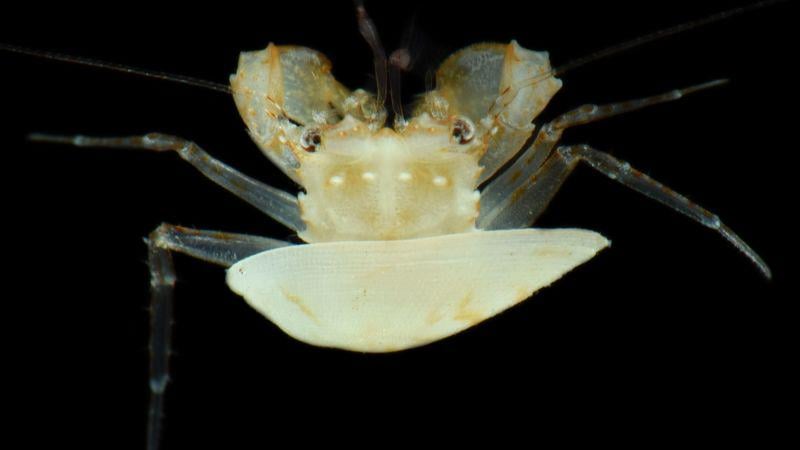
The divers found a swath of ocean populated by weird and wild creatures, from delicate corals and shimmering worms to spiky sea slugs and hairy crabs. The monitors are also providing an insight into temperature changes, suggesting climate change may be having an impact even in these deep waters.
After two weeks of processing, the scientists have so far found 2,000 specimens, 100 of which were recorded for the first time in the region and 20 of which are potentially newly discovered species.
Recent research into plastic pollution on coral reefs found the amount of plastic debris, most of which came from the fishing industry, [increased with depth,](https://www.calacademy.org/press/releases/plastic-pollution-on-coral-reefs-increases-with-depth-and-mostly-comes-from-fishing), peaking in the upper twilight zone. “We are almost always the first humans to set eyes on these deeper reefs, and yet we see human-produced trash on every dive,” said Luiz Rocha, one of the divers and an ichthyology curator at the California Academy of Sciences.
Climate change is another big threat. Temperature data is still slowly trickling in from the monitoring devices, but the scientists are already seeing that deeper water may be following the same warming trends seen elsewhere. “This contradicts assumptions that this depth would be a safe refuge, protected from warming,” Rocha said.
Comments are closed.