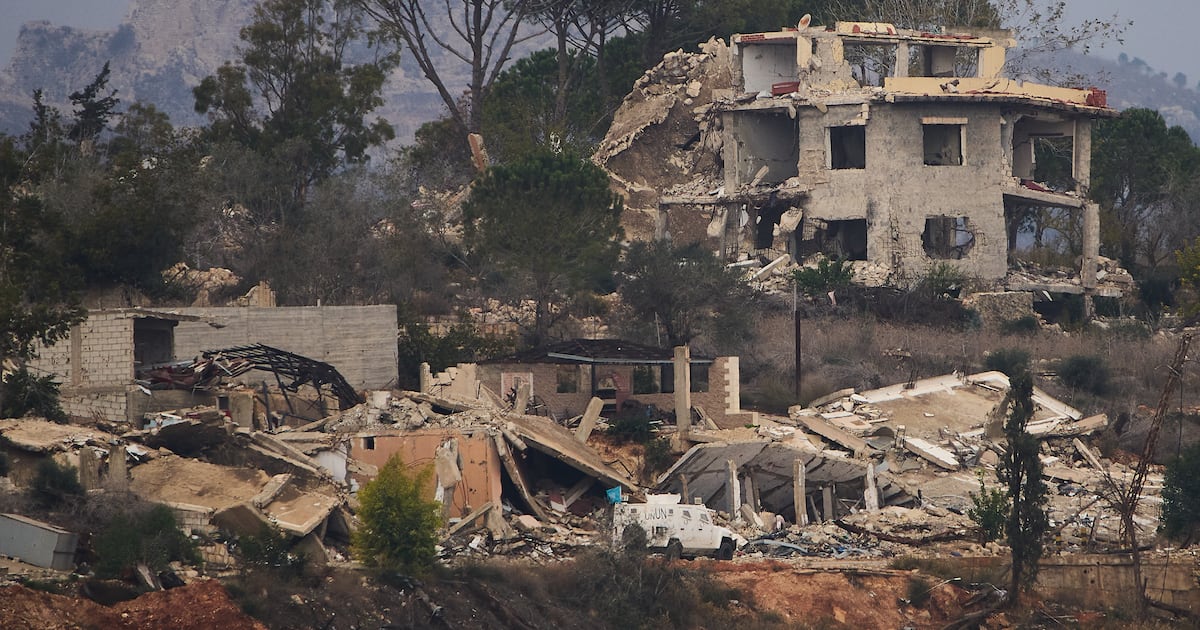
Lebanon has told Israel that the return of civilians to southern villages must come first before broader issues can be addressed in talks between civilian representatives from both sides.
Lebanese President Joseph Aoun emphasised the priority of returning residents of border villages to their homes, a presidency statement said after he met with Lebanon’s civilian representative, Simon Karam.
“The Lebanese priority is for residents of the southern villages to return to their villages, homes and land, as a gateway to addressing all other details,” he was quoted by state media as saying.
Lebanese and Israeli officials held their second round of direct civilian talks at a meeting of the US-run ceasefire monitoring mechanism as efforts continue to prevent yet another war.
Mr Aoun announced that the committee would reconvene on January 7.
The US embassy in Beirut said the meeting, held in Naqoura near the Lebanon-Israel border, brought together “civilian participants” for parallel discussions on “setting conditions for residents to return safely to their homes, advancing reconstruction and addressing economic priorities”.
“They underscored that durable political and economic progress is essential to reinforcing security gains and sustaining lasting peace”, the embassy added.
Military representatives, meanwhile, offered operational updates, the embassy said in a statement titled “Security and Economic Tracks Advance in Parallel”.
Until earlier this month, talks under the ceasefire mechanism had been limited to military officers and focused on operational and security matters.
Israel’s Deputy National Security Adviser, Joseph Draznin, was part of the delegation on Friday, thus raising the level of participation in the direct talks, according to Israeli media.
On the Lebanese side, President Joseph Aoun appointed lawyer and former ambassador to the United States Mr Karam to lead Beirut’s delegation to the committee.
It came as diplomatic efforts persist to calm the tension in Lebanon, which continues to come under daily Israeli fire. Beirut says it is in the final stages of disarming Iran-backed Hezbollah south of the Litani River, as required under the ceasefire framework.
Egyptian Prime Minister Mostafa Madbouly held talks with Lebanese leaders on Friday after arriving in Beirut on Thursday night.
After meeting Lebanese Prime Minister Nawaf Salam, the two officials discussed expanding co-operation across several sectors, as well as efforts to halt Israeli attacks on Lebanon. Egypt has taken on a larger role in Lebanon following its efforts in Gaza.
“Egypt will spare no effort in continuing its tireless endeavours to keep Lebanon away from any escalation,” Mr Madbouly said.
Lebanon and Israel, technically at war since 1948, have no official diplomatic relations. Lebanese military representatives had so far avoided direct contact with the Israeli delegation and relied instead on communicating through UN and US intermediaries.
Mr Salam had previously told The National that the addition of a civilian was agreed to in the hope of “defusing tension”.
The ceasefire mechanism meeting comes as Israel is insisting Hezbollah fully disarms, while its military has intensified daily strikes on Lebanon, saying it is targeting the group’s personnel and infrastructure, despite a November 2024 ceasefire stipulating an end to hostilities and Israel’s full withdrawal from the south of the country.
Israel carried out a spree of attacks across Lebanon on Thursday morning as France hosted a high-level meeting with US, Saudi and Lebanese officials to discuss security in Lebanon amid warnings of a collapse in the ceasefire.
The Israeli military said, without providing evidence, that it attacked various sites of Hezbollah infrastructure in south Lebanon and the Bekaa Valley.
The attacks have hindered reconstruction efforts as well as the return of many Lebanese residents to the southernmost towns near the border. Israeli troops remain stationed at five points inside Lebanese territory.