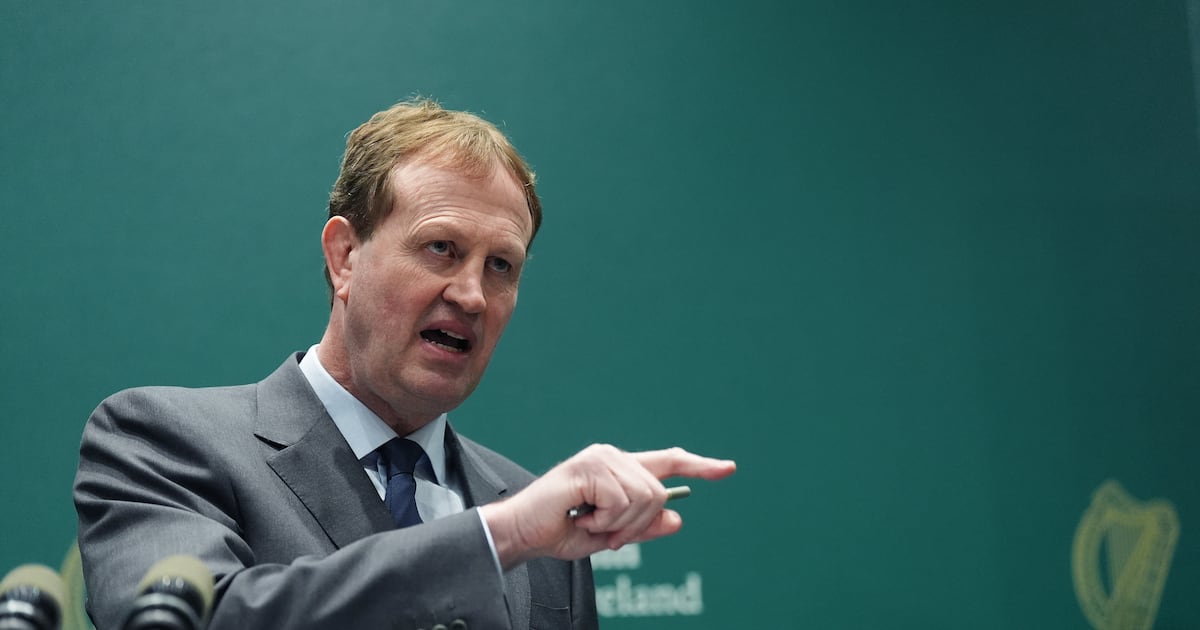
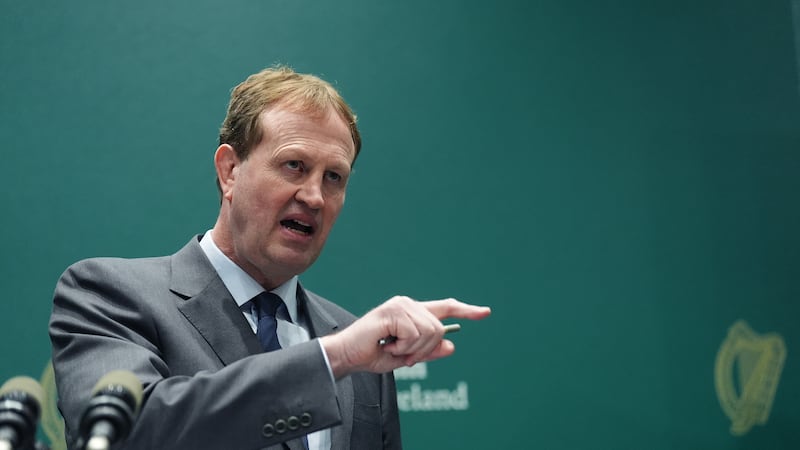
IN the latest Irish Times ‘Inside Politics’ podcast, Justice Minister Jim O’Callaghan indicated his biggest immediate concern is immigration. He was quite explicit.
“I have to be careful that the numbers, which were exceptionally high last year – 18,500 people arrived – are reduced, as otherwise we will have a breakdown of social cohesion.”
He said the rate of increase of the population, 1.6% a year, is too high. “Efforts should be made to try to curtail it.”
O’Callaghan said: “The only way we can [curtail it] is through trying to introduce some policies in respect of inward migration.”
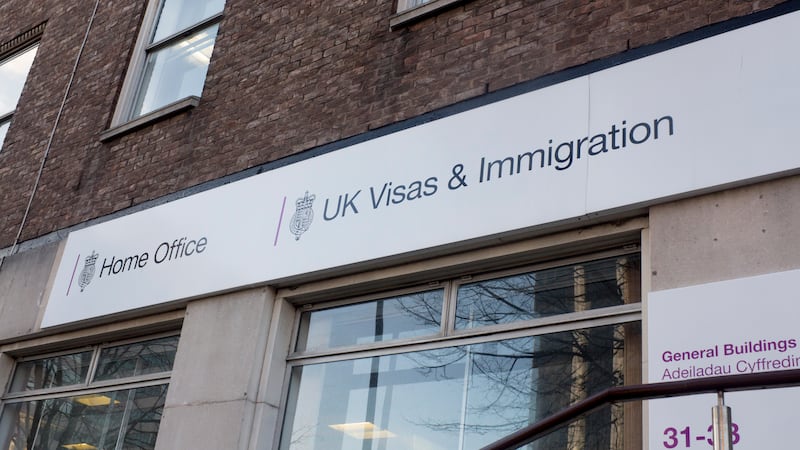
You’ll notice that he didn’t distinguish between migrants and asylum seekers, but since the Republic needs immigrants who are proficient in hi-tech and pharmaceutical industries, it’s clear the policies will bear down on asylum seekers.

It’s also clear that O’Callaghan is going to shadow the policies of Britain’s new hardline Home Secretary Shabana Mahmood, and that has led him in an unfortunate direction.
Last week he joined the ministers of justice of the 46 countries in the Council of Europe in Strasbourg to consider how the European Convention on Human Rights (ECHR) is applied to asylum seekers and refugees.
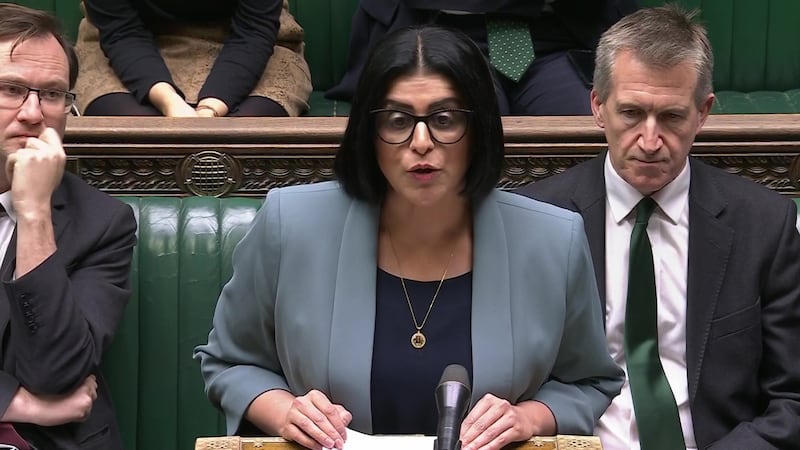 Home Secretary Shabana Mahmood outlines planned reform of the legal migration system (House of Commons/UK Parliament/PA)
The idea was to work towards a collective agreement on the matter which will be discussed at another full meeting in May 2026.
Instead, what happened was that 27 countries, with Denmark in the lead, issued a statement in which they agreed to argue for changes to the ECHR and how it is interpreted.
Shabana Mahmood strongly supported Denmark’s position. Indeed her officials have visited Denmark in recent months to learn how that country’s hardline approach can be operated in Britain.
Sadly O’Callaghan threw in his lot with the 27, not least perhaps because he intends to have Ireland row in behind Britain.
Sadly, because it seems neither he nor his Department of Justice has considered the implications for the Republic of arguing for change in the ECHR or how it’s interpreted.
Nor does it appear that this change in policy, for that’s what it is, has been announced, let alone discussed publicly.
The ECHR is vital to the Good Friday Agreement. It guarantees the human rights of everyone in the north. It requires legislation here, and in the UK affecting here, to adhere to the ECHR.
Liam Herrick, the chief commissioner of the Irish Human Rights and Equality Commission, wrote an article in The Irish Times expressing his concern at O’Callaghan joining with the other 26 in arguing for what is in effect a watering down of the convention.
The newspaper published an editorial criticising the decision and urging caution. It said: “The signatories to the ECHR should be slow to tinker with a fundamental element of the post-Second World War architecture of Europe. The ECHR, which comes under the Council of Europe, is a separate entity from the EU, but together they helped to deliver 80 years of peace and prosperity.”
In particular, the ECHR has been useful for the north, beginning with the first case decided by the European Court which was about internment and the use of torture, inhuman and degrading treatment on the ‘Hooded Men’ in 1971.
Ironically it was the Irish government which took the case – and currently has a case against the UK on legacy.
Now the 27 signatories are talking about “constraining” the scope of inhuman and degrading treatment in Article 3. They talk about “re-balancing” Article 8, which protects private and family life.
Will there be grades of degrading treatment? Will there will degrees of family life?
 18,500 people entered the Republic last year (Alamy Stock Photo)
The statement O’Callaghan signed includes asking for states to be able to send asylum seekers to ‘third countries’ to have their claims processed.
Yet the north’s courts decided Britain’s plan to send people to Rwanda breached the Windsor Framework’s guarantee of ECHR rights post-Brexit.
It appears likely that the Irish government conducted no assessment of the effect on the north of altering its stance on the ECHR.
So far there’s been no explanation for O’Callaghan jumping the gun and aligning with the other 26, some of which, like Hungary and Slovakia, have unsavoury human rights records.
In contrast, France, Germany, Spain, Portugal and Belgium didn’t sign up to the Danish-inspired statement, yet many of them have worse problems with migration than Ireland.
Here’s what Tánaiste Simon Harris told an Oxford conference in September: “The ECHR is a fundamental safeguard of the GFA. It is a core part of the delicate balances in that agreement… The ECHR’s guarantees cannot be negotiated away, despite what some politicians might claim.
“Sometimes it is necessary to state the obvious: protecting fundamental rights protects everyone. The ECHR does not take sides.”
Did anyone tell Jim O’Callaghan?
If you have an opinion on the issues raised in this article and would like to submit a Letter to the Editor to be considered for publication, please click hereLetters to the Editor are invited on any subject. They should be authenticated with a full name, address and a daytime telephone number. Pen names are not allowed.