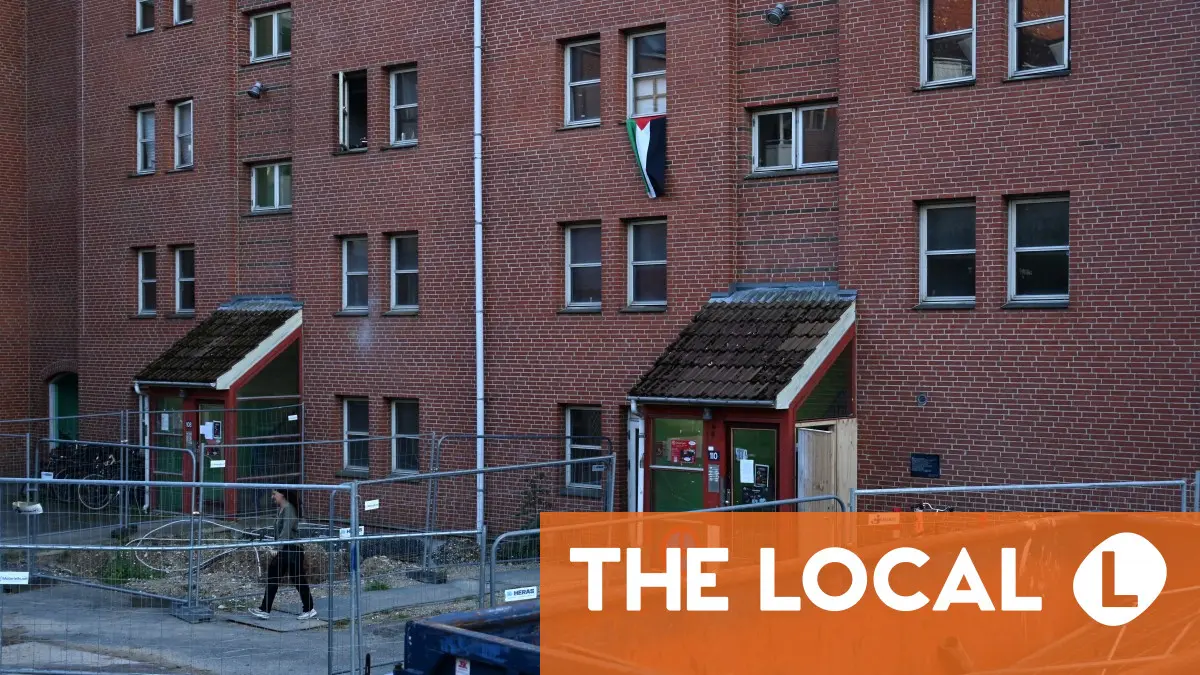
Our weekly column Inside Denmark looks at the stories we’ve been talking about over the last seven days. This week, a major discrimination case at the European Court of Justice leaves Nørrebro residents still waiting for answers.
Was EU court discrimination ruling a disappointment for Mjølnerparken residents?
The European Court of Justice on Thursday said it was up to Denmark’s courts to decide whether a Danish law requiring authorities to redevelop poor urban areas which the government itself once officially termed “ghettos” is discriminatory.
Residents in the Mjølnerparken housing estate in the outer Nørrebro area of Copenhagen had initially brought the case in 2020, arguing that using their ethnicity to decide where they can live was discriminatory and illegal.
The residents said they were positive about the EU’s ruling on Thursday, which sends a decision on the matter back into the hands of the Danish courts.
“I’m super satisfied,” their lawyer Eddie Khawaja told reporters.
He said the ruling showed that the criterion of 50 percent “non-Western” residents may seem “neutral on paper, but does not prevent residents from being subjected to direct or indirect discrimination”.
The EU court said Danish courts would have to determine whether the “criterion establishes a difference in treatment based on the ethnic origin of the majority of the inhabitants of those areas, thus resulting in the inhabitants of those areas being treated less favourably”.
It also said Danish courts would have to determine whether the law, although worded in a “neutral manner”, actually leads to “persons belonging to certain ethnic groups being placed at a particular disadvantage”.
Those words seem to favour the residents who brought the case, but it should be kept in mind that the ruling had been expected to land more decisively in their favour.
Advertisement
In February, the EU Court’s advocate general issued a recommendation that the court rule the Danish policy a form of discrimination and prior to this, the Council of Europe’s European Commission against Racism and Intolerance (ECRI) said the Danish government should amend its existing legislation on parallel societies.
“While the Danish authorities’ position is that no eviction of tenants takes place based on their ethnic or national origin from non-Western countries, ECRI nevertheless notes that the aim of the Danish legislation and related policy remains to reduce the share of ‘non-westerners’ in ‘parallel societies’,” it said in October last year.
READ ALSO: Why a key Danish law could be deemed discrimination by the EU
The Danish law from 2018 was originally known as the ‘Ghetto Law’, before Denmark’s non-anglophone politicians eventually realised they were using a pejorative term and changed it to the ‘Parallel Societies Law.’
It states that all social housing estates where more than half of residents are ‘non-Western’ must rebuild, renovate and change the social mix by renting at least 60 percent of the homes at market rates by 2030.
To qualify as ‘parallel societies’, housing areas must have a population of more than 1,000 people, of which more than half are of ‘non-Western’ origin, and must fulfil two of four other criteria relating to employment, education, income and crime rates. For areas with fewer than 50 percent ‘non-Western’ populations, the term ‘vulnerable area’ is used instead.
Danish authorities, which have for decades advocated a hard line on immigration and integration, say the law is aimed at eradicating segregation and “parallel societies” in poor neighbourhoods that often struggle with crime.
Advertisement
The government reacted to the EU Court ruling by saying it respects the court but stands by the law.
Foreign Minister Lars Løkke Rasmussen, who was Prime Minister when the law was passed, described the ruling as “sad”.
“All I can say is that the intention was good, the results have been fantastic, but we are not there yet and we need to get there,” he said to broadcaster TV2.
“If the map and the compass do not align because the map has been drawn by judges, then we must respect that and find other routes to reach the same goal,” he added.
Løkke also stressed that he “would never dream of questioning a court ruling.”
Minister for Social Affairs and Housing Sophie Hæstorp Andersen has so far had little to say about the ECJ’s ruling.
“The case now returns to Østre Landsret [high court, ed.], and we will of course study today’s ruling from the European Court of Justice closely,” she said in a statement published on the ministry’s website.
Back in Mjølnerparken, a total of 1,493 residents in 2020 had to be temporarily relocated so the apartments could be refurbished, a representative of the tenants’ association, Majken Felle, told news agency AFP.
At the time, eight out of 10 people in Mjølnerparken were deemed “non-Western”, with people from non-EU countries in the Balkans and Eastern Europe also falling into that category.
Advertisement
In order to avoid moving from one temporary apartment to another during the lengthy renovations, many residents agreed to just move to another neighbourhood.
“We were supposed to be temporarily relocated for four months, and now it’s been more than three years. Each year, they give us four or five different dates” for when the work will be completed, Muhammad Aslam, head of the social housing complex’s tenants’ association, said to AFP.
In total, 295 of Mjolnerparken’s 560 homes have been replaced, with two apartment blocks sold and replaced by market-rate rentals out of reach for social housing tenants.
Experts say some 11,000 people across Denmark will have to leave their apartments and find new housing elsewhere by 2030.
With reporting by AFP.