
Randy Boyagoda is a writer and professor of English at the University of Toronto. His new novel, Lords of Serendipity, will be published next September.
“You’re lucky you’re Catholic.”
This is a phrase I never expected to hear in my adult life, never mind at a recent Toronto dinner party where there were more degrees around the table than dishes and bottles on top of it. Under normal circumstances, I would wait for the punchline, probably something about abortion or sexual abuse, but in this case, none was forthcoming.
Instead, the person making this unprecedented observation about my lifelong faith went on to explain himself with disarming candour. As a Christian but not a Catholic, he felt a greater pressure to justify his decision to live as if God exists and to do so as part of a particular community and set of practices, compared to how Catholics experience this burden. He’s not wrong, whether in historical terms, or these days especially.
Opinion: I seek to resolve my conflict between Catholicism and my culture
There’s long been an immense variety within this global faith, which makes it possible for anyone who self-identifies as Catholic to discern a place for themselves in relation to the Church, whether positively, ambivalently, or negatively, and whether you’re living in historically Catholic-majority countries like France and Italy; or in regions where adherents are increasing in number, as in Africa and elsewhere in the Global South; or as part of any number of immigration waves from the Catholic old countries to North America. Across these contexts, each of which reliably offers family background as a ready explanation for one’s continuing Catholicism, there’s also an immense variety of responses available within the faith itself to the permanent questions of how to integrate belief with action, theological propositions with political positions, individual inclinations with group behaviour.
To be sure, this has been the case for centuries if not millennia. What feels different right now, in the lead-up to Christmas, is that Catholicism, whether in high-profile politics and culture or just ordinary demographics, seems to be enjoying a certain kind of cachet.
Earlier this year, when Mark Carney’s rapid elevation to Liberal Leader and in turn Prime Minister became apparent, like many other Canadians I began reading his book Value(s). I’m not alone, I suspect, in failing to finish his 500-page study of the tension of market and human values, but I certainly read enough to appreciate Mr. Carney’s learned, wonky seriousness, and also his openness to higher kinds of guidance. Early on, he describes a lunch with Pope Francis that he attended with others in politics, policy and charitable work, where the late pontiff told a typically earthy parable about the difference between wine and grappa to propose that people with influence over financial markets were called to bring a fuller sense of the human to bear upon their workings.
Four years after reflecting positively on Pope Francis’s challenge in the pages of Value(s), the now Prime Minister was in Washington this past October for talks with President Donald Trump and members of his administration. While there, he had dinner with Vice-President JD Vance, and several media sources pointed to their shared Catholicism: Mr. Carney’s a cradle Catholic, while Mr. Vance converted in 2019. Attesting in part to the faith’s inherent capaciousness, no one would point to Mr. Carney and Mr. Vance as readily simpatico in politics or personal bearing, but each is avowedly, openly Catholic. Did Mr. Carney retell his wine-and-grappa papal anecdote to Mr. Vance? Did Mr. Vance reflect on being the last world leader to have met Francis, the day before he died this past April?
God only knows, of course, but suffice to say there’s something at work right now in the public life of Catholicism that’s encouraging this kind of attentiveness. Put differently, it’s hard to imagine media coverage of, say, a Justin Trudeau-Joe Biden meeting that made anything of their also both being Catholic, the latter famously always carrying his rosary around with him, never mind journalists accentuating the Catholicism of nine other Canadian prime ministers dating back to Sir John Thompson.
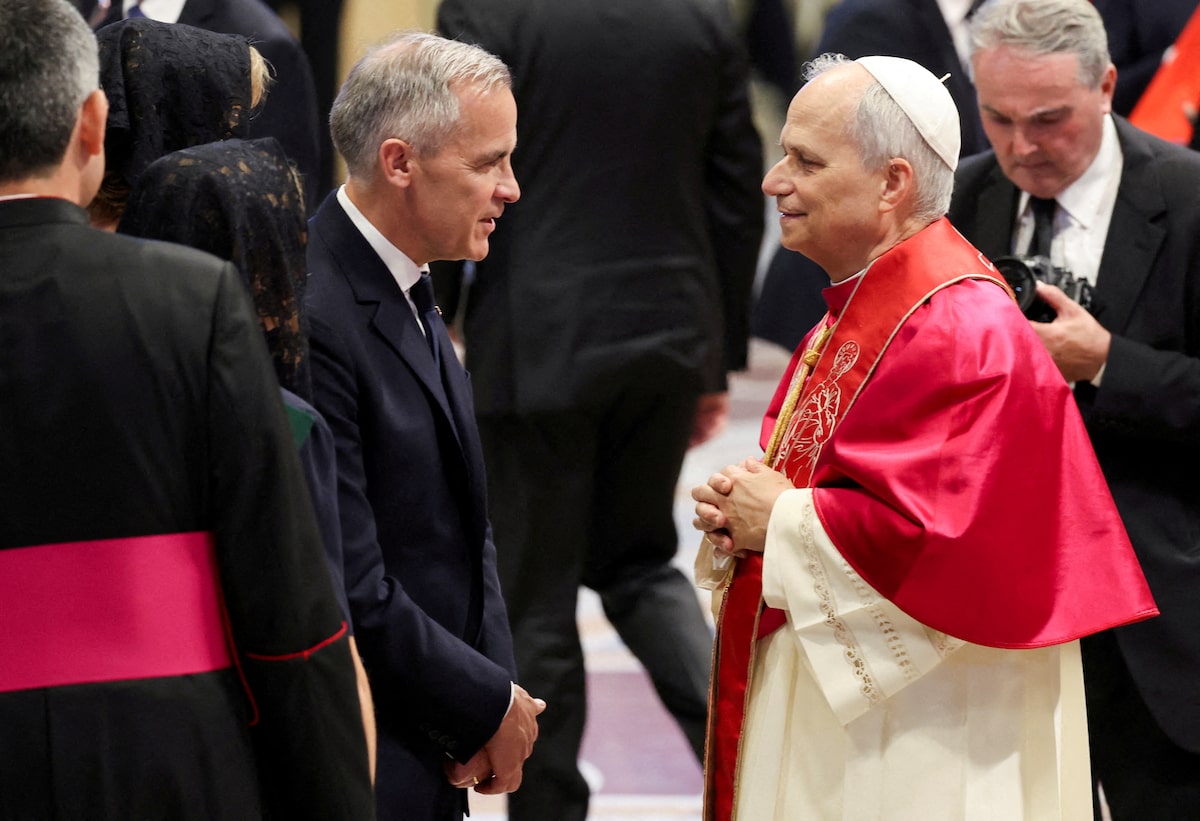
Prime Minister Mark Carney greets Pope Leo XIV in St. Peter’s Basilica, following his inaugural Mass, at the Vatican, May 18, 2025.
Claudia Greco/Reuters
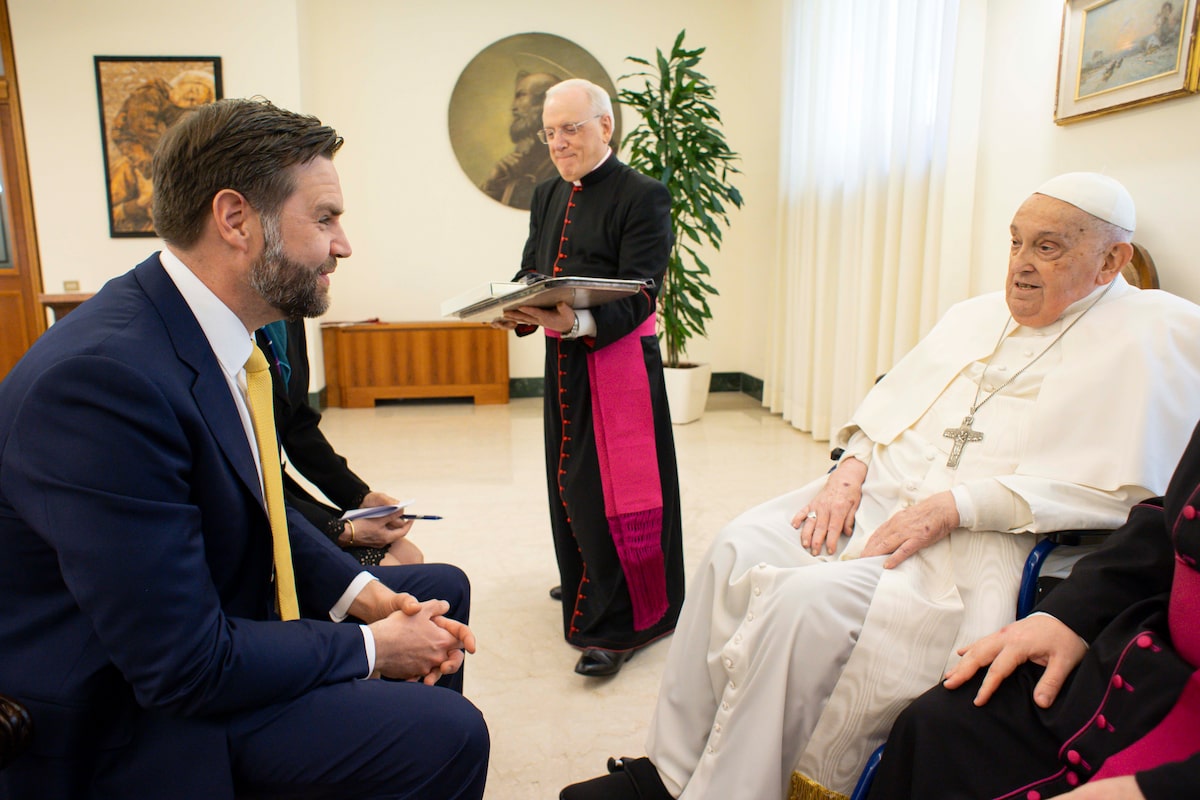
U.S. Vice President JD Vance, left, was the last world leader to meet Pope Francis before his death in April, 2025.
Vatican Media via AP
One ready explanation for Catholicism’s current cachet is Francis’s successor, Leo XIV, whose historic election saturated global media coverage this past May. The first American to have been elevated to the papacy, before he took the name Leo he was Cardinal Robert Prevost and earlier still he was Bob, born on the South Side and raised in suburban Chicago. He’s still a Chicago guy: a White Sox fan and a devotee of Aurelio’s, a family pizza chain. In interviews he shares tips for Wordle, which he plays on a daily basis (yes, obviously, religiously). This familiarity and approachability, combined with a far more modest and careful approach to public comment compared to Francis, who was an infallible source of news-making material throughout his papacy, has made Pope Leo an obvious contrast to his predecessor – and far more so to his loudest fellow American world leader.
The Leo-Trump dynamic points to the competing source of Catholicism’s current cachet, particularly when it comes to current affairs, and that’s the influence it enjoys both within contemporary conservative intellectual culture: Harvard’s Adrian Vermeule and Notre Dame’s Patrick Dineen are leading figures, while Catholics predominate on the U.S. Supreme Court. Beyond that, Catholicism also figures as part of the larger “vibe shift” in the United States, if simultaneously as a singular source of the pushback against it. Indeed, MAGA Catholicism alone is a source of agitation within the Republican Party and likewise within an American Catholicism riven by the Trump administration’s aggressive enforcement of immigration law.
Opinion: An American Pope? Has hell frozen over?
Migrants and refugees are persons of particular concern in the faith based on long-standing Catholic Social Teaching, but also reaching back to the Biblical story of Christ’s birth and early life in Egypt where Joseph and Mary migrated with the newborn Jesus. They did so in search of refuge from King Herod’s lethal persecution of first-born male children in Israel after he heard politically threatening reports of a holy birth in Bethlehem. Reports of Catholic migrants and refugees denied communion while confined in ICE-run detention centres, and the Trump administration’s widespread raid-style approach to immigration enforcement itself, led the U.S. Catholic Bishops to issue a major public statement critical of these actions. Unlike their brethren in politically fraught places like Venezuela and Congo, or in past decades in Cold War-era Poland and the Philippines, American Catholic bishops don’t normally generate positive media coverage for issuing condemnations. In this case, however, they did: They were widely regarded as a clear moral voice seeking to defend the weak against a strong political power.
Meanwhile, beyond the arrival of an amicable new American pope and American bishops amplifying some of the more long-standing, progressive-friendly features of Catholic thought, young people and young men in particular, within and well beyond the United States, have been increasingly drawn to the Church along a more conservative axis. When it comes to seeking time-tested, traditional structures and deep, fixed sources for expressing and affirming human identity, relationship, community and for proposing both ordinary and ultimate purpose, it’s hard to find a better option than the 2000-year-old billion-strong Catholic Church. At least, that’s how interviewees put it in a Reuters article published earlier this year, pegged to a survey of Gen Z churchgoers in Britain that reported Catholics between the ages 18 and 34 now outnumber Anglicans of the same age (41 per cent and 20 per cent, respectively), and not because of immigration alone but also because of conversions among the native-born, particularly in younger people – specifically, younger men. Their ranks include 26-year-old Dan Williamson, who described being drawn to Catholicism because it offers something “deeper and ancient and more rich” than a daily life spent too much alone and too much online. By comparison to an algorithm-optimized, atomized existence, the Catholic Church “is grounded in this thing which is so much bigger than ourselves,” he said. “We’re probably the first generation to try and live without God, and I think we’re slowly just saying that doesn’t work.”
Catholics receive communion as they attend the first of nine dawn masses, known as ‘Misa de Gallo,’ at a church in Las Pinas, Philippines on Dec. 16, 2025, signalling the official start of the Christmas season.TED ALJIBE/AFP/Getty Images
I’ve often reminded people who are considering, or admiring from afar, or themselves newly members of the Catholic Church, that for all of its robust history and transporting mystique, it’s an institution made up of sinners, evident in both high-profile and banal ways. Knowing and accepting, living with this, seems crucial to avoid idealizing or romanticizing the Church as some kind of impregnable fortress where you can be kept safe from godless modern living. But this is only so evident when you think about Catholicism and politics where, regardless of the issue and country, the faith enables its leaders and ordinary adherents alike to find places reliably and credibly on both sides of conventional right/left divides: As a Catholic, you can find ample cause in your faith and its teachings to be pro-life and pro-migrant; pro-traditional marriage and pro-workers’ rights; pro-family and pro-environment; pro-Israel and pro-Palestine.
That said, I think it’s in culture, not politics, that Catholicism more fully inspires and enacts representations of human experience in ways both fresh and lasting, and not just in the Dante- and Michelangelo-decorated past.
Norway’s Jon Fosse, the 2023 Nobel Laureate in Literature, is the most intensely Catholic writer to have won the prize since Iceland’s Sigrid Undset did so in 1928. Mr. Fosse’s captivating, experimental novels, most notably the Septology sequence, don’t just describe a dying man’s search for God in life and art; they create the possibility of finding God. Sam Tanenhaus’s widely praised new biography of William F. Buckley, Jr., the architect and dominant figure of the modern American Right, reveals Catholicism, not conservatism, as the most important feature of that consequential life.
Opinion: Ever since the Middle Ages, papal conclaves have been rife with intrigue
Meanwhile, the also intensely Catholic Martin Scorsese’s television series on saints is now in its second season, which features an episode about the gamer and online evangelizer Carlo Acutis. Popularly known as the first millennial saint and “God’s influencer,” Mr. Acutis was canonized by Pope Leo earlier this year, a signal sign of Catholicism’s capacity to be ever ancient, ever new. The main character in HBO’s best new show of 2025, Task, is a onetime Catholic priest turned haunted and humane FBI agent played by Mark Ruffalo. He’s repeatedly praised, even by the criminals he’s chasing, for his pastoral way with fellow sinners.
And of course, before, during and after the conclave that elected Leo XIV, the movie Conclave generated a great deal of attention, with viewers drawn in by its combination of religious mystery and ancient ritual, lavish pageantry and melodramatic intrigue, and equally by the frisson-inducing sense that this might be what it’s really like in the Sistine Chapel during a papal election while also knowing that we’ll never really know, while we otherwise know too much about everything and everyone else in our media- and information-glutted era.
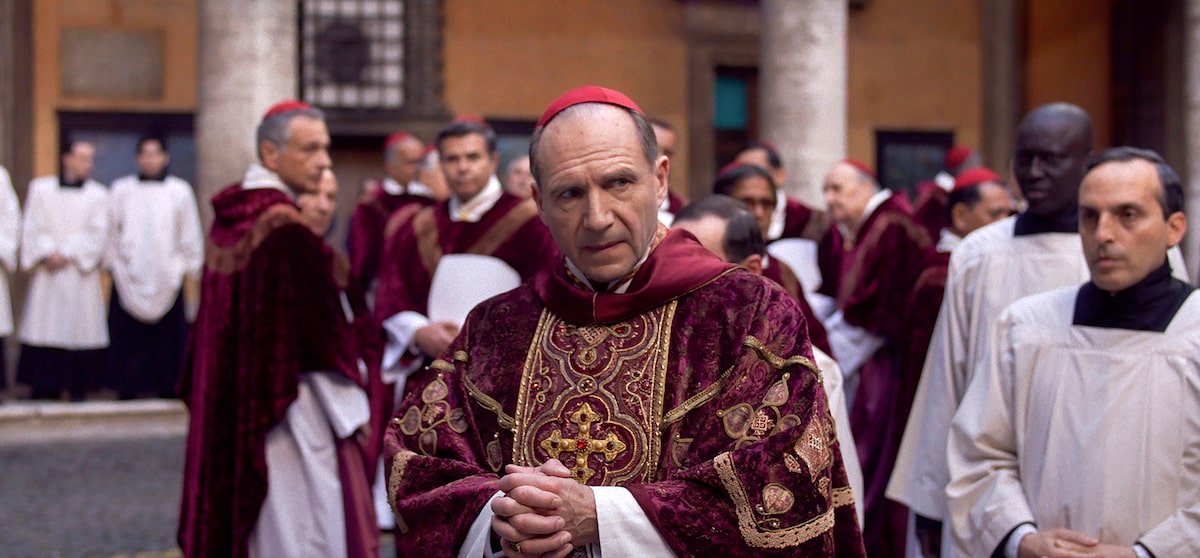
Conclave, a 2024 film starring Ralph Fiennes, drew viewers into the intrigue-filled process of choosing the next Pope.
Focus Features via AP
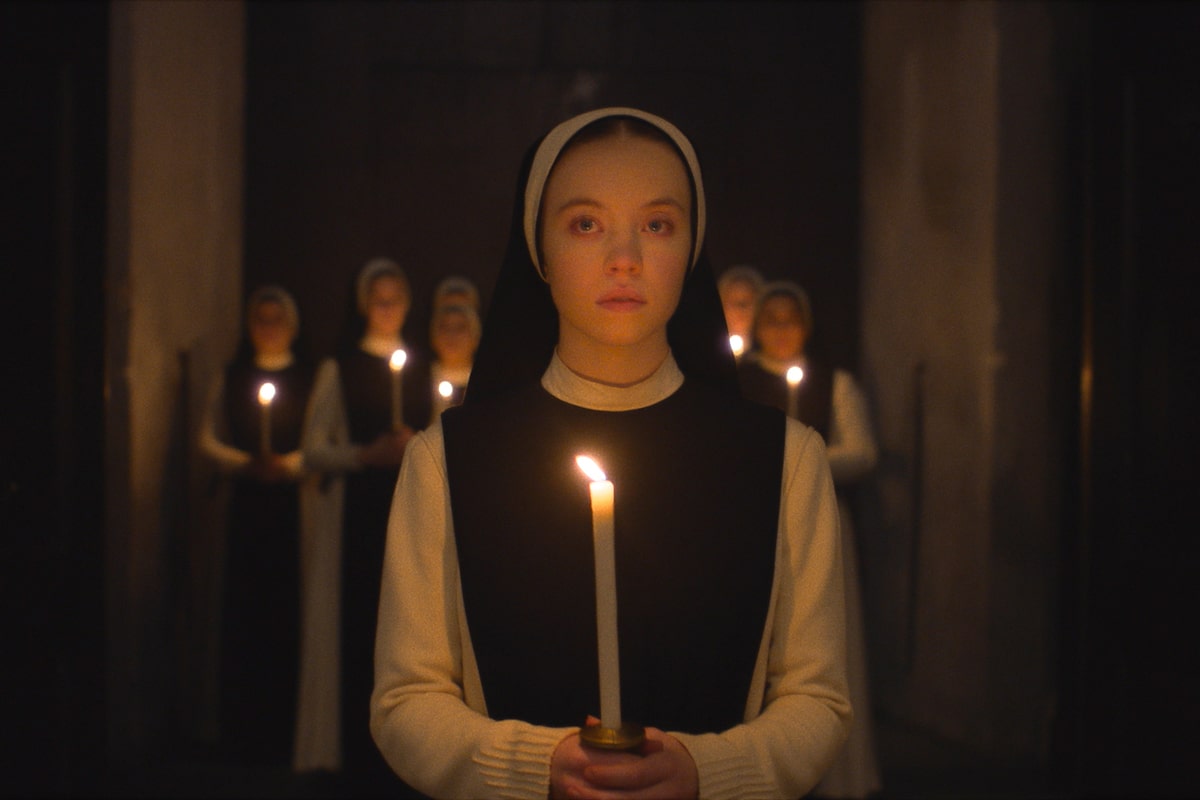
Hollywood star Sydney Sweeney played a nun in 2024’s Immaculate, another film depicting Catholicism in the mainstream.
Neon via AP
Speaking of people with great memes, even Sydney Sweeney’s involved in this #trendingCatholic situation. She isn’t Catholic, but she played a Catholic in the movies – a pregnant virgin nun no less – in the 2024 horror film, Immaculate. In related press interviews she described her hometown of Spokane, Wash., as “very Catholic” and responded positively, if vaguely, to a fashion journalist’s question about the rising trend of “Catholic-core.” I confess I’ve never heard of Spokane as a Pacific Northwest version of Vatican City, and I’m not sure I like the idea of rosaries and crosses and lacework inspired by liturgical garments as ways to look good for your next Hinge date, but either way, emphasizing Catholicism on the page, on screens, and on your very person is, as my four daughters might put it, a deal right now, in ways it hasn’t been in a long while.
Why?
I think it’s because Catholicism has depth and range, deep structure and flexibility, sources of affirmation and legitimation alongside sources of denial and rebellion, like no other world religion. You can see and hear as much in Sarah Kirkland Snider’s eroto-feminist opera about the life of the medieval mystic and theologian Hildegard von Bingen, which debuted in Los Angeles earlier this year and will be playing in New York next month. And speaking of New York, there you can see Catholicism’s distinct presence and power in concentrated form in the “Dimes Square” arts and culture scene in contemporary Lower Manhattan, in the area surrounding the Old St. Patrick’s, the city’s first cathedral (and Martin Scorsese’s boyhood parish). In a pseudo-ethnography of its defining features for The New York Times, journalist Julia Yost argued for the significance of its strongly Catholic features, evident in young, very cool culture-making New Yorker interests in traditional Catholic practices like praying the rosary and attending mass, and in how the faith figures notably in content and visuals, via podcasts and social media activity.
Ms. Yost cited as precedent the role of Catholicism in the 19th-century Decadent Arts movement, which featured the writer Oscar Wilde, a deathbed convert to Catholicism. She also mentioned the daily-mass-attending Pop artist Andy Warhol (who was a recurring focus in The Last Supper, Paul Elie’s engrossing new book about the charged interplay of religion and pop culture in 1980s America).
Writing in 2022, Ms. Yost suggested that Catholicism’s cachet, then newly emerging with contemporary bohemian artists and intellectuals in one New York neighbourhood and now fully apparent nationally and internationally, has two related sources: “Disaffection with the progressive moral majority … combined with Catholicism’s historic ability to accommodate cultural subversion.”
In 2025, miraculously, it feels easy to be Catholic, trendy to be Catholic, and subversive to be Catholic, all at once. That’s a hell of a trinity.
Catholics in popular culture: (top left) Hildegard von Bingen played by Barbara Sukowa, Oscar Wilde, JD Vance, (bottom from left) Andy Warhol, Martin Scorsese, Sigrid Undset.ZEITGEIST FILMS/AP PHOTO/GETTY IMAGES