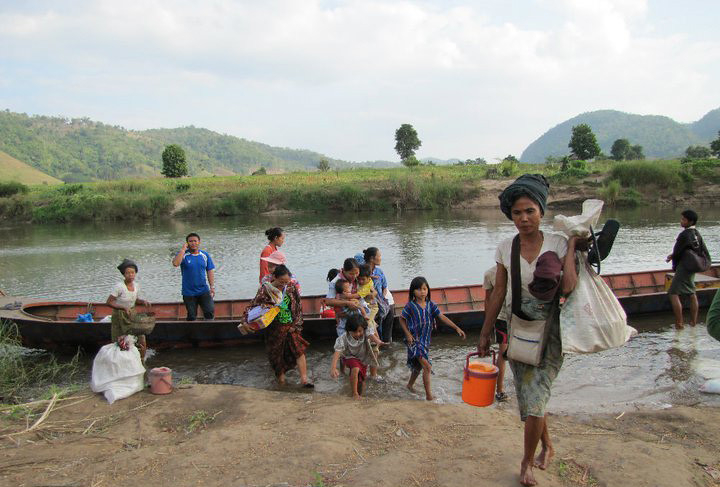
 Thailand has enacted a policy granting Myanmar refugees living in border camps access to employment. Reuters reports that this policy shift will grant 80,000 refugees the right to work; many of them have been living at these border camps for 40 years. According to UNHCR, around 47% of refugees were born in these shelters.
Background
A violent military regime drove the refugees out of Myanmar. Since then, they have been living in nine camps spread across the Thai border and have been completely dependent upon foreign aid. A diminishing foreign aid budget, particularly from the United States, has contributed to this decision.
According to Léon De Riedtmatten, executive director of the Border Consortium (TBC), the United States was one of the largest donors to the refugee camps. The TBC is one of the largest suppliers of food to the camps. The current administration has significantly reduced the overseas budget this year, which has, in turn, forced the TBC to provide aid only to the most vulnerable. According to De Riedmatten, Thai officials knew that no other government would be willing to support as much as the United States would.
As a result, Thai officials approved employment access for Myanmar refugees to reduce labor shortages and protect human rights. Cambodian workers leaving the labor force following an armed conflict at the border also influenced this policy change.
Economic Impacts
Tammi Sharpe, a UNHCR representative, has emphasized this development as a turning point. According to Sharpe, “With this policy shift, Thailand transforms hosting refugees into an engine of growth – for refugees, for host communities and for the nation as a whole.” She further confirms that providing employment access to Myanmar refugees benefits both Thailand and the refugees themselves.
Refugees will have the opportunity to provide for themselves and their families while also stimulating the Thai economy. Job growth is expected to increase as thousands of Myanmar refugees join the workforce and, in turn, the national GDP is also projected to rise. This marks a positive step toward poverty reduction.
As more refugees gain employment, dependence on aid is expected to decrease, while social mobility improves. Sharpe explained that the UNHCR has partnered with the World Bank to analyze economic data tracking how refugees are entering and participating in the formal job market. Humanitarian organizations also hope to expand employment access for refugees living outside the camps.
Conclusion
Granting Myanmar refugees access to employment marks a turning point in their relationship with Thailand. It will serve as a mutually beneficial process; Myanmar refugees will receive the means to support themselves and increase their standard of living, while the Thai economy will experience a boost in job growth and GNP. Poverty will diminish directly for the refugees and indirectly over time for people living in Thailand via systemic change. Overall, this policy change provides a hopeful trajectory for the country’s economic future.
– Sasha Banaei
Sasha is based in San Diego, CA, USA and focuses on Business and Good News for The Borgen Project.
Photo: Flickr