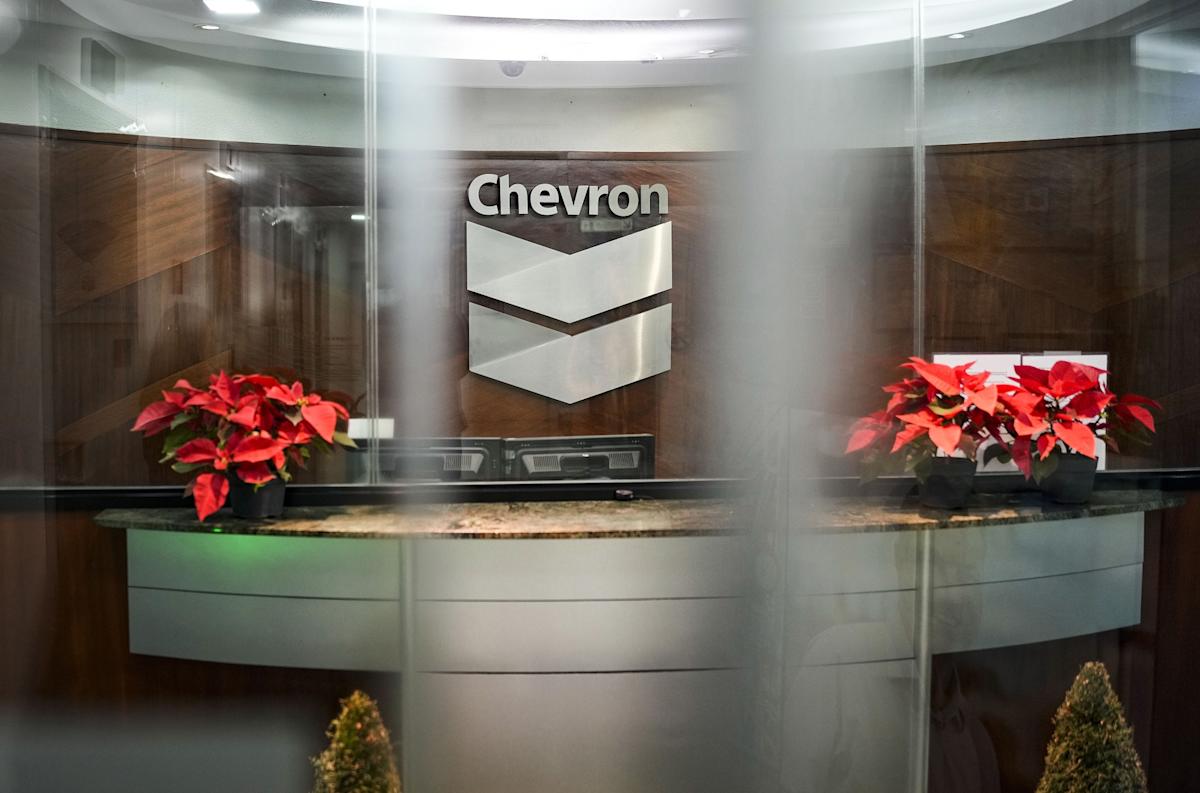
(Bloomberg) — For almost two decades, oil giant Chevron Corp.’s stubborn persistence in Venezuela looked like folly: with billion-dollar investments constantly under threat from the tug-of-war between Caracas and Washington DC.
Now, however, that strategy has placed the world’s biggest petroleum prize within Chevron’s reach.
Most Read from Bloomberg
As tensions mount between Venezuela and the US, Chevron remains the only global oil company with access to the country’s immense crude reserves — the largest known. Should US President Donald Trump, who has deployed a fleet of warships to the Venezuelan coast, attack and overthrow the government, no company would be better positioned to help rebuild the country’s battered oil industry. Should Trump and Venezuelan President Nicolás Maduro strike a deal, the country would need to export as much oil as possible to generate cash — again benefiting Chevron.
The Houston company’s unique position carries big risks — not least to its people — if hostilities break out. Chevron could still find itself shut out of the country by either Maduro or Trump, a fate that has befallen multiple foreign oil companies in Venezuela over the years.
But both Trump and Maduro have reason to see Chevron as a useful ally, and neither side has moved to halt the company’s operations during the current standoff. As of Thursday, Chevron was preparing to export 1 million barrels of Venezuelan crude, according to Bloomberg tanker tracking — a day after Trump labeled the country’s government a “foreign terrorist organization.” Chevron produces about 200,000 barrels a day from multiple joint ventures with Venezuela’s national oil company and exports its share of production to US refineries on the Gulf Coast.
“These are very tough waters to navigate,” said Francisco Monaldi, director of Latin American energy policy at Rice University in Houston. “But Chevron is a very attractive partner for Venezuela and the US government. It a very strong strategic position in almost any possible scenario.”
The situation for most of the Venezuelan oil industry is bleak.
Trump’s blockade in the southern Caribbean means state-owned Petróleos de Venezuela SA can no longer export crude through its shadow fleet of “ghost vessels” to China and may have to start shutting in wells within 10 days. A cyberattack hit Venezuela’s main export terminal in December, while air travel in and out of the country has largely halted after signal jamming and US warnings of heightened military activity.
