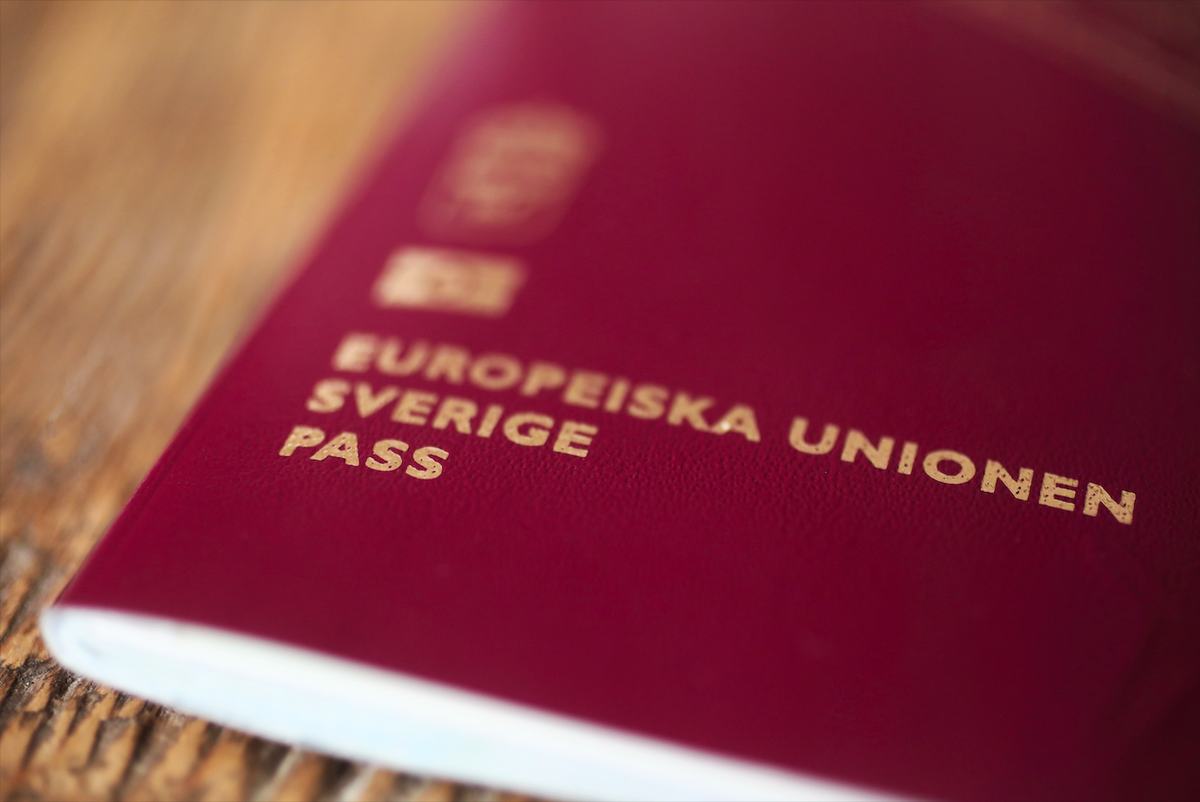
Several applicants directly affected by the policy reached out to media outlets. Photo credit: Jeppe Gustafsson
European Union officials have formally engaged with Swedish authorities after reports emerged that some passports, including those issued by EU member states, were being treated as insufficient proof of identity in citizenship applications. The move has sparked political scrutiny in both Sweden and the EU capital, with questions over whether current Swedish procedures align with EU law on the free movement and equal treatment of citizens.
The issue came to light when several applicants, including Irish citizens, reported difficulties with the Swedish Migration Agency’s handling of identity documentation. Applicants were informed that their passports, particularly those issued digitally without an in-person process, did not meet the agency’s requirements for establishing identity in citizenship procedures. This prompted broader concern within the European Commission, which has since sought clarification from Swedish counterparts.
Complaints from Applicants Prompt Reaction
Irish citizens among those affected
Several applicants directly affected by the policy reached out to media outlets, claiming that they were told their valid EU passports were unacceptable as sole proof of identity during the Swedish citizenship application process. In some cases, the challenge stemmed from how the passports were issued; digital issuance without an in-person visit to a passport office was cited by applicants as the reason their documents were questioned. These reports also included individuals from Ireland, a fellow EU member state, who found themselves caught up in the process.
Most Read on Euro Weekly News
In response to these concerns, the European Commission confirmed that it was aware of the situation and in communication with Swedish authorities to understand the matter better. Commission officials emphasised that the issue was being examined in the context of EU law, which guarantees equal treatment and rights for all EU citizens across member states.
Swedish Migration Agency Adjusts Practices
Shifts in what documentation is accepted
The Swedish Migration Agency, responsible for processing citizenship applications, has acknowledged the difficulties and indicated that it has begun to adjust its stance on certain passports. Notably, the agency now accepts passports from some countries, including the United Kingdom and Australia, that were issued digitally. However, it has not published a comprehensive list of all passports it considers acceptable, leaving some applicants uncertain about their status.
The agency has also stated that it is undertaking a broad review of passport issuance processes worldwide. The goal is to determine which passport formats and issuance methods provide sufficient security and reliability to serve as definitive identity proofs. As part of this review, the Migration Agency is assessing biometric details, issuance methods and the security features of passports from various countries.
Officials have indicated that the review is expected to be completed by the end of the year, after which clearer and more detailed guidance is likely to be published for applicants and case officers alike. This effort comes amid heightened scrutiny of identity verification across immigration and citizenship systems internationally.
Security Measures and Sweden’s Policy Context
Tighter checks on citizenship applications
Sweden has recently undertaken a series of measures aimed at strengthening the security of its citizenship application processes. Earlier this year, the Swedish Migration Agency implemented more stringent checks after being tasked by the government to enhance the security perspective of its naturalisation procedures. The changes included requirements for applicants to appear in person at agency offices when feasible, particularly to verify identity, and stricter scrutiny of non-biometric documentation.
These measures were introduced in response to concerns over potential security risks and the need to ensure that identities are accurately established before granting citizenship. The agency’s leadership explained that in-person verification and thorough document checks make it harder for individuals with false identities to obtain citizenship. Beyond passport scrutiny, applicants are now required to provide additional information on their background, travel history, and other personal details to support their applications.
Key Points
The European Commission has engaged Sweden over reports that some passports, including EU-issued ones, were being treated as insufficient proof of identity in citizenship applications.
Applicants, including Irish citizens, reported that digitally issued passports were sometimes rejected, creating delays and confusion.
The Swedish Migration Agency is reviewing its policies and adjusting which passports are accepted, while also conducting a broader review of global passport formats and issuance methods.
Stricter identity verification measures have been introduced in Sweden to enhance security in citizenship applications, including in-person checks and additional documentation requirements.
The EU is examining whether Sweden’s procedures align with EU law guaranteeing equal treatment and rights for all EU citizens.
Until the review is complete, applicants may continue to face uncertainty over which documents are accepted for naturalisation.
Broader Implications and EU Rights
Citizenship rights and EU law under the spotlight
The European Commission’s involvement reflects broader questions about how EU law intersects with national citizenship procedures. EU citizens have the right to move, reside and be treated equally across member states, and a passport issued by any EU country should generally be recognised as valid proof of nationality and identity when exercising these rights. Critics argue that Sweden’s stricter interpretation could set an unwelcome precedent if left unaddressed.
Sweden’s actions have prompted legal and political debate, particularly regarding whether national security measures should take precedence over fundamental rights enshrined in EU treaties. The European Commission is now tasked with assessing whether the Swedish approach aligns with these legal frameworks.