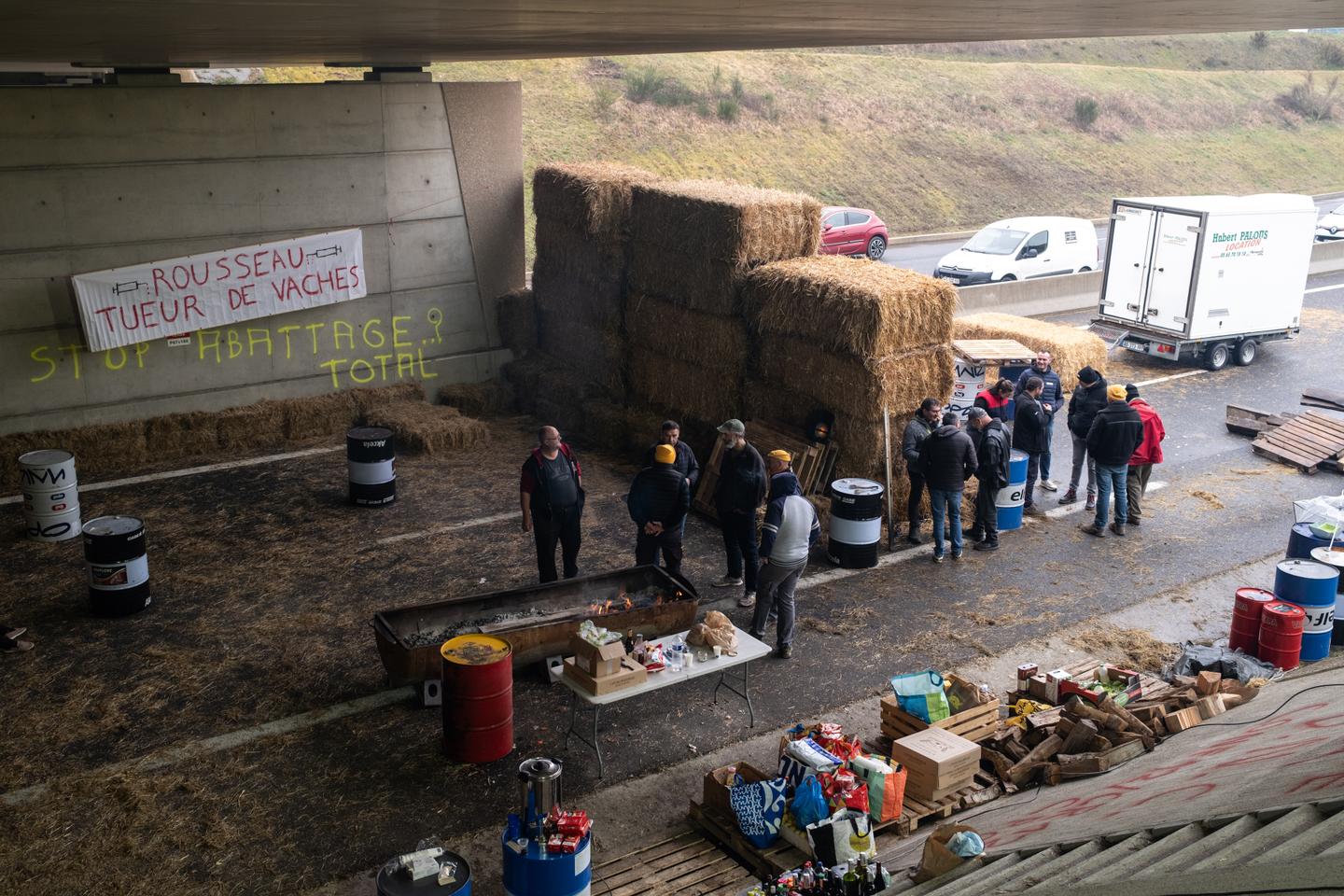
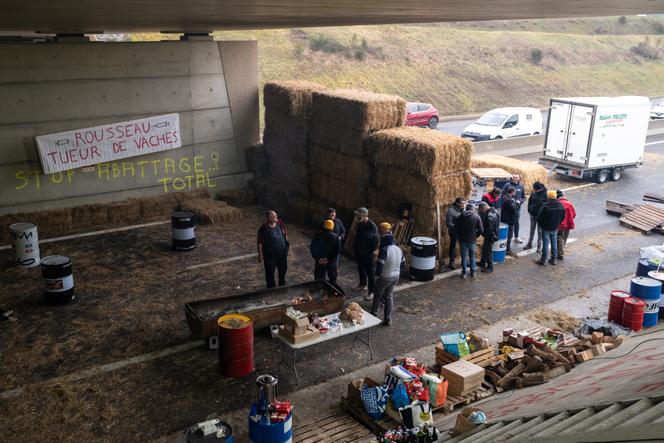
 Farmers block the RN88 motorway, near the Marengo interchange, in Baraqueville, southern France, on December 17, 2025. ULRICH LEBEUF FOR LE MONDE
In Brussels, on Thursday, December 18, the numerous farmers protesting sent a unanimous message. “No to the EU-Mercosur deal,” they chanted in unison. The call was echoed by an alliance of the FNSEA and Jeunes Agriculteurs farmers’ unions, which had organized nearly 4,000 French farmers to travel to the Belgian capital. They joined 6,000 of their counterparts from other European countries, who had come to defend similar positions. All their protests took place at the very moment when the leaders of the 27 European Union member states were meeting in Brussels to discuss this contentious agricultural issue, among other subjects. Later, in the evening, European Commission President Ursula von der Leyen announced that signing the free trade agreement would be postponed by roughly one month, until January.
Over the past week, protests have spread and intensified across France, mainly at the call of the Coordination Rurale and Confédération Paysanne farmers’ unions. Their anger initially focused on the government’s handling of an outbreak of contagious nodular dermatosis (CND), also known as lumpy skin disease, which has affected French cattle herds since June while farmers refused to cull all contaminated herds. But it also concerned their opposition to the EU-Mercosur agreement.
You have 79.75% of this article left to read. The rest is for subscribers only.