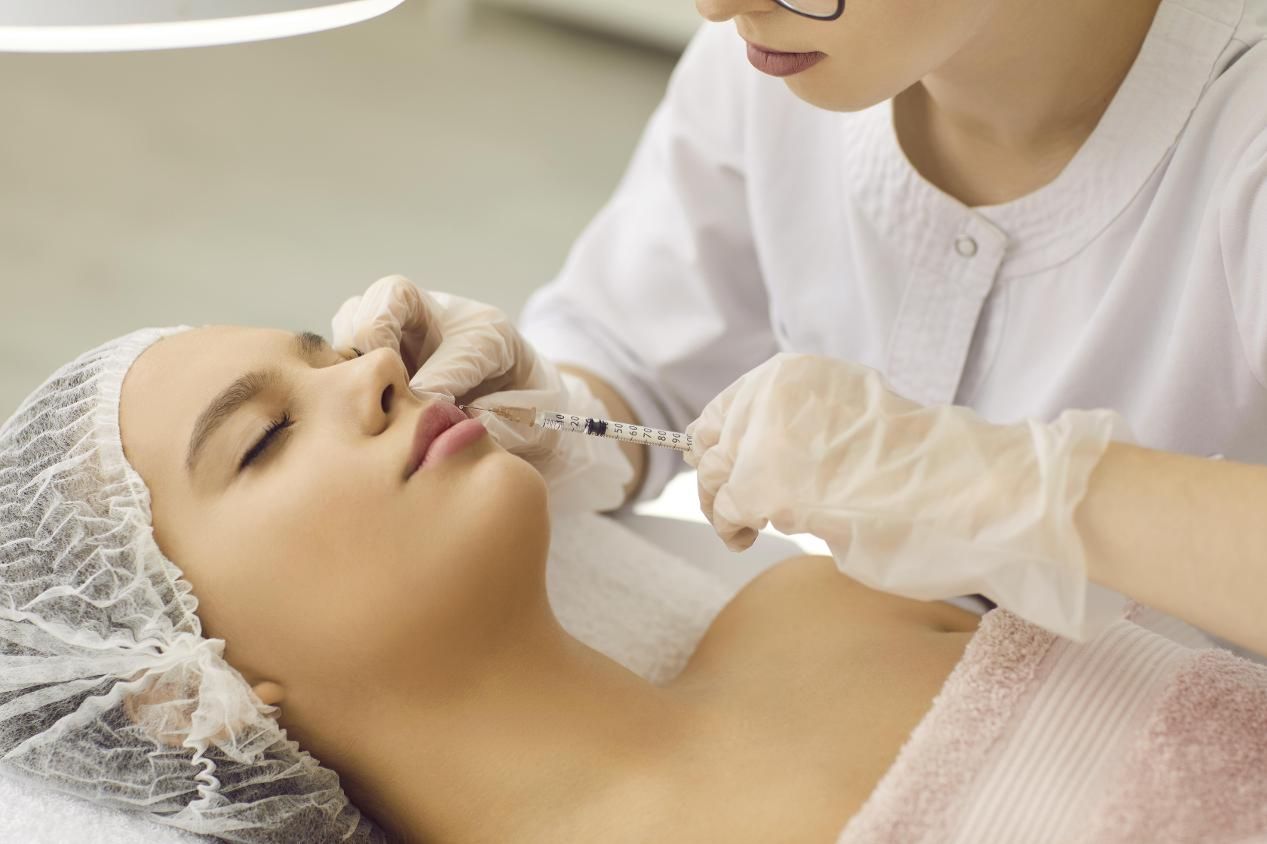
For Natsagdorj Namuun, a 30-year-old freelance model from Mongolia, the imagined Korea of her youth was a neon-hued daydream of K-pop, defined by the synchronized glitz of the Wonder Girls and Girls’ Generation.
But for Natsagdorj and her peers today, the country is no longer just a distant stage for pop idols, but a place they associate with personal reinvention.
“I had rhinoplasty and breast surgery in Seoul in 2022,” Natsagdorj told The Korea Times. “I can’t give an exact figure, but I spent at least several million won on the procedures. Five or six of my friends also came to Korea for cosmetic surgery.”
About 1.17 million foreign patients visited Korea last year, the highest total since Seoul began promoting medical tourism in 2009, underscoring the industry’s growing economic significance.
The impact extends beyond hospitals. A recent study found that foreign patients are also emerging as significant consumers, with about 920,000 visitors spending a combined 3.66 trillion won ($2.47 billion) in Korea last year.
The Korea Health Industry Development Institute released a report last week analyzing international patients’ spending patterns using 2024 credit card data, covering both medical services and nonmedical consumption across Korea.
Medical services accounted for 1.4 trillion won, or 38.3 percent, of foreign patients’ total credit card spending in Korea, suggesting that medical visits are increasingly translating into broader domestic spending beyond individual treatments.
That pattern was evident on a per capita basis, with foreign patients spending nearly 4 million won per person across all sectors, including 1.53 million won on medical care.
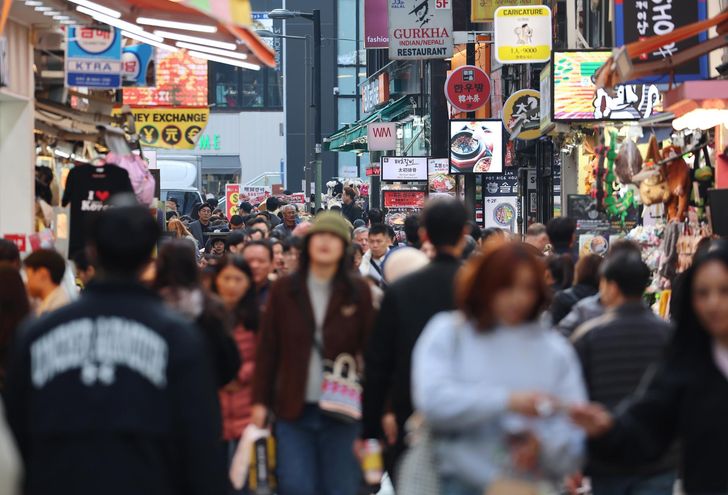
Crowds of visitors are seen in central Seoul’s Myeong-dong, Nov. 4. Yonhap
Dermatology accounted for the largest share at 585.5 billion won, followed by plastic surgery at 359.4 billion won. Together, the two totaled 944.9 billion won, or 25.8 percent of all medical spending by foreign visitors.
That figure exceeded the 799.5 billion won foreign patients spent at department stores, restaurants, duty-free shops and luxury hotels, highlighting the central role of medical services in their spending.
Japan accounted for the largest number of foreign patients with 282,000 visitors, followed by the United States, Taiwan, China and Singapore.
The United States led overall spending at just over 1 trillion won, followed by Japan, Taiwan, China and Singapore. The same ranking held for medical spending, with the United States accounting for about 307 billion won.
Medical spending made up the largest share of total spending among patients from Kazakhstan at 60 percent, followed by Indonesia at 56.3 percent, Japan at 49 percent, Taiwan at 46.5 percent and Thailand at 45.1 percent.
Seoul accounted for the largest share of medical spending at about 1.2 trillion won, or 87.6 percent, followed by Gyeonggi Province with 79.4 billion won and Busan with 32.4 billion won.
The report identified dermatology as a low-barrier entry point for first-time foreign patients, helping generate longer-term demand for other medical services.
It added that patients from countries such as Kazakhstan, Mongolia and the United States show strong potential for spending centered on hospitals and internal medicine, underscoring the need for broader screening packages, advanced treatments and integrated post-treatment care.
Experts say coordinated efforts are needed to turn the phenomenon into a lasting trend rather than a short-lived boom.
“Today’s popularity could vanish like a mirage,” said Choi Soon-woo, chief surgeon at View Plastic Surgery Clinic. “For it to last, the medical community and government authorities must work together with genuine commitment.” He added that patient satisfaction will be key to sustaining the momentum.