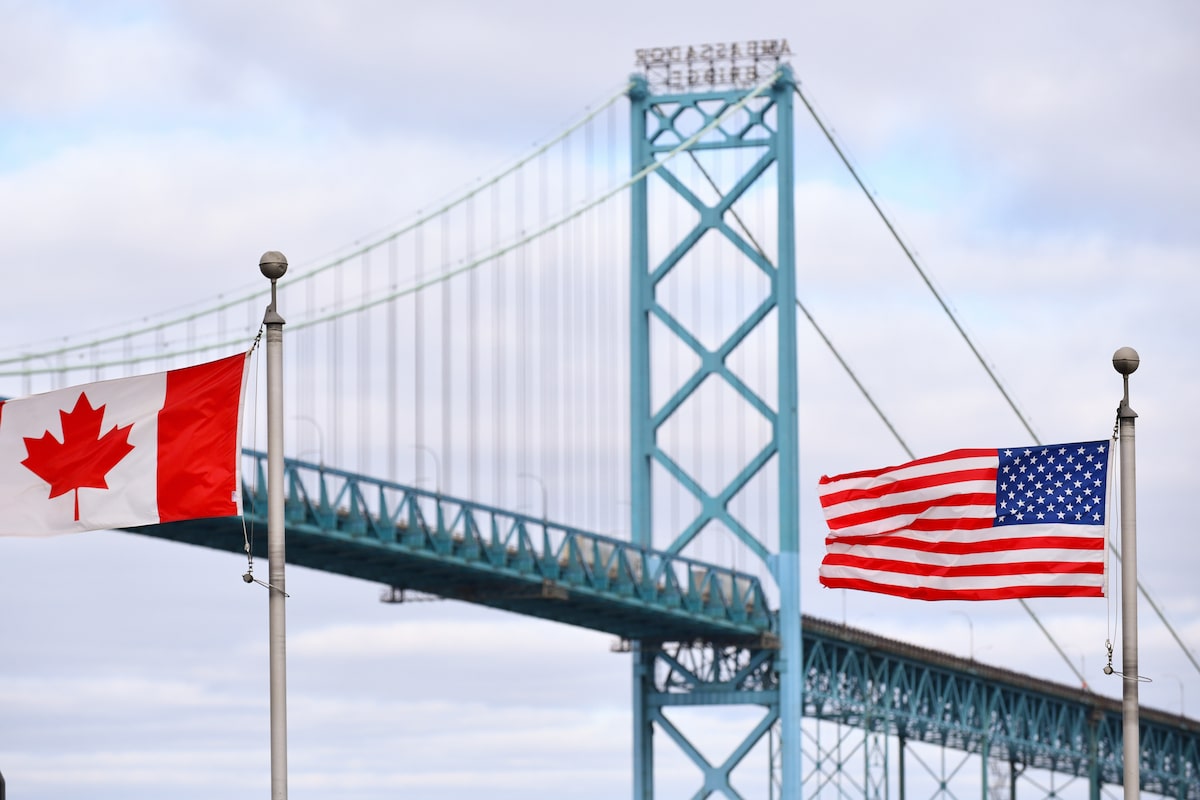
Donald Trump’s trade war. Tariffs. The “Buy Canadian” movement. Tariffs. An economic downturn. Tariffs. It is safe to say that trade tensions with the United States have shaped a lot of the biggest headlines of the year, especially as Canadians navigated the wobbly economic terrain.
So, in the final weekly digest of 2025, we’re taking a look back at The Globe and Mail’s most-read business and investing stories of the entire year. Get caught up on the biggest stories that resonated with readers on a variety of topics, from Bay Street to banking to how Canadian companies have fought against tariffs and more.
Why banks are closing accounts without explanationOpen this photo in gallery:
An unidentified Toronto-based entrepreneur from Nigeria says losing access to his bank accounts stunted his business.Adetona Omokanye/The Globe and Mail
Your bank can cut you off and never tell you exactly why. A letter in the mail succinctly announces that all of your financial accounts will be shuttered and, usually, you have up to three months to make alternate arrangements. The process is called debanking or derisking.
Earlier this year, Erica Alini, Alexandra Posadzki and Stefanie Marotta reported on an increasing number of customers who were seeing their bank accounts closed without warning. Often, a bank detects and flags unusual transactions that indicate a customer may be linked to money laundering, terrorist financing, fraud or other crimes. In some cases, the institution will call in the client for a conversation and an opportunity to explain the financial activity. But often it will simply shut down the account without saying why. The consequences can be dire for customers, who are left to rely on high-interest loans while scrambling to transfer mortgages or lines of credit.
Canada’s response to Trump’s trade warOpen this photo in gallery:
Since Mr. Trump’s trade war began, Erick Vachon, President of Ideal Can, has tripled the number of shifts at his manufacturing plant to meet the rising demand for his Canadian-made goods.Renaud Philippe/The Globe and Mail
Tariff chaos made many companies consider moving to the U.S. this year as per the rhetoric behind Trump’s trade war. But a growing number of companies – both big and small – decided to go all in on Canada instead. Pippa Norman and Irene Galea spoke to a handful of businesses that relied on increasing domestic sales rather than the U.S. market. Manufacturers have felt the pinch of Trump’s tariffs – everything from supply chain issues to higher prices – but also outline the harsh reality of manufacturing at home.
The American tariffs on Canadian goods also inspired consumers to rethink how they shop. The trade war was fought in coffee shops, airports and even the Costco frozen food section. As shoppers looked for ways to keep more of their money at home, The Globe and Mail created the Big Guide to Canadian Shopping that recommends an ever-evolving directory of domestic brands to replace big American imports – from cookware to cosmetics. Plus, here are 29 ways Canada has changed during this remarkable year.
How Canada got immigration right for so long – and then got it very, very wrongOpen this photo in gallery:
Refugees who made an irregular crossing at the Canada-U.S. border wait in a temporary detention centre in Blackpool, Que., in August, 2017.GEOFF ROBINS/AFP/Getty Images
Canada’s relationship with immigration has significantly changed throughout the years, as Globe columnist and author Tony Keller detailed in an excerpt from his new book, exploring how well the Canadian immigration system used to work and how Justin Trudeau’s government – with help from business, higher education, the provinces and a marriage of progressives and Bay Street – broke it.
From the 1990s to the mid-2010s, there was a high degree of public confidence in the country’s immigration system – which was not often the case around the world. While immigration sparked growing political conflict and polarization in Europe and the United States, polls showed that Canadians had the world’s most positive and welcoming attitude toward immigrants. But then things went very, very wrong. Between 2022 and 2024, Canada had an unprecedented immigration surge, taking in 3.1 million new people.
Read the full excerpt, which takes a deeper look into Canada’s immigration measures, what they have meant for the people who have immigrated and where we go from here.
Is the king of Bay Street’s empire crumbling?Open this photo in gallery:
Wes Hall at his Toronto home in June, 2020.Fred Lum/the Globe and Mail
For years, Wes Hall led proxy solicitors into battles over businesses. He founded Kingsdale in 2008, a shareholder advisory firm that has been the dominant player in an important but niche industry on Bay Street. The firm is hired by publicly listed companies (or activist investors) to win over shareholders. Kingsdale has been so successful that Mr. Hall is often credited with elevating the entire industry, earning proxy solicitors a seat at the deal table alongside investment bankers and lawyers.
But recently, Kingsdale’s reign has been battered by one blow after another: an exodus of executives, a lawsuit alleging a toxic work environment, a public loss in one of the most high-profile activist fights in recent history and growing signs that competitors are stealing the firm’s market share – all leading to Mr. Hall fending off attacks from inside and outside the boardroom. Reporter Robyn Doolittle reported on the reigning King of Bay Street and his crumbling empire.
They worked hard to retire early. Now, they’re dealing with regretsOpen this photo in gallery:
Jeremy Finney, 46, made enough money to retire at the age of 41. He now regrets it but thinks he doesn’t have the skills to re-enter the workforce.Darren Calabrese/The Globe and Mail
A small but growing group of Canadians retiring in their 30s and 40s were inspired by the FIRE (financial independence, retire early) movement and the the idea of quitting work decades before 65. But some early retirees are coming to terms with something they didn’t expect: regret. A 2019 CIBC poll of about 3,000 Canadian adults found that more than a quarter of retired Canadians regret retiring, and 23 per cent have tried to re-enter the labour market. Nearly 60 per cent of retirees chose to return to work for the intellectual stimulation.
For younger retirees – many of whom sacrificed fun, relationships and hobbies to retire early – the regret can run even deeper, experts say. Meera Raman spoke to a set of early retirees experiencing this who say they’ve sacrificed too much, cutting back on activities like travel and dining out, in pursuit of extreme saving and financial freedom.
Test your knowledge on the latest headlines with our weekly business and investing news quiz and prepare for the week ahead with The Globe’s investing calendar.