It was the scariest moment of his life. In September 2016 Gerry Pendon was a mere five metres away from a bomb explosion at the Roxas night market in Davao City. The Islamic State attack killed 15, including his brother-in-law. A five-month battle between the military and the jihadist group in Marawi City followed.
Nine years later, the shadow of IS again looms over one of the Philippines’ major cities, amid international scrutiny over the four-week stay in the city of the alleged Bondi beach shooters, Sajid Akram and his son Naveed.
Pendon, who works as a massage therapist at the night market, heard about Bondi on the news, but like other residents interviewed by the Guardian, felt largely detached.
Even the 2016 bombing is a bad memory he is trying to move on from. “It won’t happen again in Davao,” Pendon says.
Police have said they are ‘not taking lightly’ the presence of Sajid and Naveed Akram in Davao as they piece together the pair’s activities during their four-week stay. Photograph: Manman/The Guardian
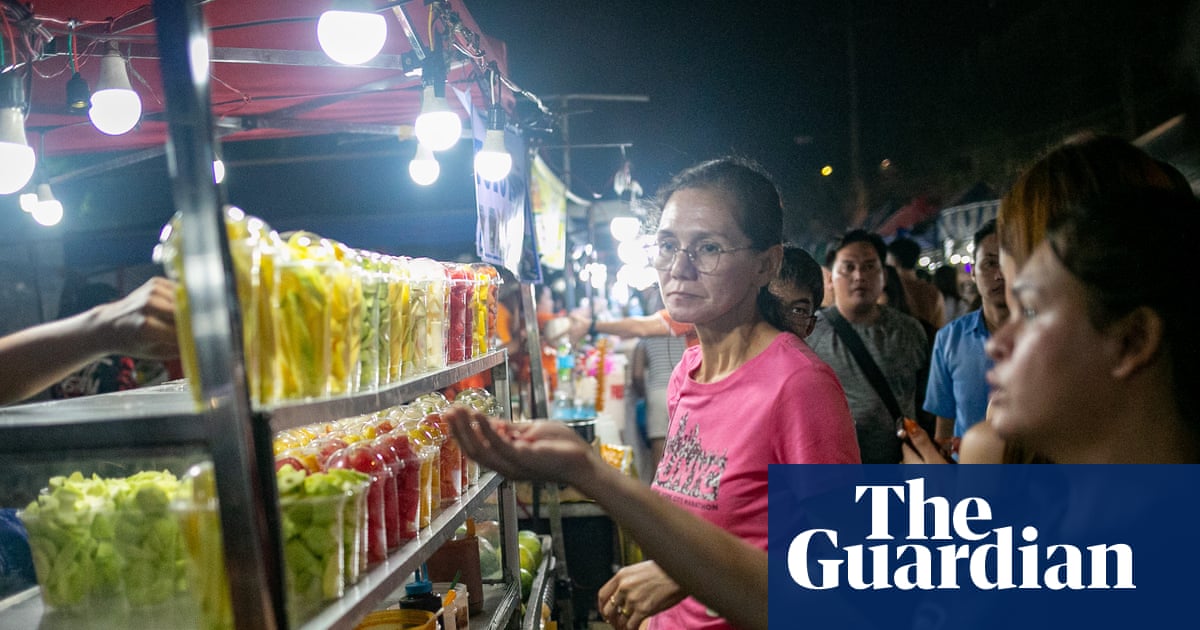
A remembrance marker for the 2016 deaths stands in a corner of the night market, looking out of place amid the celebratory atmosphere as hundreds flocked there for food, massages and trinkets.
Sign up: AU Breaking News email
Investigations into the Philippines activities of the father and son comes as the predominantly Catholic country is preparing for Christmas. Davao’s city hall has been adorned with a towering Christmas tree, malls are packed, and children knock on doors to sing carols.
“I was surprised to see [the Akrams] in the news. But they were here for tourism, not terrorism,” says Emelyn Lorenzo, also a massage therapist at the market. Authorities have made clear the investigation into their activities is ongoing and the exact reason for their visit is still unknown.
Lorenzo is also confident that no one could carry out another terror attack in the city long ruled by the family of former president Rodrigo Duterte, whose reputation – both famous and infamous – was built on aggressively securitising Davao through hardline anti-crime and anti-drug campaigns. At one entrance of the night market, at least four personnel stand inspecting bags.
Residents of Davao City are confident the hardline anti-crime policies of former president and mayor Rodrigo Duterte have made another IS terror attack unlikely in the city. Photograph: Manman/The Guardian
The Philippine government has pushed back against claims that it was a terrorist training ground for the accused Bondi shooters. The country has a long history of unrest and marginalisation that has seen some Muslim separatist groups forge ties with international jihadist groups. But while IS-linked groups remain present, security officials say they are small and weakened.
What is clear, said Eduardo Año, the Philippines’ national security adviser, is the two never left the city nor received military-style training in the country, as was earlier claimed.
Karlos Manlupig, executive director of peace-building NGO Balay Mindanao said: “It is just unfortunate that legitimate grievances are hijacked by extremism. Sadly, the narrative of brutal violence was unfairly glued to Mindanao’s identity.”
Manlupig lauded community efforts in improving the security situation in Davao City but he said “this doesn’t mean that extremism magically vanished”. He said the country must address socioeconomic factors and political factors that drive the motivations behind the violence while “continue pushing for tolerance and avoid prejudice and division”.
Philippine police SWAT members on standy as investigators inspect the budget hotel where Bondi terror suspects Sajid Akram and Naveed Akram stayed in the weeks before the shooting. Photograph: Manman/The Guardian
Police have said they are “not taking lightly” the pair’s presence in the country as they piece together the activities of the father and son during their four-week stay in Davao City.
Investigators say there are numerous places the two could have visited or met contacts in the area. Dozens of establishments sit between the GV Hotel and a nearby Jollibee fast food restaurant, where they were known to buy their meals.
Police are reviewing CCTV footage and tracing taxi trips to reconstruct their movements, and that all possibilities are being entertained.
In Marawi, the site of fierce battles with IS-linked militants in 2017, residents are concerned that renewed terrorist labels could lead to heightened securitisation and deepen bias against Muslims.
Tirmizy Abdullah, a faculty member at the Mindanao State University in Marawi City, said the Philippine intelligence community must establish what happened.
“[The Akrams’] stay should be properly investigated and the intel should provide clear and truthful answers without turning uncertainty into blame against Mindanao or its people,” Andullah said.