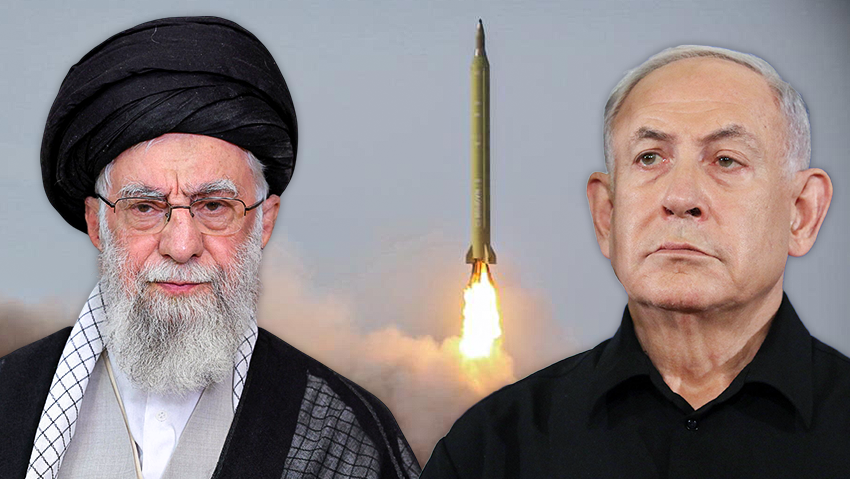
As in those earlier days, Israeli officials are again weighing the possibility of striking Iran. NBC reported on Sunday that Prime Minister Benjamin Netanyahu is expected to present US President Donald Trump with military strike options, with or without US participation, during their meeting in Florida later this month.


In Tehran, senior figures in the ayatollah regime say they are ready for another round of confrontation with Israel. ‘Our powerful missile production lines have not stopped for a moment,’ Iranian army spokesman Abolfazl Shekarchi said last week. At the same time, Iran is holding intensive military drills and exercises in preparation for a future clash, warning that ‘if the enemy tests our nation again, it will receive a stronger slap’.
Displays of force have also returned. This month, the Revolutionary Guards’ navy held drills that included the launch of cruise missiles, ballistic missiles and drones at mock targets in the Gulf of Oman, which Iran said were destroyed with ‘high precision’.
4 View gallery
(Photo: Dana Kopel, WANA (West Asia News Agency) via Reuters, Sepahnews/ Anadolu Agency via Getty Images)
Videos circulated on social media claimed that cruise missiles from the Qader 110, Qader 380 and Qader 360 models were fired, along with a ballistic missile identified as model 302. ‘We achieved all the objectives of the exercise,’ said Iranian navy commander Alireza Tangsiri. ‘For the first time, we tested a missile that reaches beyond the Gulf. We tested precise ballistic missiles against targets under water, above water and in the air.’
Iranian parliament speaker Mohammad Bagher Ghalibaf said after what he called the successful drill that ‘the test launch of precise missiles reaching beyond the Persian Gulf was gratifying, and they struck their targets accurately’. He warned neighboring countries not to test Iran’s resolve to defend its territorial integrity and its islands in the Persian Gulf, while adding that Tehran seeks stability and good neighborly relations.
Iran has also hosted the ‘Sahand 2025’ exercise in East Azerbaijan province with member states of the Shanghai Cooperation Organization. About a month ago, Iran conducted a telephone alert drill in several regions, similar to the warning messages Israelis receive during missile fire. Residents received test messages stating, ‘This is a trial message for the emergency alert system’, aimed at assessing technical readiness.
Alongside the drills, Iranian officials have resumed a steady stream of threats. Vice President Mohammad Reza Aref said two weeks ago that ‘if the enemy tests our nation again, it will receive a stronger slap’. Shortly before that, Revolutionary Guards commander Mohammad Pakpour warned that ‘if the Zionist enemy takes any action against Iran, the response will be harsher and more crushing than before’.
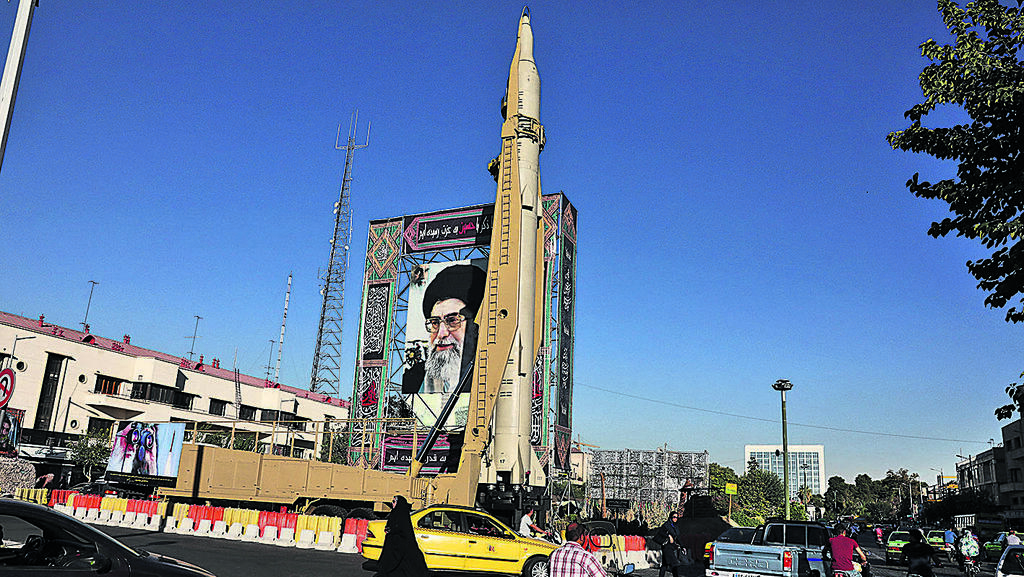
Last month, Mohammad Reza Naqdi, an adviser to the Guards’ commander, said the Basij forces demand that any new war not end before Israel is ‘completely destroyed’. He claimed Israel is ‘at its weakest point today’ and said Iran is preparing for a final confrontation.
In September, Ghalibaf again warned that if an operation known in Iran as ‘True Promise 4’ were carried out, Tehran would respond with greater force and precision. Foreign Minister Abbas Araghchi stressed that Iran’s missile program is nonnegotiable, saying no rational person could accept disarmament.
Last Thursday, Iranian President Masoud Pezeshkian acknowledged that Israel had an advantage in missile capabilities during the war. ‘It is true that we had missiles, but theirs were more numerous, more powerful, more precise and easier to use,’ he said. Still, he insisted Iran is committed to maintaining and expanding its missile program. ‘They tell us not to have missiles while they arm Israel from head to toe so it can come here whenever it wants, flatten everything and leave. I will not accept that,’ he said.
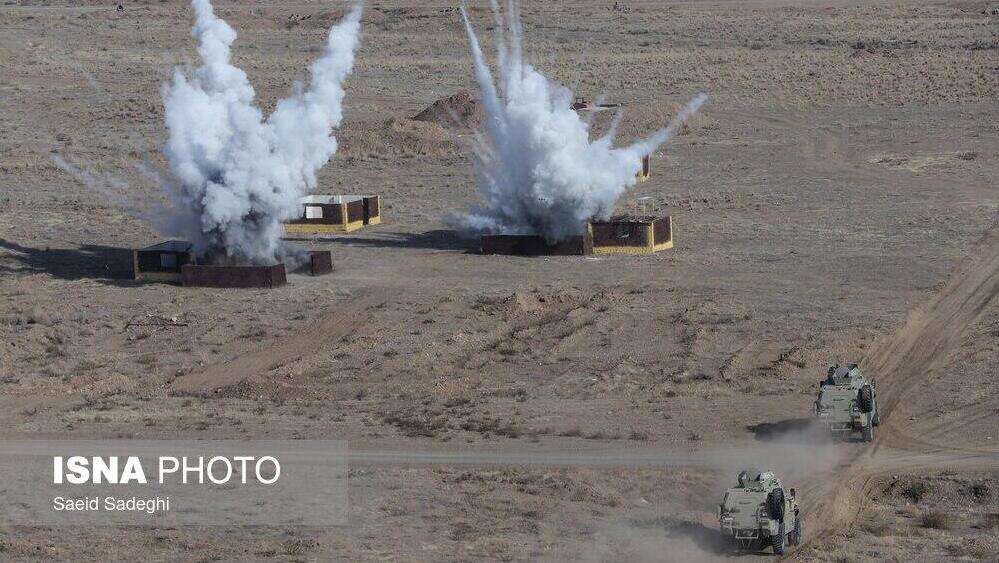
Iranian missile drill back in September
Ebrahim Azizi, head of Iran’s parliamentary national security committee, criticized Pezeshkian’s remarks as unprofessional. ‘If Israel’s missiles were more effective, why did they insist on a ceasefire?’ he asked.
Reports of Iran rebuilding its missile capabilities are not limited to Iranian statements. CNN reported that in recent months, 10 to 12 shipments carrying about 2,000 tons of sodium perchlorate, a key component in missile fuel, were sent from Chinese ports to Bandar Abbas. The Wall Street Journal reported that US forces intercepted a ship carrying military equipment from China to Iran in the Indian Ocean last month, seizing and later destroying the cargo as part of efforts to disrupt Iran’s rearmament.
A senior US official told Saudi channel Al Arabiya last month that Washington is closely monitoring Iran’s nuclear program, adding that Tehran is rebuilding its missile capabilities and continuing to smuggle missiles to regional militias. In September, the Associated Press reported, based on satellite imagery analysis, that Iran has begun rebuilding missile production sites damaged in Israeli strikes, though it still lacks critical planetary mixers needed for solid fuel production.
Meanwhile, Araghchi told Russia Today that Iran does not rule out another Israeli attack but is fully prepared. ‘The best way to prevent war is to prepare for it,’ he said, adding that Iran has rebuilt everything damaged in the previous conflict. ‘If Israel wants to repeat the same failed experience, it will not achieve a better result.’
A former senior Revolutionary Guard Corps commander said Iran’s intelligence structure is not adequately prepared for the scope and nature of the Israeli threat and needs a fundamental reorganization. Iranian media reported that several officials known to be Israeli targets lived in the same building, allowing them to be killed in a single strike.
Hossein Alaei, a former commander of the Guards’ navy, said Iran’s intelligence agencies failed to anticipate Israeli actions, including plans to target commanders and scientists. ‘If our intelligence services had been properly focused on Israel’s activities, they should have known about plans to assassinate commanders and scientists, including through the use of aircraft,’ he said. He added that the 12 day war exposed structural weaknesses in Iran’s intelligence system, which was not organized in proportion to Israel’s intelligence and security efforts against Iran.