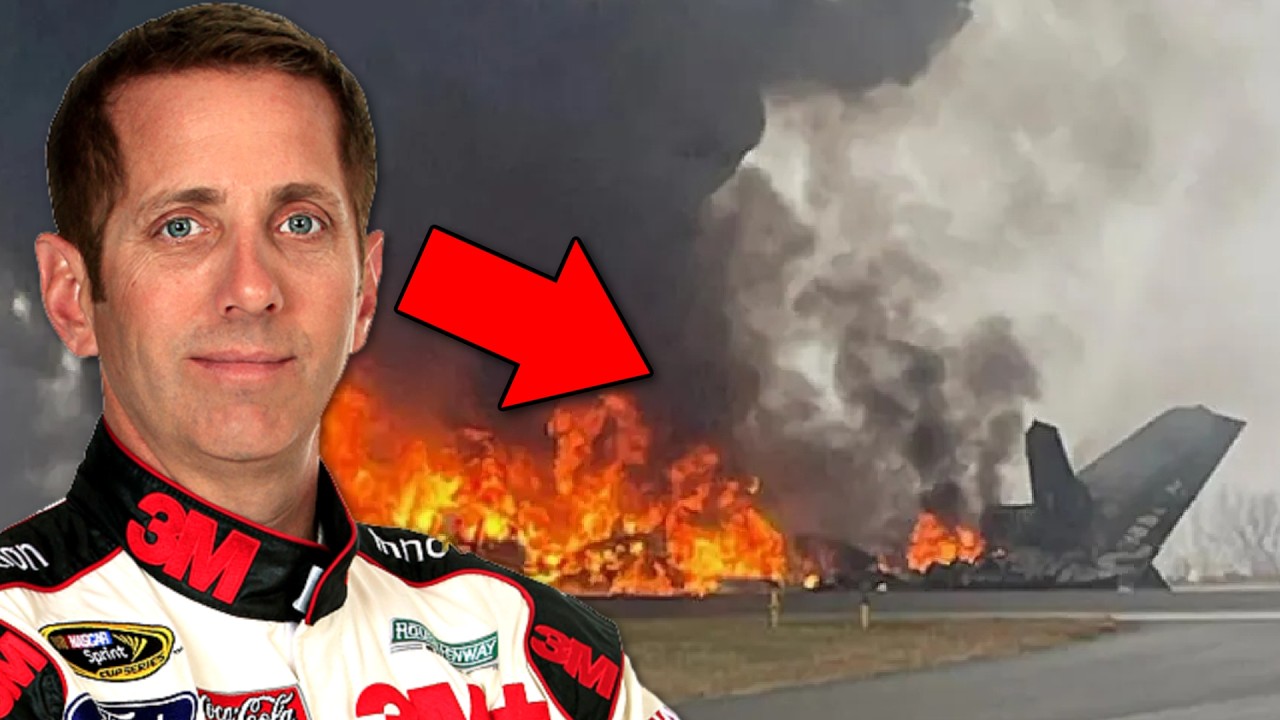
NASCAR Legend Greg Biffle’s Heartbreaking Plane Crash!
Seven people, including former NASCAR driver Greg Biffle, his wife, and his two children, were tragically killed when the aircraft they were flying in, crashed at the Statesville Regional Airport in North Carolina earlier today. Now, normally I don’t make videos about breaking news plane crashes because there’s so much that we don’t know and it’s too easy to speculate, but this one hits really close to home. And that’s why I felt it was important to make this quick update just to walk you through the facts and talk about what we know so far. I’m Hoover and welcome to your pilot debrief. I want to start with a quick overview from the Aviation Safety Network. The aircraft involved was a Cessna 550 Citation 2 business jet. This is what that aircraft looked like just for reference. And as of this time, the Aviation Safety Network is saying there were six fatalities, but the news is currently reporting seven fatalities. According to the preliminary information, the jet was trying to return to runway 28 following an issue on departure. It’s not known what that issue was, but we will take a look at the flight data here in a second. The aircraft collided with the terrain short of the runway, crossed a road and the airport perimeter fence before finally coming to rest on the runway and a postc crash fire ensued. The aircraft speed was fluctuating. Before we take a look at the flight data, one of the first things that we need to do is talk about the weather at the Statesville Regional Airport earlier today. This is showing you the weather history for today and it was VFR early in the morning improving to about 5,000 foot ceilings with 10 miles visibility. That was around 9:35 to 9:55 local time. Now, initial reports were saying that the crash happened at 10:32 local time, but according to the flight data, it looks like the crash possibly occurred at 10:15 local time. However, the important takeaway from this weather is showing you how at 9:55 we had VFR conditions. Then at 10:15 it was marginal VFR with 5 miles visibility and 1200t ceilings. And then at 10:35 it was 1 and 3/4 mile visibility with 1,000 foot ceilings. You also had some rain in here with scattered clouds at 400 ft. So over the course of about 30 minutes, you had some rapidly deteriorating weather conditions, which would have been taking place right around the time they were taking off and leading up to the crash. The reason why this is important is because we need to understand what type of flight plan they were on when they took off. Now, it’s possible they took off on a VFR flight plan based on the weather conditions, but because they were rapidly deteriorating, my guess is that they at least looked at the forecast and they saw that and hopefully they were filed on an IFR flight plan, which means after they got airborne, they would have been talking to air traffic control. Now, this does bring up a minor point. When we look at the actual airfield itself, the Statesville Regional Airport, it is a nontowwered airfield. So, they could have gotten that IFR clearance while they were on the ground prior to taking off, but we just don’t know that for sure. There’s a lot we still don’t know about this investigation. I haven’t heard any air traffic control audio yet. So, again, I don’t want to speculate about what took place when they actually took off. What I do want to talk about is the flight data because that’s a hard set of facts that we can reference without necessarily speculating as to the cause of this terrible tragedy. This is the information that I imported into flytow from ADSB exchange which gives you the ADSB data from the aircraft itself. We can see they departed from runway 10 at 1507 Zulu which would be 10:07 local time and they immediately make this left-hand turn on departure. And right off the bat things seem to be going pretty standard. A normal departure with a left-hand turnout here. Now, what’s interesting to me though is they get up here to 2200 feet MSL, which is about 1,200 feet, 1,267 ft above the ground. Then immediately after that, they start a descent. And if we let this go all the way through, you can see they get all the way down here as low as 600 ft above the ground. So, for some reason on this departure here when they’re making this left-hand turn, they’re up at again 1,250 ft above the ground and then they make a descent to just 600 ft above the ground. Now, we don’t know why that happened. We don’t know if they have a problem with the aircraft and they’re troubleshooting. We don’t know if it’s an emergency situation or possibly they took off VFR and they descended to stay out of the weather until they were able to pick up an IFR flight plan. So, we just don’t know and I don’t want to speculate as to the reason for that. Now, the next thing that’s important to look at is right around this point they started to begin their climb again. And I’m just going to let this play in real time so we can see this is the vertical speed showing you the rate of climb. So, they’re at about 1,000 ft per minute right now until they get to about this point right here. And then all of a sudden, they start descending again. So now you’re seeing this fluctuation going as low asgative 832 feet per minute. So there’s potentially some aircraft control issue here or something going on where they’re starting to climb, but then they’re descending again and they go from 8881 ft per minute at at the bottom there up to a climb rate of 4,500 feet per minute and then all all the way as high as 6,600 feet per minute. At this point, if we look at the heads up view from the actual cockpit itself, you can see that they’re 2,800 feet above the ground. It appears to be a very aggressive climb here at 6,600 ft per minute. They’re doing 157 knots, but keep in mind that this is ground speed. It’s not the actual indicated air speed. Right here is the highest point they’re going to reach during the flight, which is 4,500 ft MSL or about 3,600 ft above the ground. And what you’re going to see here as they begin this left-hand turn, they’re starting a descent, but look at this vertical rate of speed here. They’re doing a very aggressive descent. As they’re finishing this turn here and pointing back the other direction, their vertical speed is almost 5,000 foot per minute uh rate of descent in that turn, which is extremely aggressive and not something that you want to be doing, especially if you’re in the weather. And even if you’re VFR, it’s still a pretty aggressive maneuver to be making. But what’s interesting also is we go from again that 5,000 foot per minute rate of descent. A few seconds later, we’re back up to a uh almost a 4,000 ft rate a minute climb climbing the aircraft back up. So, I don’t know if there’s some aircraft control issues going on here or or what’s happening, but it’s obviously not a very stable platform as this aircraft is making this maneuver and starting to point back towards the airfield. And my gut tells me at this point they’ve made the decision that hey, we need to get back to the airport. We need to get this thing on the ground and and resolve whatever issue that we’re dealing with at this point. They end up going back up to 3100 ft MSL, so about 2,000 ft above the ground. Then they start descending again. And then let’s go ahead and look at the altitude here and zoom this out. And what I want you to see is what it looks like they’re doing here is essentially setting up for a downwind to land on runway 28, which is opposite the direction they took off from. Now, because there weren’t any winds, this isn’t necessarily going to be an issue. But you can see when they’re on this downwind here, they’re pretty close to the runway. So, it is setting up for a tight pattern. When we look at the altitude, we can see when they’re on this downwind here, right here at this point, just before they start that turn, they’re at 850 ft above the ground and possibly below the weather. We don’t know for sure. Diving down to about 400 ft above the ground here, which is a a pretty low altitude to be at when you’re on a downwind leg. Again, we don’t know why they’re that low on the downwind. Possibly because of weather. We just don’t know for sure. Now, what I’ve done is I’ve backed this up to show you the cockpit point of view as they’re coming into the runway. So, you can see the runway coming into view right here. They’re making this right-hand turn to potentially set themselves up on a downwind to land on runway 28 opposite the direction they took off from, which isn’t necessarily going to be an issue because the winds were were pretty light. But look at this rate of decent here. 1,400 ft per minute. They’re 600 feet above the ground now on the downwind now at 500 feet and they end up going as low as I think about 400 feet here. We’re going to see that in a second. There we are. 400t AL right there. That little turn to the right to me indicates possibly they’re trying to fix their spacing because they realize they’re a little bit tight to the runway. They’re doing 172 knots, which I’ve never flown this aircraft before, but that seems pretty fast to me to uh be on the downwind, especially at 350 ft AGL. That That’s low. You’re going fast. You’re tight on the runway. Now, watch what happens. They start to turn away, and then the air speed starts slowing down. And again, this is ground speed, so it’s not an actual indicated air speed, but pay attention to this altitude here. The the rate of climb and descent stabilizes. So, they’re about 450 ft. I don’t know what kind of weather they’re seeing. They’re at 160 knots and then they’re going to start this lefthand turn to point back towards the runway. All right, here they go making that lefthand turn. And pay attention to the air speed as they start to continue this left-hand turn back around to get pointed at the runway. They’re starting a shallow descent. Now, they’re up around 500 ft above the ground. The air speed is starting to decay. So, it’s starting to get back more into the the normal range that I would expect for flying on an approach here. We’re going to start to see the runway come into view in just a second or two here. And it looks like everything is going okay. They’re still potentially a little bit low here at 500 ft. And I’ll pause right there. Okay, we’re at 100 knots, 450 ft above the ground. And you can see the runway off in the distance. Continue. And there are some airspeed fluctuations here. So, this could be, you know, some inconsistent data from the ADSB. We’re not sure at this point. And then the flight data is going to end right around here, I believe. Now again, I don’t want to speculate as to the reason why they crashed. What I did want to point out is some of the flight data to show you some of the inconsistencies with that vertical speed, how they were doing these climbs and desents, how some of the maneuvering was potentially very aggressive, but we don’t know what was going on with the aircraft. It was if it was a controllability issue, if there was something else happening, we just don’t know. And that’s why it’s so important to wait for the NTSB to conduct their investigation to give us the actual data. That way, we can go back and do a full debrief on it and figure out what actually went wrong. The one thing that we know for sure is that this was an absolutely heartbreaking tragedy to lose seven people, including an entire family, so close to the Christmas holiday. And I know this isn’t going to answer all the questions, but I hope it provided some clarity. Thank you for watching and thank you for your
Greg Biffle, his wife, two children, and three others died in a heartbreaking plane crash earlier today. This was a horrible tragedy but I hope this provides some clarity to what happened.
#aviation #flying #pilotdebrief
Get my FREE Aviation Mishap Newsletter: 👉 https://www.pilotdebrief.com
Watch ad-free videos & get exclusive content on Patreon 👉 https://patreon.com/PilotDebrief
Contact Info:
E-mail: Hoover@pilotdebrief.com
Debrief Requests: https://pilotdebrief.com/incident-report/
Business Inquiries: pilotdebrief@outloudtalent.com
Copyright Disclaimer Under Section 107 of the Copyright Act 1976, allowance is made for “fair use” for purposes such as criticism, comment, news reporting, teaching, scholarship, and research. Fair use is a use permitted by copyright statute that might otherwise be infringing. No copyright infringement intended. All rights belong to their respective owners.
This channel is for entertainment purposes only and represents solely my opinion and not the opinion, views, or position of anyone else.
29 comments
This was a horrible tragedy and I hope this provides some clarity to what happened.
My heart and prayers go out to the friends and loved ones left behind.
Hoover, thank you for your professionalism, and experienced approach you provide in your content. Your insight is very much appreciated whether the ins and outs of an incident are fully understood or not.
My thoughts and prayers are with their family he helped so many people may they all rest in peace
What a horrific loss. Family members gone in seconds. I'd recommend using a commercial airline instead of a small plane. Your family will arrive alive.
Great work always get it right very helpful pilots should really follow you 👀🔥🍿🍿🍿🍿
Your right can jump to conclusions ether way a tragedy prayers to everyone on that plane I’ll be waiting to see your video on this
Anyone think he looks like Steveo
Thank you.I know you're hesitant to do these so soon but we appreciate it so much, and thank you for having the courage to talk about it even before the full report is in. What you do really matters, and I want to thank you, and have a Happy Holidays. Axe
Hi Hoover, so sorry this had to happen, so sad… Question, I was thinking, could it have been possible the father and son was flying the Aircraft, the father just happens to have an illness that accrued doing flying and the Son tried to take over but not understanding how to fly that type of Plane.?
We keep having very different definitions of the word "tragedy" and "heartbreaking"
Man this guy did such a great job with his R-44 during the North Carolina floods. I’m military and most of the pilots I’m involved with are med – flight or airline pilots so that all we know and deal with all day everyday. Do we all remember Davey Allison , a NASCAR driver in 1993 that bought a shiny restored OH-6/ MD-500 and got caught in wind gust at Talladega and got thrown into the ground killing the pilot ( Davey ) and injuring his passenger? Greg was such a kind heart though. I’ve been a pilot since 1999, and one thing I will not do is put my whole family in one aircraft, even on a commercial flight, I will go separate, or even drive. This again is so sad, Greg was such a good man.
Okay, so if you take off into the wind like they did like they did, why did they land the way they did? You would think that they would come in on runway 10 which would be into the wind. Unless the conditions were dead calm, which I don't remember what you said. It just seems like to me that it would have been better to come in on runway 10 because that would have been a straighter approach than than making that big left turn to line up with the runway which would bleed off speed and altitude. I'm simply asking a question because I honestly don't know the answer to it and I'm not trying to pretend to be any type of pilot. I've just watched enough of Hoover's videos to wonder about things like this.
I'm surprised by how old the Jet was. I'm not saying it was a factor but why would someone with his Net worth own a Jet that was 45 years old. Just seems odd. This is a tragic loss. The Biffle family were very giving people and it's a shame. Curious ….. was Greg Piloting the Jet ?
why did this accident hits close to home for Hoover ?
Greg Biffle recently earned his pilot’s license and may have been flying the aircraft with a more experienced pilot by his side.
Almost as if they lost hydraulics. Not much control of the plane seemingly. So sad. RIP.❤
Do you think the pilot could have suffered an emergency , and the other ones were trying to land the plane
Sad story, especially the children 😢 RIP
Such a sad tragedy. You can get clearance with void time at uncontrolled field on ground either by phone or radio to departure control, so would have no problem climbing into any clouds.
Speculating: CG issue, flight control failure, engine failure – any of these issues in the goo is tough sledding. Jet has CVR/FDR so they probably know already. God bless their souls and families.
OMG such an awful loss, RIP to them all.
Looking at their return circuit. Although not known , I wonder if someone had taken over the control of the aircraft , due to an illness in the cockpit.
We do not know or can speculate.
But so so sad an occurrence to affect these persons. 😢
Weird looking people, that photo is terrifying!
BIFF will be missed. Tragic. Thanks for another solid video Steve O.
Mr.Biffle I know you will live on in our hearts you were a great man and a Legend before this. Thanks for guiding Cleetus to become one of the greats like you!
Wouldn’t it be better to widen that turn to 28 ? 7:40
Wow so sad especially at the holidays.. condolences to the family and fans…
I became interested in pilot things when my friends son had a crash and heard the details after. its very interesting to a non-pilot person to listen to all the minute details of crashes. his crash was due to mechanical failures, not pilot error.i feel so badly for the children especially. .
Could they have hit a bird?
All these so called experts on here, just wait to see, then your know if your right or not won’t you, I’ve just read 6 different reasons why it crashed, I garantie not one is right, wait for a update from maverick hoover
Comments are closed.