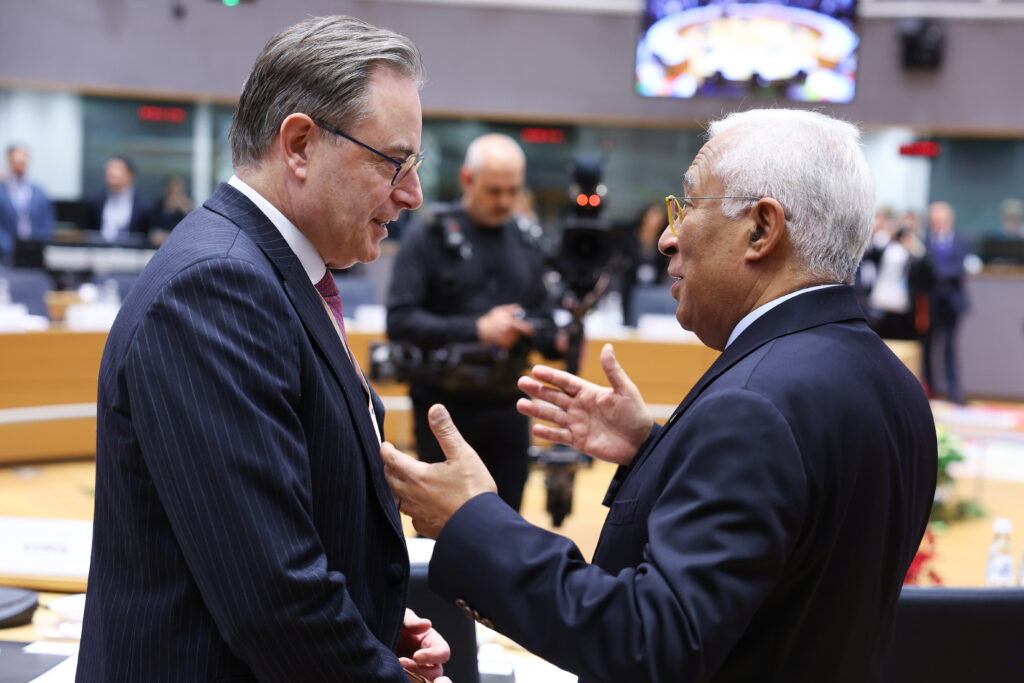
Brussels – “We have an agreement.” The announcement by the President of the European Council, Antonio Costa, comes at 2:57 a.m., at the end of a 16-hour-long summit. In the end, the heads of state and government of the EU countries found a solution to guarantee the financial aid needed to support Ukraine: the idea of using Russian assets frozen on European soil remained on the table, but was postponed until further technical-legal work was done, and while waiting to find a solution they offered Kyiv 90 billion euros “based on EU borrowing on the capital markets backed by the EU budget headroom,” according to the conclusions released at the end of the summit.
The EU will therefore move forward with common debt, avoiding vetoes through enhanced cooperation, the mechanism that allows the Union to proceed with a core group of countries. By doing so, the conclusions point out, any mobilisation of resources from the EU budget will have no impact on the financial obligations of the Czech Republic, Hungary, or Slovakia.
The solution found in Brussels saves face and allows moving forward. In fact, the leaders buy time. Parliament and the Council will be able to work under less pressure to make the use of Russian assets possible, addressing Belgium’s concerns, as it holds most of these assets through Euroclear, while also providing Ukrainian leader Volodymyr Zelensky with the support he was seeking.
In addition, the leaders agree to keep up the pressure, and, in adopting new sanctions on Moscow’s shadow fleet, they announce their intention to proceed with a new, further package of restrictive measures for “early 2026.” Costa rejoices: “We committed and we delivered,” he says during the press conference held at that moment, between late night and early morning. “The message we are sending to Russia today is crystal clear: first, you have not achieved your objectives in Ukraine; second, Europe stands with Ukraine. Today, tomorrow, and as long as necessary; third, Russia must come to the negotiation table in a serious way and accept that it will not win this war.“
German Chancellor, Friedrick Merz, was also satisfied: “Ukraine is being granted an interest-free loan of 90 billion euros. These funds are sufficient to cover Ukraine’s military and budgetary needs for the next two years.” Also for Merz, “this is a decisive message for the end of the war, because Putin will only make concessions when he realises that his war will not bear fruit.” Then the German leader threatens Moscow: “Frozen Russian assets will remain frozen until Russia has paid reparations to Ukraine; and if Russia does not pay the reparations, we will use – in full compliance with international law – the frozen Russian assets to repay the loan.”
Italian Prime Minister Giorgia Meloni also said she was “satisfied” with the summit’s outcome. “It was important to support Ukraine, but to do so in a way that was legally and financially sustainable, and I am happy that common sense prevailed.” The assets issue remains, with Meloni stressing that “the most important decision we took in the past few days was that they remain immobilised, that they are not returned.” On the possibility of using them, “work must continue,” and the leaders will therefore return to the subject.
Work will also have to be done on other fronts, such as the EU’s multiannual budget. Financial support to Ukraine is possible “on the basis of a unanimous agreement to amend the Multiannual Financial Framework,” European Commission President, Ursula von der Leyen stressed. “The financing of Ukraine beyond 2027 will be part of the next common budget discussion,” she anticipates and assures.
English version by the Translation Service of Withub