 Close
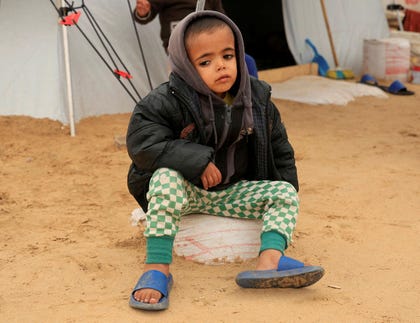
CloseYasser, 5, severely malnourished, in Khan Yunis, southern Gaza, last week. Credit: Haseeb Alwazeer / Reuters
Yasser, 5, severely malnourished, in Khan Yunis, southern Gaza, last week. Credit: Haseeb Alwazeer / Reuters
The Integrated Food Security Phase Classification report that was published on Friday has again revived the debate over famine in the Gaza Strip. The report from the IPC, which the UN uses to determine food insecurity, presents an incomparably better picture than the last report, which was published in August.
Following the cease-fire there was a dramatic increase in the amount of food entering the enclave, with food prices dropping and with most of the populace not suffering from life-threatening hunger. And yet, two and a half months after the end of the war, IPC experts claim that there are still around 100,000 people in Gaza suffering from extreme hunger. Hundreds of thousands of others are at risk of deteriorating into a state of hunger.
Like last time, the report evoked a public diplomacy onslaught by the Foreign Ministry and the office of the Coordinator of Government Activities in the Territories, in an attempt to undermine it. The report’s authors anticipated this and added a document explaining their method and refuting claims made against them. However, they do not explain one important claim raised against them in the context of their August report, which concerns disparities in reported mortality rates, which left some vagueness surrounding their decision to declare a famine in Gaza at the end of the summer.
Before delving into the details of this argument, it must be said that it’s clear there was rampant hunger in the Gaza Strip. It was lethal for at least hundreds of people, including many children, and had immense health and mental health implications for most of the enclave’s population. This hunger was caused directly by an Israeli government decision, taken on March 2, 2025, to stop food from entering into Gaza. The total siege lasted 78 days, after which Israel allowed the entry of very limited amounts of food. The combination of the siege and the total failure of the Gaza Humanitarian Foundation initiative meant by the end of the summer, hunger had spread across the Strip.