Leading economist Justin Wolfers issued a stark warning regarding the state of the U.S. economy on Sunday, arguing that rising unemployment—not stock market volatility—is the flashing red light signaling a potential recession.
Tariff Stagnation
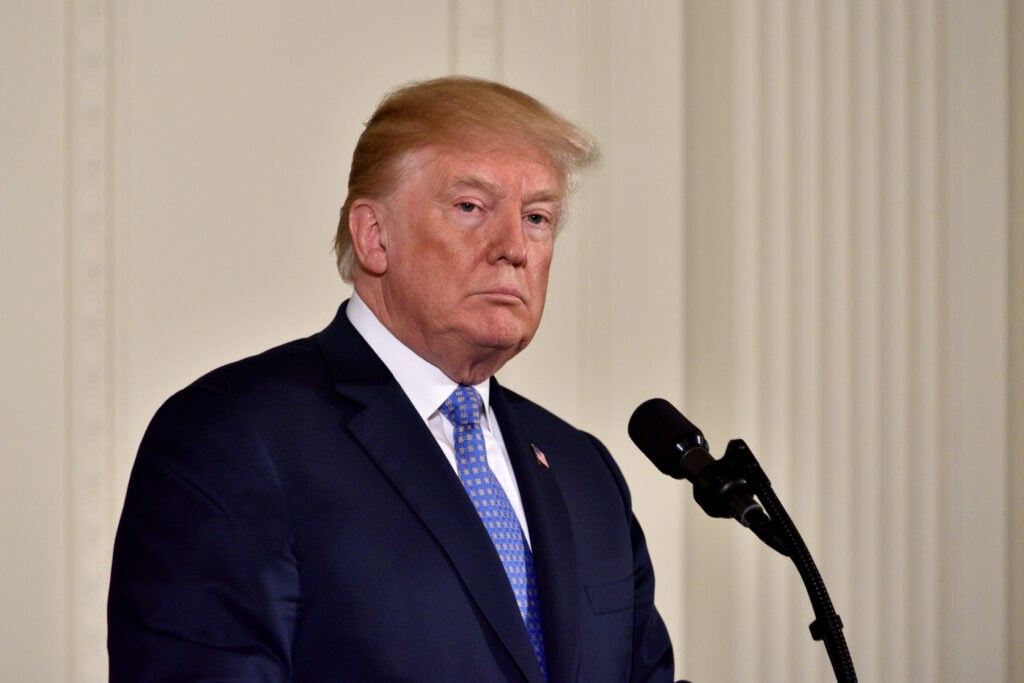
Wolfers stated that since the introduction of tariffs by the Donald Trump administration, the American economy has effectively stalled, creating “close to zero jobs.” He pointed to “Liberation Day”—the date new tariffs were implemented—as a critical turning point for the labor market, in a video shared by him on X.
While political discourse often focuses on trade balances, the University of Michigan professor highlighted a more immediate domestic consequence: a hiring freeze.
“If you actually look at… when the tariffs came into the present, the US economy has actually created close to zero jobs,” Wolfers said.
He warned that the situation may be deteriorating faster than official reports suggest, predicting that once the next set of data is released, the economy will likely show it has shrunk.
According to Wolfers, the sharp rise in unemployment is significant enough that “we really are looking at whether we’re in a recession.”
See Also: Top Economist Says Trump’s Tariff Rollbacks ‘Remarkable Admission’ That His Policies Raised Prices
Paychecks Over Portfolios
Wolfers urged the public to ignore the “background noise” of other economic data and focus on the single metric that impacts daily life: the ability to earn a living.
In a post accompanying his analysis, he dismantled the idea that stock portfolios are the primary gauge of financial safety for most Americans.
“Think of your biggest financial risk: it’s not your stock portfolio, it’s losing your paycheck,” Wolfers wrote. He argued that when people cannot earn a living, other economic indicators become irrelevant.
Erosion Of Worker Power
Beyond the macroeconomic data, Wolfers highlighted the behavioral shifts in the workplace caused by a cooling labor market.
When jobs are scarce, worker leverage evaporates. Wolfers noted that employees are becoming unable to ask for pay raises or express dissatisfaction.
“It is hard to express dissatisfaction with your current job and look elsewhere,” he explained. The result is a trapped workforce where employees are “so scared that they stay in the job with a crappy boss” rather than risking unemployment in a stagnant market.
S&P 500, Nasdaq, Dow Jones Dip In Data-Heavy Week
After a slew of delayed economic data that was released last week, the major U.S. benchmark indices declined over the five sessions, but closed higher on Friday.
The S&P 500 was 0.37% lower, whereas the Nasdaq Composite and Dow Jones slipped 0.10% and 0.95%, respectively, in the last week.
The SPDR S&P 500 ETF Trust (NYSE:SPY) and Invesco QQQ Trust ETF (NASDAQ:QQQ), which track the S&P 500 index and Nasdaq 100 index, respectively, closed higher on Friday. The SPY was up 0.91% at $680.59, while the QQQ advanced 1.30% to $617.05, according to Benzinga Pro data.
The futures of Dow Jones, S&P 500, and Nasdaq 100 indices were trading higher on Monday.
Read Next:
Disclaimer: This content was partially produced with the help of AI tools and was reviewed and published by Benzinga editors.