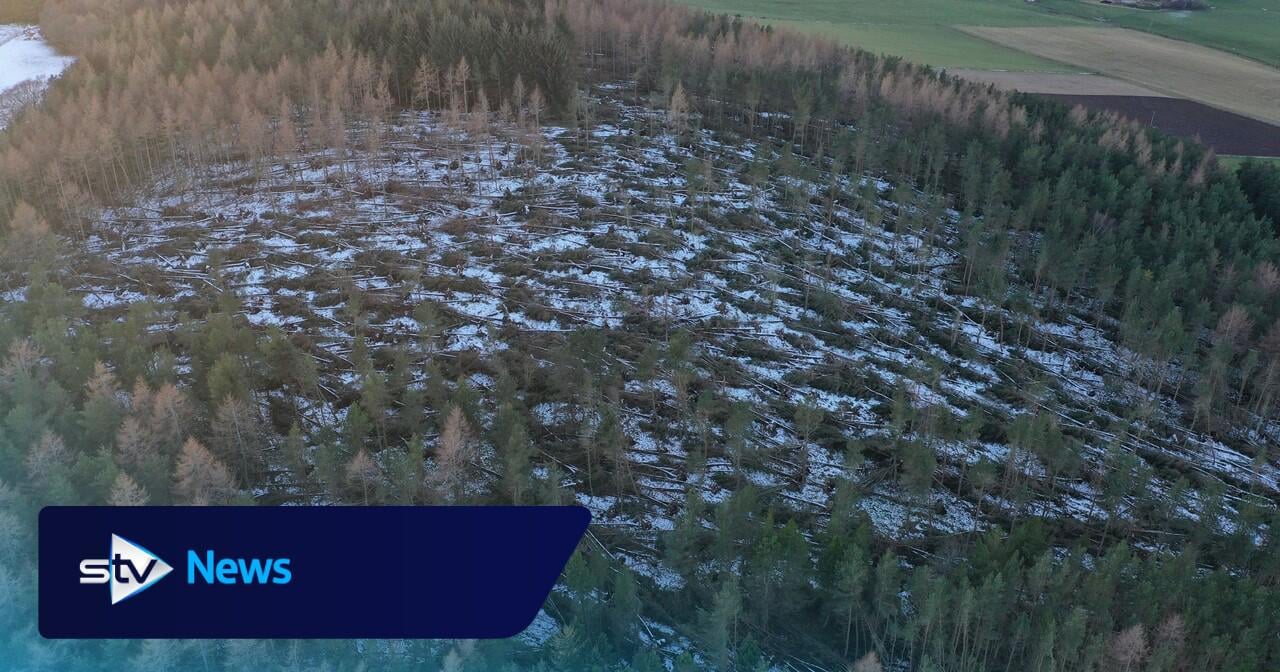
From what i saw around angus after arwen the majority of trees down were plantation sitka spruce. There were plenty big beech and other down too but the plantations seemed to be worst affected (guess there are more plantation trees anyway)
Years to clear with the budget they’re able to allocate towards it.
Thing is that a lot of the fallen trees won’t have much, if any, commercial value, so it’s not like they could sell the salvage, or offer salvage as part-payment to any forestry contractors.
That’s in addition to things such as whether there is access to the sites, and whether there are any forestry contractors available to do the work.
Standing and fallen dead wood is also of some ecological value, there are some kinds of fungus, some beetle species, that only live on standing dead wood, others that only live on fallen dead wood, and they’re parts of the overall woodland ecosystem. But fungi only grows so fast, so a large surge in deadwood can’t be dealt with quickly. And the right species might not be present on any given site, due to habitat fragmentation in the past. Some deadwood beetle species are only found in deep woodland, hundreds of metres from any edge. And standing deadwood is good for things like woodpeckers, and as perches for birds-of-prey. Plus piles of deadwood provide habitat for forest rodents such as mice, which in turn provide food for the birds-of-prey, foxes, pinemartens, wildcats, etc.
But there is also the question of what the management plan is. The National Trust for Scotland is not specifically a wildlife-focused organisation. It also has a strong cultural heritage focus. Which means conserving&preserving certain landscapes as they were when the cultural thing happened. This approach to land management is similar to that used by the National Trust in England, which is particularly noticeable in parts – the management of the Lake District for example, is intended to preserve the appearance of the area when Wordsworth et.al. were writing their poems, which means hills clear of trees, with sheep grazing on them, in small plots enclosed by stone walls, and that’s not necessarily conducive to wildlife diversity.
So the National Trust for Scotland’s management of some of its woodland estates, the woodland is not necessarily the focus, so they are managed in a way to minimise upkeep, which means removal of deadwood to minimise fire risks. And to maintain the cultural heritage of the area, which doesn’t necessarily mesh with what is beneficial to wildlife. If the NTS were to acquire a sporting estate, for example, they might be obliged to maintain the heather moorland, despite it being of greater wildlife value to reforest it.
2 comments
From what i saw around angus after arwen the majority of trees down were plantation sitka spruce. There were plenty big beech and other down too but the plantations seemed to be worst affected (guess there are more plantation trees anyway)
Years to clear with the budget they’re able to allocate towards it.
Thing is that a lot of the fallen trees won’t have much, if any, commercial value, so it’s not like they could sell the salvage, or offer salvage as part-payment to any forestry contractors.
That’s in addition to things such as whether there is access to the sites, and whether there are any forestry contractors available to do the work.
Standing and fallen dead wood is also of some ecological value, there are some kinds of fungus, some beetle species, that only live on standing dead wood, others that only live on fallen dead wood, and they’re parts of the overall woodland ecosystem. But fungi only grows so fast, so a large surge in deadwood can’t be dealt with quickly. And the right species might not be present on any given site, due to habitat fragmentation in the past. Some deadwood beetle species are only found in deep woodland, hundreds of metres from any edge. And standing deadwood is good for things like woodpeckers, and as perches for birds-of-prey. Plus piles of deadwood provide habitat for forest rodents such as mice, which in turn provide food for the birds-of-prey, foxes, pinemartens, wildcats, etc.
But there is also the question of what the management plan is. The National Trust for Scotland is not specifically a wildlife-focused organisation. It also has a strong cultural heritage focus. Which means conserving&preserving certain landscapes as they were when the cultural thing happened. This approach to land management is similar to that used by the National Trust in England, which is particularly noticeable in parts – the management of the Lake District for example, is intended to preserve the appearance of the area when Wordsworth et.al. were writing their poems, which means hills clear of trees, with sheep grazing on them, in small plots enclosed by stone walls, and that’s not necessarily conducive to wildlife diversity.
So the National Trust for Scotland’s management of some of its woodland estates, the woodland is not necessarily the focus, so they are managed in a way to minimise upkeep, which means removal of deadwood to minimise fire risks. And to maintain the cultural heritage of the area, which doesn’t necessarily mesh with what is beneficial to wildlife. If the NTS were to acquire a sporting estate, for example, they might be obliged to maintain the heather moorland, despite it being of greater wildlife value to reforest it.
Comments are closed.