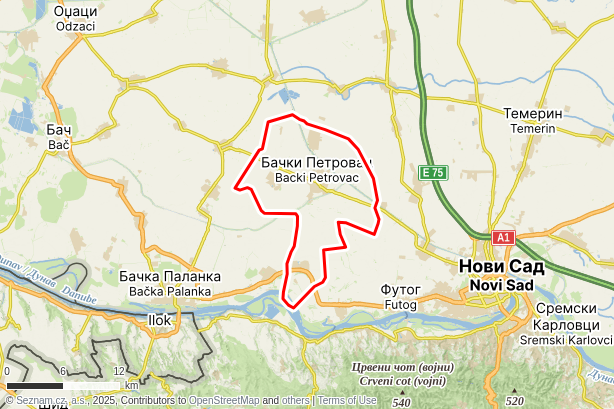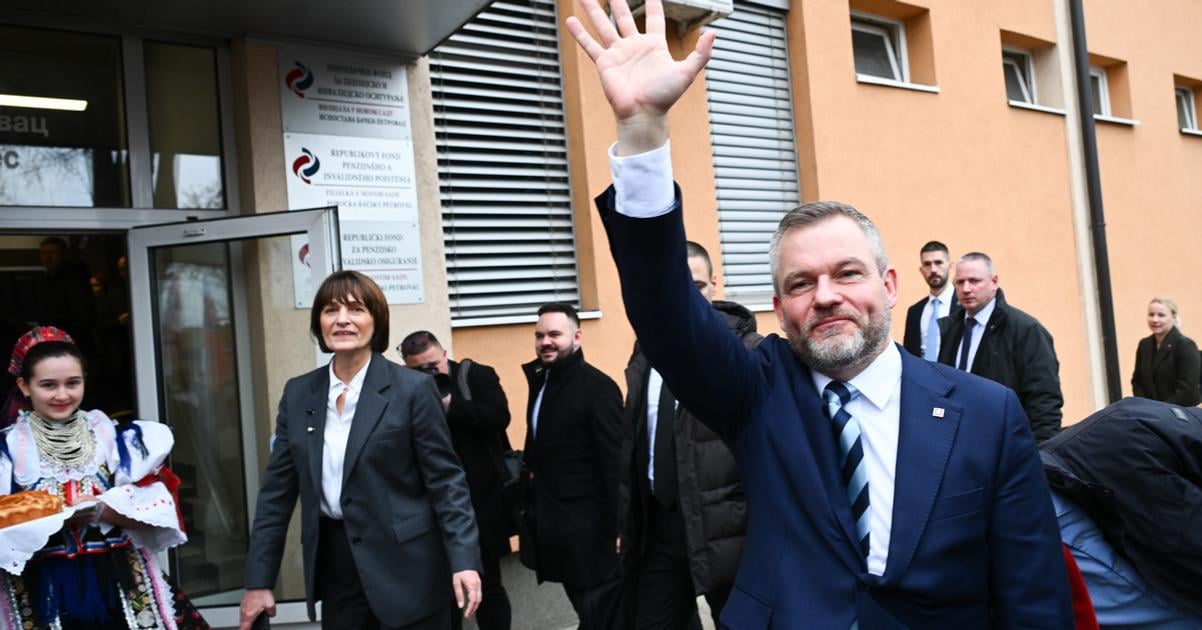
Slovak President Peter Pellegrini met members of the Slovak minority in Serbia’s Vojvodina region during an official visit on Monday, 22 December, but minority representatives critical of the Serbian government say they were excluded from the programme, according to the Slovak daily SME.
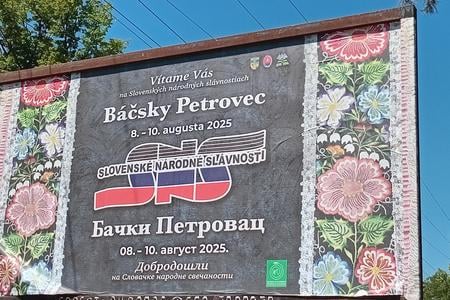
Pellegrini has also come under criticism for failing to clearly condemn an incident that took place in Bački Petrovac in August, when supporters of Serbia’s ruling Serbian Progressive Party (SNS) destroyed a photo exhibition organised by local Slovaks documenting anti-government protests and physically attacked organisers and bystanders. The violence was not seen as an ethnic conflict, as the attackers included local Slovaks, while many Serbs from the region mobilised to defend the organisers.
Related article
Fico abandons ethnic Slovaks in Serbia by siding with Vučić
Read more
Opposition to President Aleksandar Vučić has grown across Serbia following last year’s collapse of a railway station canopy in Novi Sad, Vojvodina, which killed 16 people. The tragedy was widely blamed on corruption and triggered sustained civic protests nationwide.
The Slovak president’s office described the incident in Bački Petrovac as an internal Serbian political matter and said Pellegrini would not intervene.
“If any conflict arises, it is driven by politics rather than nationality,” the president himself said.
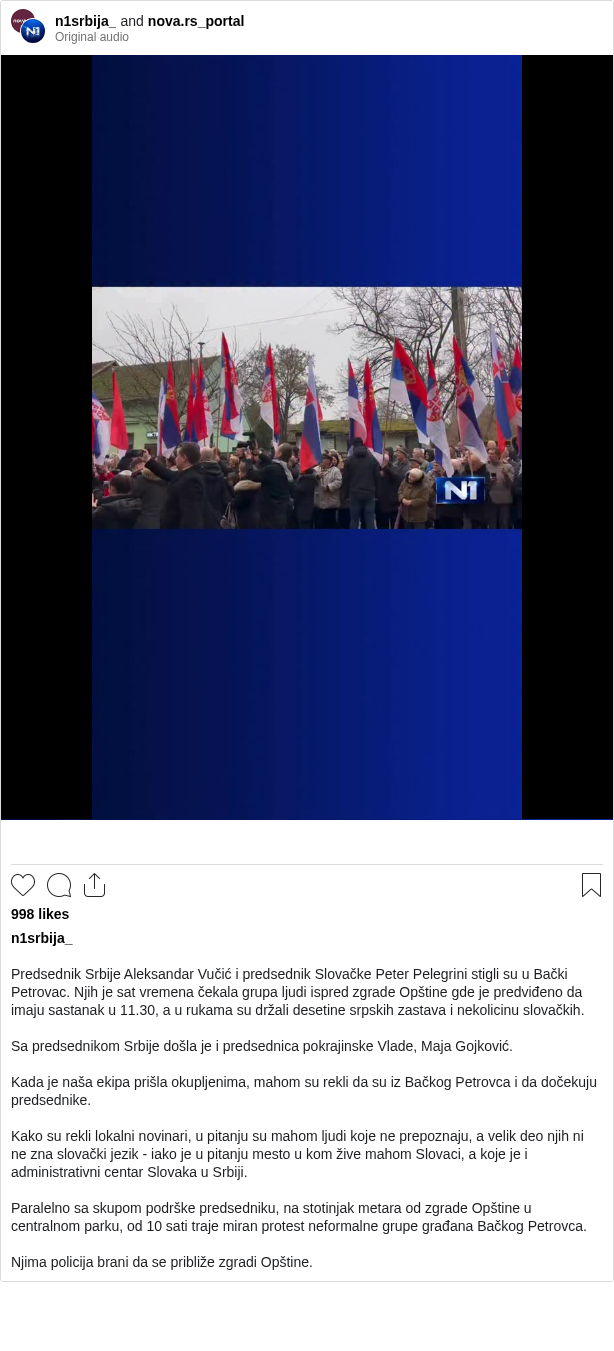
The Monday visit to Slovak communities — his second since a 2019 visit as prime minister — was carried out jointly with President Vučić. While Slovaks in Bački Petrovac had requested a meeting with Pellegrini, they simultaneously organised a demonstration against Vučić’s arrival.
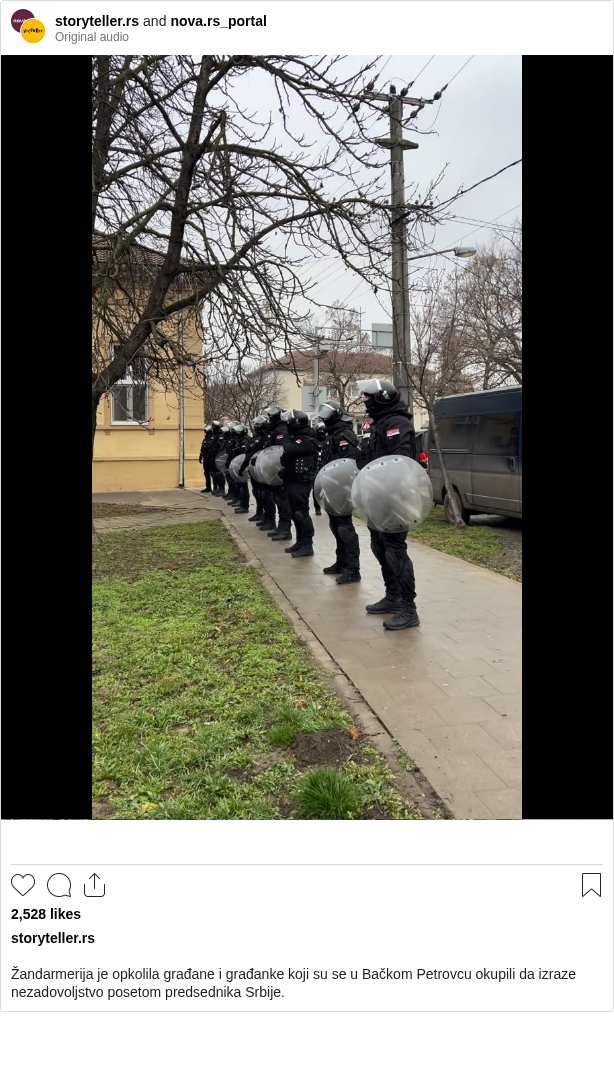
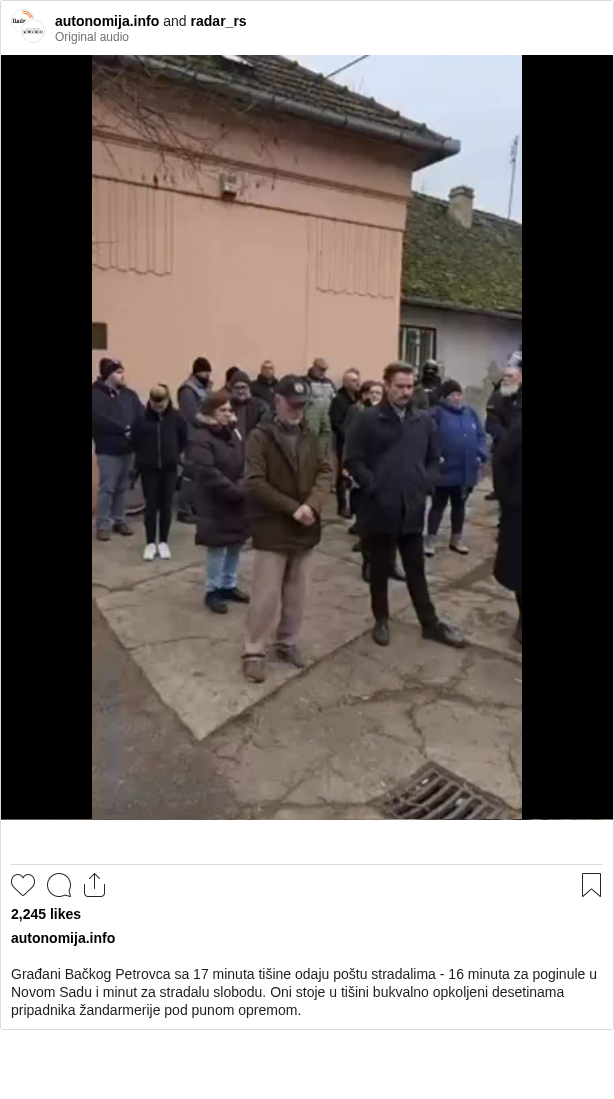
Police intervened shortly before the presidents arrived, removing protesters from a park near the venue. According to participants, the group was surrounded by police, restricted in movement and prevented from leaving freely.
The group included Slovaks, Serbs and Hungarians, who at one point sang both the Serbian and Slovak national anthems together.
Open letters ignored
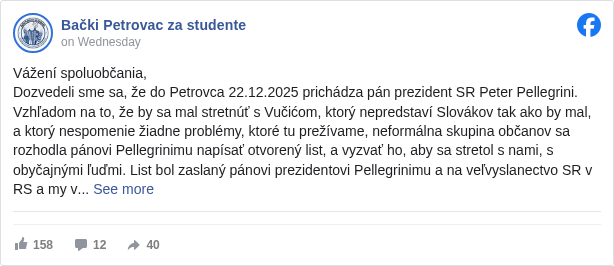
Ahead of the visit, Pellegrini received three open letters from Slovaks in Bački Petrovac and elsewhere in Vojvodina, the autonomous northern province where most of Serbia’s Slovak minority lives, urging him not to meet only representatives aligned with the Serbian government.
“Do not folklorise us and do not ignore us,” the signatories wrote, calling on the president to listen to those willing to speak openly about the real situation of the Slovak minority.
They warned that Slovak identity in Serbia is being eroded “quietly, through bureaucracy and indifference”, and reduced to cultural performances rather than meaningful political representation. According to the letters, key minority institutions are dominated by individuals aligned with the ruling party, while Slovak-language media face censorship.
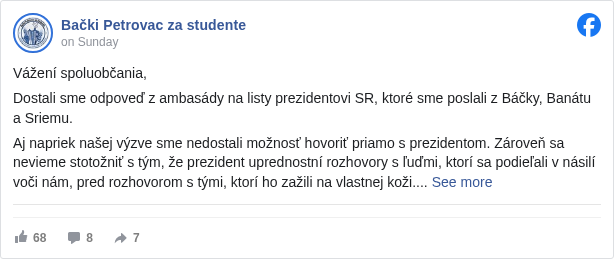
None of the groups behind the letters were granted a meeting with the president. Pellegrini’s office said the programme was prepared by the Slovak embassy, which stated that time constraints made separate meetings impossible. The embassy maintained that the president met representatives “from across the political spectrum”.
The embassy neither condemned the August events nor stood up for the Slovak community at the time.
The Slovak president said that none of the members of the Slovak minority who took part in discussions with the two presidents said they felt treated as second-class citizens in Serbia.
In the open letter, Slovaks also warned that if Pellegrini meets only with those who “filter the truth”, they would be forced to see it as ignorance and a betrayal by the Slovak state — not a political decision, but a moral failure.
Official programme continues
As protesters were kept away, Pellegrini and Vučić met at the municipal office in Bački Petrovac, where they announced plans to revive the construction of a Slovak House – a multi-million-euro project intended to support the Slovak minority in Vojvodina. Pellegrini thanked Vučić for the initiative, which will be funded by Serbia.
Vučić said the talks also covered infrastructure issues such as roads, water supply, sewage systems and schools.
“I am proud of the Slovaks living in Serbia and of the respect they show towards our country,” Vučić said, as quoted by the Slovak press agency TASR.
Pellegrini said Slovakia was ready to assist Serbia with the construction of a nuclear power plant and invited Vučić to visit Slovakia.
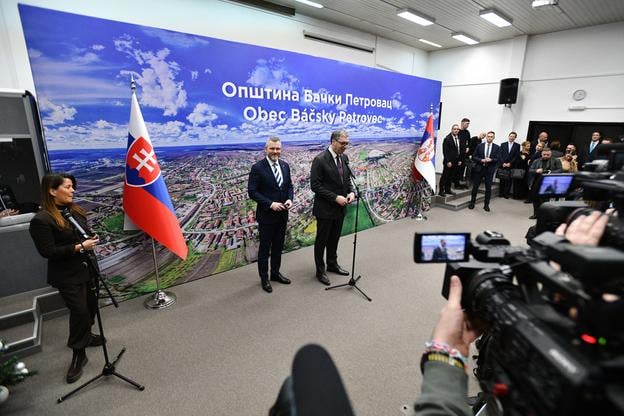
Slovak President Peter Pellegrini and Serbian President Aleksandar Vučić during a press briefing in Bački Petrovac, Serbia, on Monday, 22 December 2025. (source: TASR)
For some Slovaks in Serbia, however, the visit reinforced concerns that their grievances remain unheard.
The current Slovak government, widely seen as Russia-friendly, maintains very close relations with the pro-Russian regime of President Vučić. Slovak Prime Minister Robert Fico has long criticised the European Union for what he describes as new obstacles to Serbia’s EU accession.
Fico travelled with Vučić to Moscow in May to attend World War II commemorations, and the two leaders also met in Beijing in September. He also visited Serbia in November 2024. Vučić has described Fico as “one of the most important and influential world leaders”, a characterisation Fico has echoed when speaking about the Serbian president.
Pellegrini began his political career in Fico’s party, Smer, before founding his own party, Hlas, in 2020. Despite the split, he has never fully distanced himself from Fico. Although, as president, Pellegrini has taken several unexpected steps that were not welcomed by the Fico government, he is still widely regarded as the prime minister’s ally.
Pellegrini and Vučić last held talks in October in Uzbekistan, where Vučić invited Pellegrini to visit Serbia.