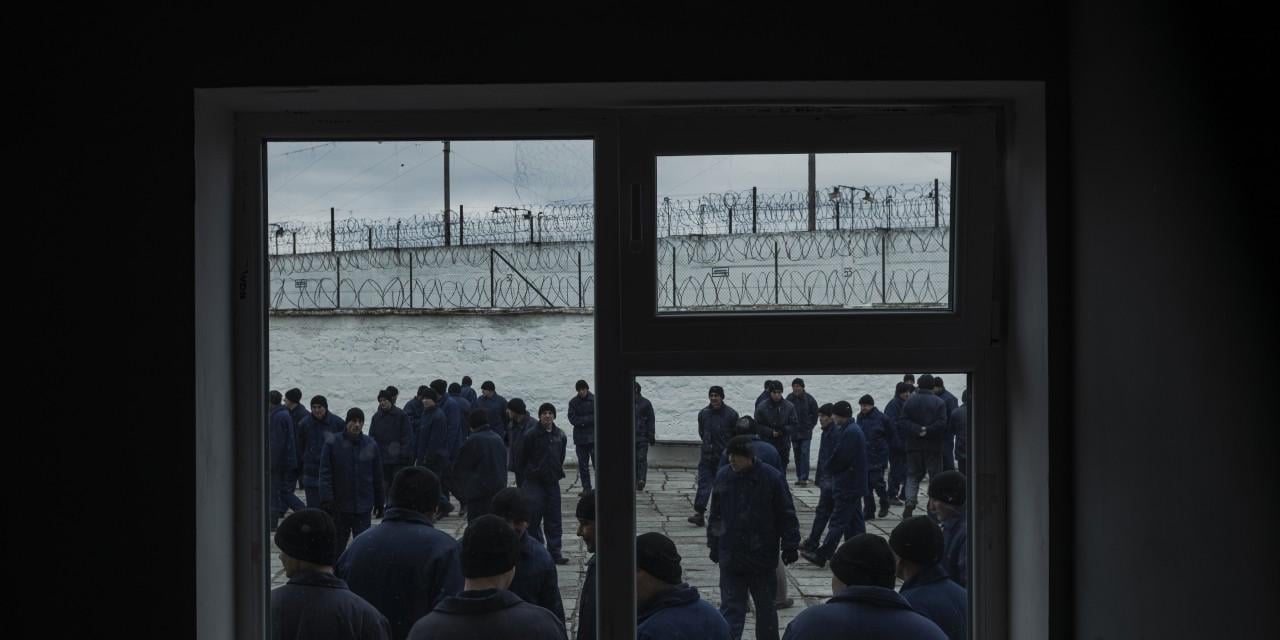
Returning Russian POWs Pay Heavy Price for Choosing Surrender Over Death
https://www.wsj.com/world/russia/returning-russian-pows-pay-heavy-price-for-choosing-surrender-over-death-de3376a3
by Panthera_leo22
Returning Russian POWs Pay Heavy Price for Choosing Surrender Over Death
https://www.wsj.com/world/russia/returning-russian-pows-pay-heavy-price-for-choosing-surrender-over-death-de3376a3
by Panthera_leo22
7 comments
So… don’t just surrender – defect
ARTICLE BELOW
> **By Milàn Czerny, Thomas Grove and Daria Matviichuk**
> *The Wall Street Journal*
> December 21, 2025, 11:00 p.m. EST
>
> When a self-described patriotic, middle-aged Russian soldier was released from a prisoner-of-war camp in Ukraine earlier this year, he called his family to tell them he was alive, free and back on Russian soil. As the phone was passed around, he told them he might be back in time for his son’s birthday in a few weeks’ time.
>
> He never made it. Instead, he was subjected to weeks of questioning by Russia’s security services — then sent back to the front. Soon he went missing again on the front lines near the occupied Ukrainian city of Donetsk. This time, his relatives fear he is dead. One likened the situation to being caught in a circle of hell.
>
> Across Russian towns and cities, authorities have celebrated the patriotism of volunteers who sign up to Russian President Vladimir Putin’s war. Veterans who return from the front are sometimes lionized on television and promised privileged positions in the local and regional governments of an increasingly militarized Russia.
>
> But the fate of Russia’s POWs has been an overlooked chapter of Moscow’s invasion of Ukraine. Before soldiers are even sent to the front, their commanders admonish them to blow themselves up with a grenade before submitting to Ukrainian capture. Russian rapper Dmitry Kuznetsov, known as Husky, echoed the sentiment in his new album: “I won’t be taken prisoner, in my left hand a grenade, in my right, a grenade.”
>
> POWs and their families say the joy of coming home is short-lived. Those who choose to surrender face a return fraught with suspicion and shame. Salaries and one-time bonuses — a chief reason many agreed to go to war — can be cut off as soon as they are captured, leaving thousands in financial limbo.
>
> “The country is at war,” said Valery Vetoshkina, a lawyer associated with the Russian nongovernmental organization OVD-Info. “The state does not encourage voluntary surrender.”
>
> When soldiers are returned to Russia, they are bused from Belarus, where most exchanges occur. Apart from periodic phone calls, they are isolated from their families for as long as a month while being interrogated by the Federal Security Service (FSB), the military prosecutor’s office and Russia’s Investigative Committee.
>
> In some cases, officers are searching for treason or collaboration. In others, they probe for criminal offenses. In 2022, amid chaotic mass mobilization, Russia criminalized voluntary surrender to discourage draftees from giving themselves up.
>
> Earlier this year, one of the first criminal cases for surrender resulted in a 15-year sentence for Roman Ivanishin, who was convicted of voluntary surrender, attempting to surrender and desertion after returning from Ukrainian captivity.
>
> After interrogation, most former POWs are sent back to their units. Some are stripped of weapons and relegated to cleaning and endless drills. Others are sent straight back to the front, where families accuse commanders of punishing them or assigning them to especially dangerous missions.
>
> Conditions can be so harsh that some families have lobbied to keep their sons out of prisoner exchanges. Ukrainian POW camps are widely regarded as more humane than Russian camps holding Ukrainians, where torture has at times been systematic.
>
> The Kremlin did not respond to requests for comment.
>
> In August, word reached home that Igor Dolgopolov, 31, had been captured near Chasiv Yar. His relatives fear he may be exchanged only to be sent immediately back to combat.
>
> One relative said former POWs are distrusted, humiliated and denounced by commanders. “It would be better for them to stay and live in Ukraine,” the person said, “even take citizenship there.”
>
> Under the Geneva Conventions, former POWs cannot be returned to active combat roles. A Russian Defense Ministry document viewed by *The Wall Street Journal* argues that some provisions do not apply while the war continues.
>
> Russia’s stance echoes World War II-era doctrine, when surrender was illegal and POWs were branded traitors. A phrase attributed to Joseph Stalin — “We have no prisoners, only traitors” — still resonates.
>
> Earlier this year, former POW Pavel Guguyev, 45, was charged with cooperating with a foreign government after speaking to Ukrainian journalists about his captivity and his treatment upon return. He faces up to eight years in prison.
>
> In a video recorded after his exchange, Guguyev said he was interrogated by the FSB and sent to a military hospital near Moscow, where fellow soldiers asked why he hadn’t killed himself instead of being captured.
>
> Returned soldiers, he said, are labeled “lost trust,” barred from seeing family and used for menial labor. “They don’t let zeks go home,” he said, using prison slang. “They use them like workers.”
>
> Other former POWs described similar treatment: interrogation, isolation and mistrust. One said he was pulled off a plane moments before redeployment because officers no longer trusted him.
>
> “‘Oh, you’re a prisoner of war?’” he recalled an officer saying. “Then they took me off the plane. That was it.”
Inhumane treatment aimed at it’s own citizens as disgusting as aspected…sadly.
A systematic efficent meatgrinder utiliest to full capacity.
What a nightmare to be a russian soldier, pushed towards death by your own officers and politians.
And the Russian military families and returned POWs just accept these conditions. And their other sons keep signing up. SMDH.
Looks like the smart ones continue to live longer
This is how the Soviets treated anyone who was captured by the Germans during WWII. Many thousands of Red Army combat veterans went to the gulag, even those who had been encircled and managed to fight their way back to their own lines.
Seriously what messed up country Russia is. I know my country is not close to perfect but it has Russia beat by a mile.
Comments are closed.