Nida Al Watan, Lebanon, December 4
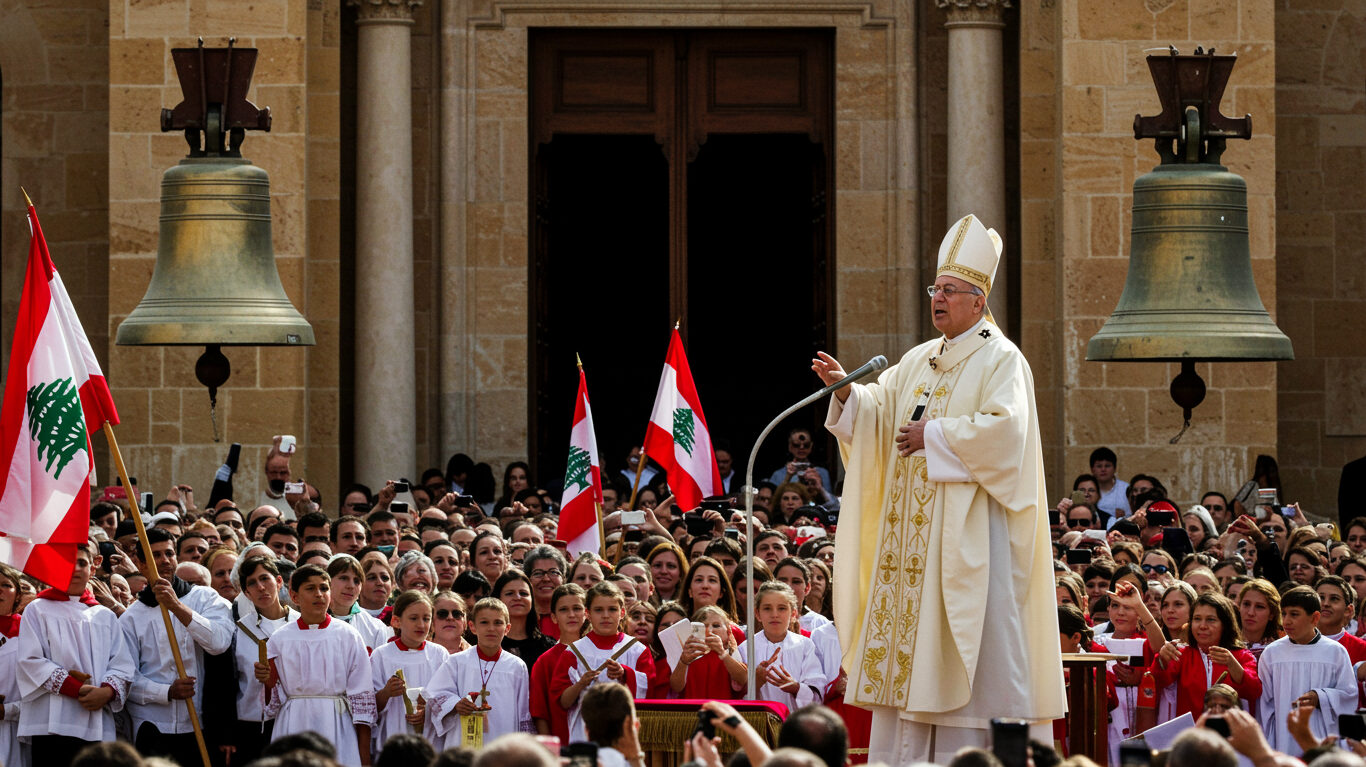
Pope Leo XIV’s visit to Lebanon offered a much-needed lift to Christian morale after years of hardship and tragedy that have weighed heavily on the country. His arrival came amid sweeping regional upheaval, reaffirming the enduring role of Christianity within Lebanon’s social fabric at a moment when Christian communities are shrinking across much of the Middle East, including Lebanon itself.
In his address, the pope underscored the importance of remaining rooted in the country—not out of resignation, but as an expression of faith in Lebanon’s capacity to recover. He delivered his most pointed message to those in power, urging them to place peace above all else and stressing that peace is now the only viable path to save Lebanon. His appeal was not a rhetorical flourish but the guiding theme of the entire visit. The word “peace” echoed throughout his speeches, repeated dozens of times, emphasizing the urgency of ushering the country into a new phase.
Peace offers the most stable environment for Christians to live securely and maintain their historic role, and it is the essential means of halting the demographic decline they face in Lebanon and across the region. It is no surprise that the pope confronted this issue directly and without equivocation. The visit broke a long-standing silence—not only among politicians but also among ordinary citizens. Peace is now being discussed openly and assertively, no longer in hushed tones or laden with political ambiguity. The pope effectively removed the pursuit of peace from the realm of “national taboos,” granting Lebanese across the political spectrum renewed legitimacy to elevate peace as an urgent national priority.
The conversation surrounding peace today is fundamentally different from what it had been just days before the visit. While “peace” may be the pope’s central message to Christians, for Shiites it represents an existential necessity rather than a political preference. Decades of violence and armed confrontation—regardless of the rhetoric used to justify them—have brought devastating loss, destruction, and displacement to Shiite communities, especially in the south. Hezbollah’s most recent military escalation has proved particularly catastrophic, inflicting levels of destruction on southern towns unseen since the founding of the Lebanese state.
This is no longer a familiar cycle of “destruction followed by reconstruction.” What is unfolding today exceeds all previous rounds, reaching the level of an existential threat, with a very real risk that these towns could be emptied entirely if Hezbollah, backed by Iran, continues on its rigid, unyielding course. In this context, the pope’s call for peace extends far beyond Christian communities; it echoes the message that [Grand Ayatollah] Ali al-Sistani directed to Iranian leaders, urging them to act before the Shiite community slides into irreversible collapse.
“Blessed are the peacemakers” is not simply a biblical verse the pope invoked; it functions as a political imperative—a plea for leaders with the courage to safeguard the Christian presence and its national role. Just as urgently, it is a call to save the Shiite community itself and stop the relentless cycle that continues to consume its people. In a country trapped between the hammer of war and the anvil of systemic collapse, peace is no longer a religious slogan or a moral exhortation; it is the final lifeline for the survival of all Lebanese, without exception.
Marwan El Amine (translated by Asaf Zilberfarb)