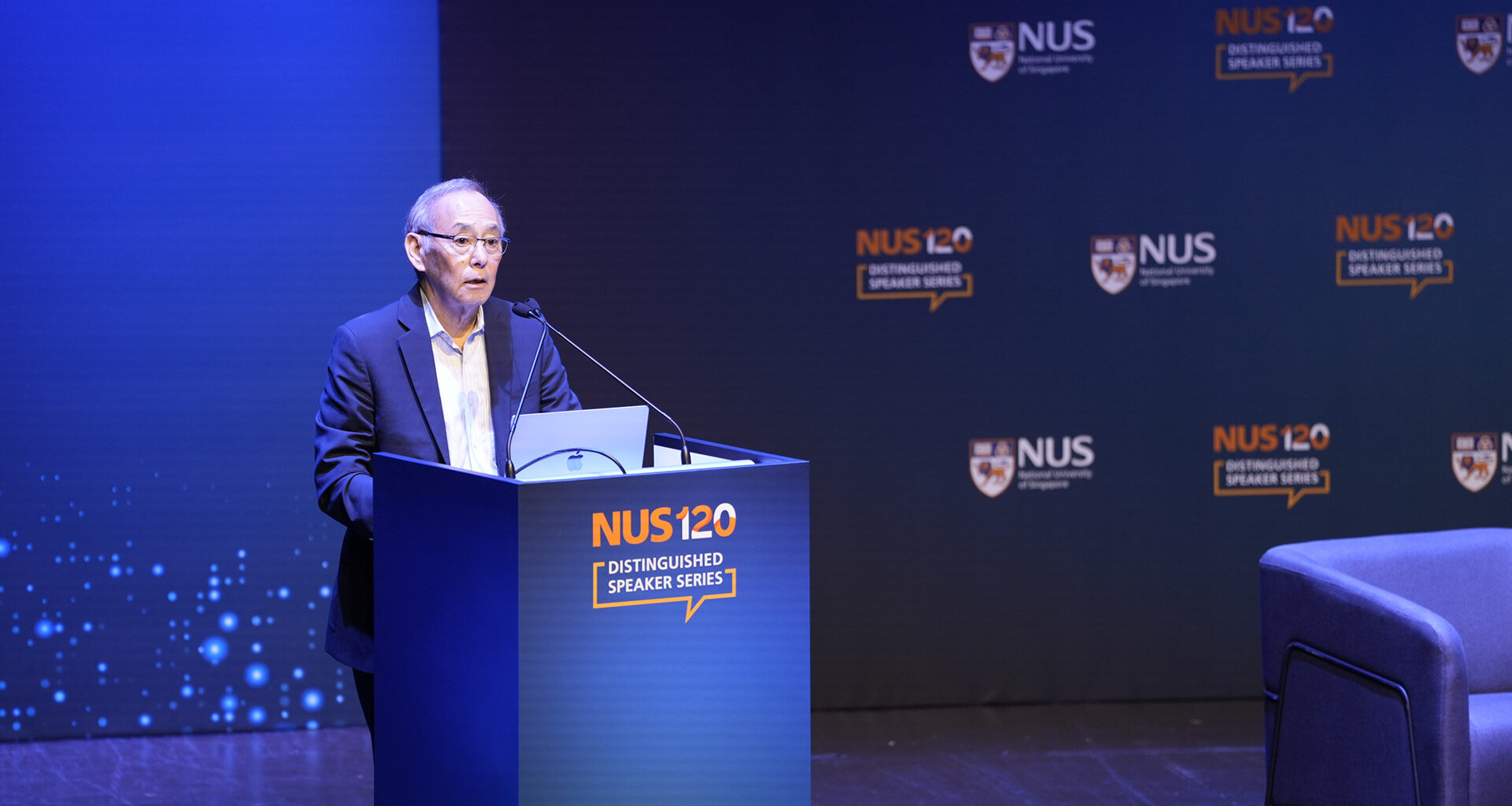
Steering away from fossil fuels
Prof Chu opened the lecture with troubling data: global temperatures have already exceeded the 1.5 deg C threshold set by the Paris Agreement, with current trajectories pointing to a 3 deg C increase by the end of the century.
More alarmingly, much of the warming is “baked into the system”, as 90 per cent of additional heat trapped by greenhouse gases is absorbed by the oceans, with 40 per cent sinking into deep waters that will take decades or even centuries before people feel its effects.
Beyond rising temperatures, Prof Chu highlighted how climate change threatens global stability through agricultural collapse and the potential displacement of millions. By 2050, there could be 200 million climate refugees — a humanitarian crisis that would dwarf current migration challenges and push nations towards extreme political unrest.
To deviate from this dangerous course, one approach is to shift away from fossil fuels, which has become a more viable option thanks to technological breakthroughs.
China, for instance, is leading in wind turbine innovation, developing massive 25-megawatt turbines with blades of over 300m in diameter to boost clean energy production. Meanwhile, California has expanded its large-scale battery storage capacity to nearly 16 gigawatts, achieving 70 per cent carbon-free electricity for the state.
Even less widely adopted sources like nuclear energy are gaining traction, Prof Chu noted. Small nuclear reactors promise reliable carbon-free baseload power, while being safer and less land-intensive. This could be promising for smaller nations, he added in response to a question from the floor on nuclear viability for resource-constrained nations.
‘;