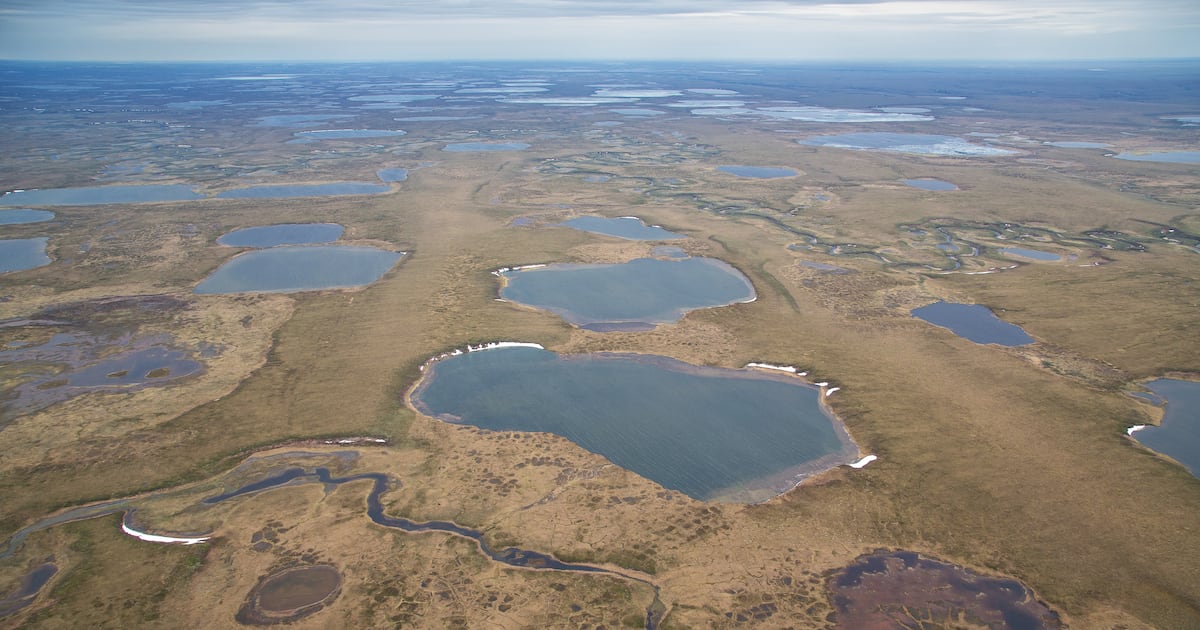
 The northeastern part of the National Petroleum Reserve-Alaska is seen on June 26, 2014. (Photo by Bob Wick / U.S. Bureau of Land Management)
The Bureau of Land Management on Monday said it approved an updated management plan that opens about 82% of the National Petroleum Reserve-Alaska to oil and gas leasing.
The agency this winter will also hold the first lease sale in the reserve since 2019, potentially opening the door for expanded oil and gas activity in an area that has seen new interest from oil companies in recent years.
The sale will be the first of five oil and gas lease sales called for in the One Big Beautiful Bill Act that passed this summer.
The approval of the plan follow the agency’s withdrawal of the 2024 activity plan for the reserve that was approved under the Biden administration and limited oil and gas drilling in more than half the reserve.
The 23-million-acre reserve is the largest tract of public land in the U.S. It’s home to ConocoPhillips’ giant Willow discovery on its eastern flank.
ConocoPhillips and other companies are increasingly eyeing the reserve for new discoveries. ConocoPhillips has proposed plans for a large exploration season with winter, though an Alaska Native group and conservation groups have filed a lawsuit challenging the effort.
The planned lease sale could open the door for more oil and gas activity deeper into the reserve.
The Voice of the Arctic Iñupiat, consisting of elected leaders from Alaska’s North Slope, where the reserve is located, said it supports the reversal of the Biden-era plan. Infrastructure from oil and gas activity provides tax revenues for education, health care and modern services like running water and sewer, the group said.
The decision “is a step in the right direction and lays the foundation for future economic, community, and cultural opportunities across our region — particularly for the communities within the (petroleum reserve),” said Rex Rock Sr., president of the Arctic Slope Regional Corp. representing Alaska Natives from the region, in the statement from the group.
The reserve was established more than a century ago as an energy warehouse for the U.S. Navy. It contains an estimated 8.7 billion barrels of recoverable oil.
But it’s also home to rich populations of waterfowl and caribou sought by Alaska Native subsistence hunters from the region, as well as threatened polar bears.
The Wilderness Society said the Biden-era plan established science-based management of oil and gas activity and protected “Special Areas” as required by law.
It was developed after years of public meetings and analysis, and its conservation provisions were critical to subsistence users and wildlife, the group said.
The Trump administration “is abandoning balanced management of America’s largest tract of public land and catering to big oil companies at the expense of future generations of Alaskans,” said Matt Jackson, Alaska senior manager for The Wilderness Society. The decision threatens clean air, safe water and wildlife in the region, he said.
The decision returns management of the reserve to the 2020 plan approved during the first Trump administration. It’s part of a broad effort by the administration to increase U.S. oil and gas production.
To update the 2020 plan, the Bureau of Land Management invited consultation with tribes and Alaska Native corporations and held a 14-day public comment period on the draft assessment, the agency said.
“The plan approved today gives us a clear framework and needed certainty to harness the incredible potential of the reserve,” said Kevin Pendergast, state director for the Bureau of Land Management. “We look forward to continuing to work with Alaskans, industry and local partners as we move decisively into the next phase of leasing and development.”
Congress voted to overturn the 2024 plan for the reserve, supporting bills from Alaska’s Republican congressional delegation to prevent a similar plan from being implemented in the future.