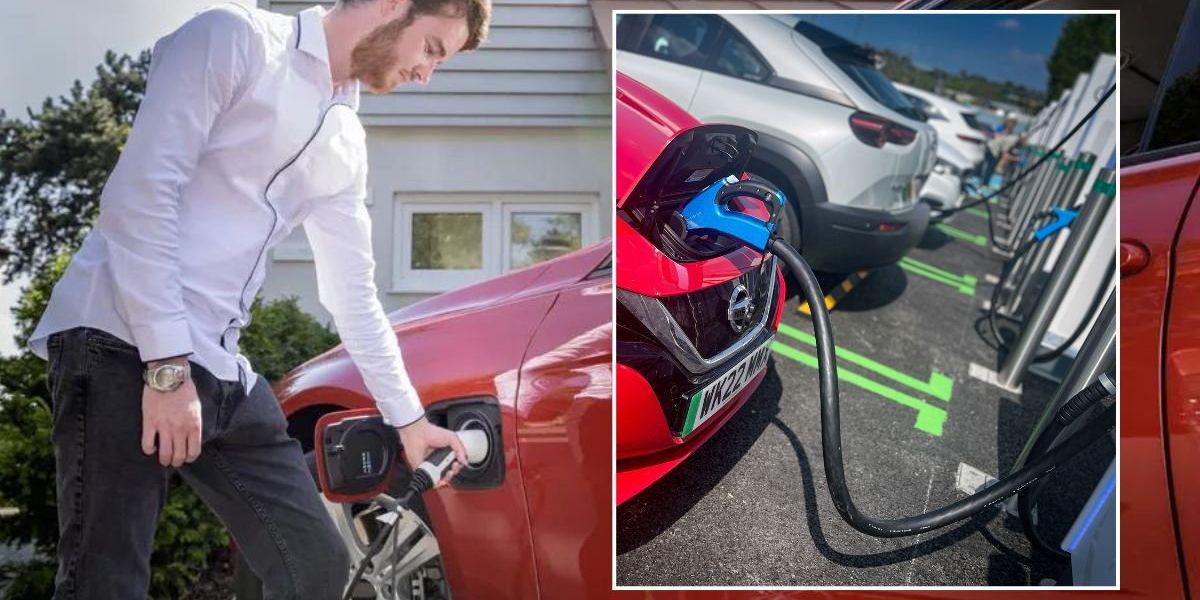
For major markets, UK now only second to China for EV market share, with plugin cars hitting 38.4% share, on track for 100% by 2030.
https://www.gbnews.com/lifestyle/cars/electric-car-targets-uk-ditch-petrol-diesel
by Economy-Fee5830
For major markets, UK now only second to China for EV market share, with plugin cars hitting 38.4% share, on track for 100% by 2030.
https://www.gbnews.com/lifestyle/cars/electric-car-targets-uk-ditch-petrol-diesel
by Economy-Fee5830
3 comments
#Summary: For major markets, UK now only second to China for EV market share, with plugin cars hitting 38.4% share, on track for 100% by 2030
The UK is experiencing remarkable success in its transition to electric vehicles, with [plugin EVs capturing 38.4% of the auto market in November 2025](https://cleantechnica.com/2025/12/22/evs-take-38-4-share-of-the-uk-ford-makes-push). Among the world’s largest car markets, Britain now ranks second only to China in the proportion of drivers choosing electric vehicles.
The strong performance puts the UK firmly on track to meet its Zero Emission Vehicle (ZEV) mandate targets. The mandate requires 28% of new car sales to be electric in 2025, rising to 80% by 2030, before the complete ban on new petrol and diesel sales takes effect that year.
“Despite claims that sales targets would not be hit, it seems clear that in 2025, just as last year, the industry is on track,” said Colin Walker, head of transport at the Energy and Climate Intelligence Unit (ECIU).
Between January and November 2025, over 426,000 new electric vehicles were registered – a 26% jump from the previous year. EVs now represent 22.7% of the overall new car market, while petrol car sales fell 8.3% and diesel registrations plummeted nearly 16%.
The transition is even more advanced in the corporate sector, where Fleet200 research reveals that [plugged-in EVs now account for 65.1% of company car fleets](https://www.fleetnews.co.uk/features/ev-becomes-dominant-car-powertrain-in-uk-s-largest-fleets) – up dramatically from just 8.8% in 2021. This represents more than a fivefold increase in just four years, driven by tax incentives, corporate net zero targets, and the expanding availability of electric models.
During the same period, diesel’s dominance in fleet vehicles has collapsed, falling from 68.3% in 2021 to just 15.7% in 2025 – a drop of more than 50 percentage points.
“As companies look to reinforce their ESG agendas, the electrification movement continues to gather pace helped by advantageous tax breaks,” says Andy Bruce, CEO of Fleet Alliance. “A current rate of company car tax of just 5% by 2027/28 is a huge financial incentive for would-be company car buyers as well as providing certainty about future tax levels.”
British drivers are increasingly choosing electric vehicles thanks to improved affordability and attractive incentives. “British drivers are increasingly choosing to switch to electric, so much so that, of the world’s largest car markets, the UK is now second only to China in the proportion of drivers buying new EVs,” Walker noted. “Be they new cars or regular families going electric on the second-hand market, British EV drivers are saving hundreds, even thousands, of pounds a year.”
Labour’s Electric Car Grant, which received a £1.3 billion boost in the Autumn Budget, has already helped more than 40,000 drivers save up to £3,750 on new electric cars, with over 40 models eligible for the discount.
Major companies are leading the charge, with Vodafone UK expecting its fleet of almost 1,000 company cars to be fully electric by 2026, one year ahead of schedule. “We have been pursuing a determined electrification strategy for our car fleet, driven by both our overall corporate environmental objectives and demands from drivers for zero emissions options,” says Craig Login, property contract manager at Vodafone UK.
The environmental impact is substantial, with average fleet CO2 emissions falling by more than half since 2021, from 109g/km to 52g/km. Future orders indicate this trend will accelerate, with fully-electric cars accounting for 55.1% of new fleet orders.
Combustion-only vehicles now account for less than half the market for three consecutive months, a milestone indicating the UK’s permanent shift toward electric transport. Walker warned that any delay to the 2030 deadline would hamper growth, impact the vital second-hand EV market and leave motorists stuck in “dirtier and more expensive petrol cars.”
“It’s clear the world is only going in one direction on electric cars, so slipping into the slow lane is a recipe for getting left behind,” the expert concluded.
Several affordable electric models are now selling close to 1,000 units per month or more, with popular choices including the Renault 5, Ford Puma, BYD Dolphin, and Volkswagen ID.3 – all priced at or below £30,000.
UK car industry is too weak to protect.
So they can accept game changing with chinese EVs.
This really makes sense for an island nation like UK.
Small enough that range anxiety isn’t a problem. Expensive fuel cuz island.
Comments are closed.