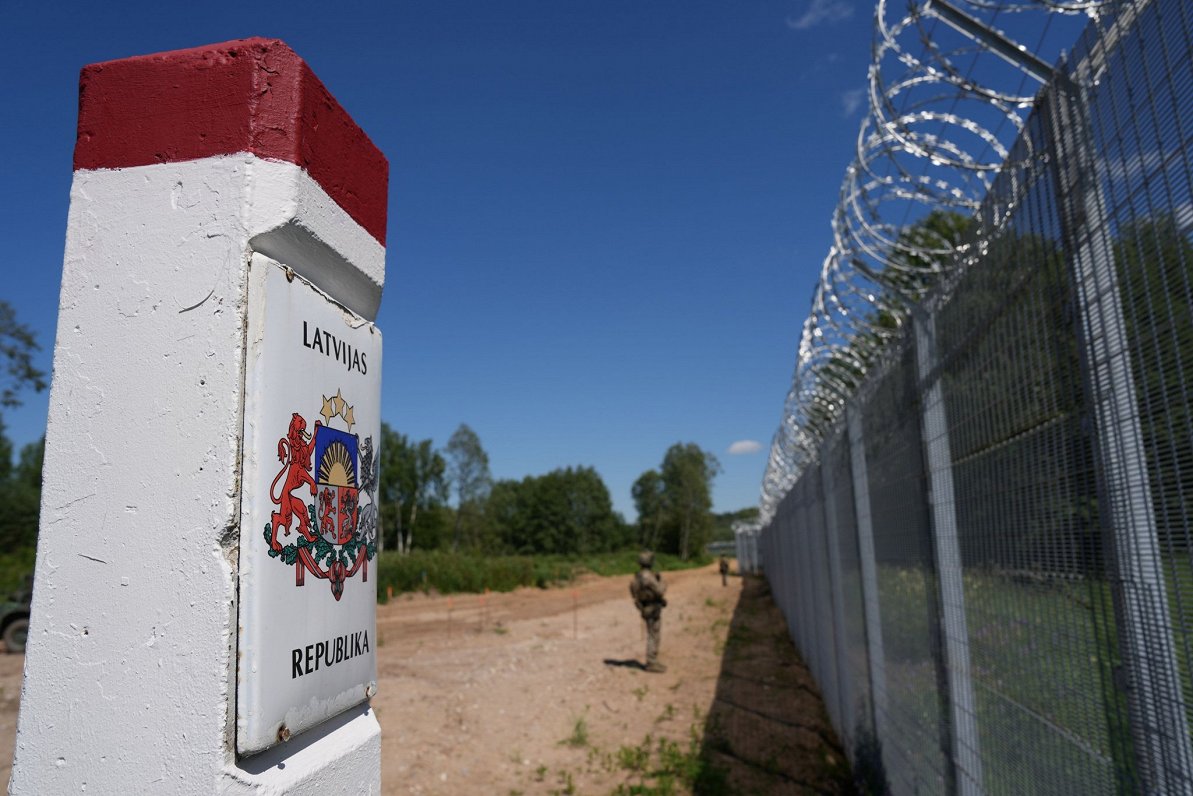
On Monday, December 22nd, the Latvian Cabinet of Ministers conceptually approved the territories necessary for the future implementation of anti-mobility infrastructure development – a list of real estate properties that will be taken into state ownership.
The owners of real estate properties whose land will be expropriated will begin to be notified individually this year by the Ministry of Defence or the State Defence Military Facilities and Procurement Centre, a release confirmed.
“With the decisions taken today, we are starting the next stage in the military strengthening of Latvia’s eastern border. The creation of anti-mobility infrastructure is moving forward, and this is a significant step to ensure the resilience and operational readiness of our country’s defense capabilities. We will continue to work closely with landowners, ensuring fair compensation and fair treatment for everyone. This is the common security of our country, and we are acting responsibly, purposefully and without delay,” said Minister of Defence Andris Sprūds.
The government also supported the designation of the aforementioned territories as objects of national interest, as well as the establishment of easements on real estate owned by private individuals or parts thereof, in accordance with the Law on the Establishment of Anti-Mobility Infrastructure.
“Fair compensation will be paid to real estate owners for the expropriation of the territory necessary for the anti-mobility infrastructure. The determination of fair compensation will be carried out by a fair compensation determination commission, involving a certified real estate appraiser,” said the release.
“Just compensation consists of the market value of the real estate and the amount of damages suffered by the real estate owner,” it was promised – though it remains to be seen whether landowners agree that the amounts they will be offered are fair.
The required real estate portfolio is classified, so the total list of properties will not be made public. Each landowner will be approached individually.
Land plots of various sizes, with a total area of up to 2,000 hectares in the Vidzeme and Latgale regions have been earmarked for expropriation in six municipalities, five of them along the eastern border: Alūksne, Augšdaugava, Balvi, Krāslava and Ludza. A Defence Ministry release also named Smiltene municipality as a location, even though this is located some distance from the eastern border.
The establishment of anti-mobility infrastructure will not be subject to the usual construction, forest management, tree felling and environmental protection requirements. The National Armed Forces will also be able to carry out the establishment of anti-mobility infrastructure without involving merchants. In order to accelerate the military strengthening of the border, the public procurement regulation will not be applied to the creation of military anti-mobility infrastructure, as a time-saving measure.
However “The basic principles of public procurement will be observed in the selection of applicants. The law gives the right to use roads and other territories owned by private individuals for the creation of anti-mobility infrastructure, which, if necessary, will be cleaned up after the work is completed,” the ministry release said.
The National Armed Forces have been militarily strengthening the eastern border of Latvia since March 2024. The goal of the construction of defensive structures is to deter, stop and, if necessary, eliminate an aggressor. Primarily, anti-mobility material warehouses are being created near the most important transport arteries, and the existing infrastructure of the State Border Guard is being strengthened.
In Latgale, on the border of Russia and Belarus, engineering resource depots have been established, where thousands of anti-mobility structural items are located.
Border crossing points and border control points that are already closed have been blocked and border roads and forest trails are being blocked to limit transport movement in the border area. Surveys of the 400 km long Russian-Belarusian border and planning of the placement of obstacles continue. This year, 45 million euros have been allocated for the military strengthening of Latvia’s eastern border.
Select text and press Ctrl+Enter to send a suggested correction to the editor
Select text and press Report a mistake to send a suggested correction to the editor
Tell us about a mistake