Posted on Tuesday, December 23, 2025
|
by The Association of Mature American Citizens
|
0 Comments
|
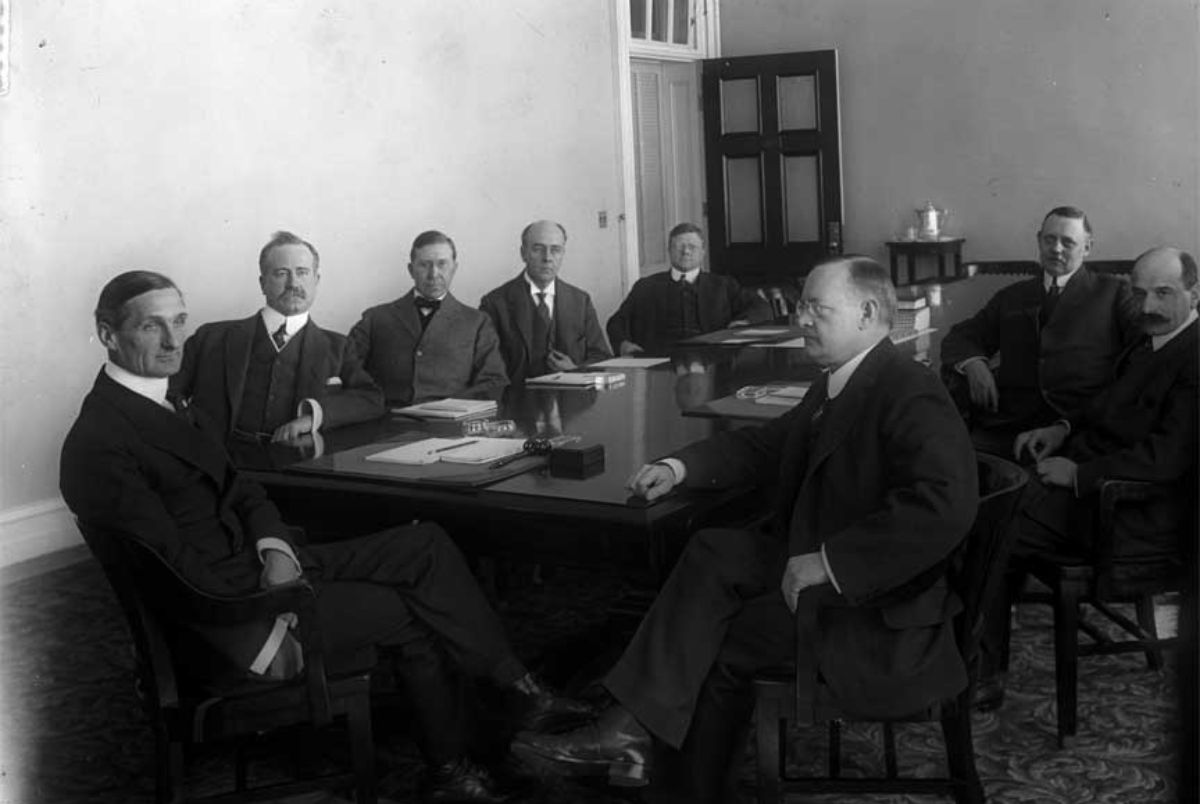
On December 23, 1913, President Woodrow Wilson signed the Federal Reserve Act into law, creating the Federal Reserve System — the central banking system of the United States — after years of political debate and economic pressure for reform. This landmark legislation marked a turning point in U.S. financial history by providing the nation with a more stable, flexible, and resilient monetary framework to respond to financial panics and manage the money supply effectively.
In the years leading up to the Act’s passage, the United States endured repeated banking crises, most notably the Panic of 1907, when the stock market collapsed, several banks failed, and credit dried up, leaving the economy in turmoil. These events exposed fundamental weaknesses in the existing banking structure, which lacked a central authority to supply liquidity and stabilize the financial system during times of stress. Without a central bank, the nation was forced to rely on private financiers and ad-hoc responses to avert economic disaster.
The Federal Reserve Act was the culmination of three years of intense discussion and negotiation among lawmakers, bankers, economists, and regional interests. The resulting system balanced competing visions for central banking — blending public oversight with regional representation — in an effort to address fears of concentrated financial power while ensuring effective national coordination.
Under the law, the Federal Reserve System was structured around twelve regional Federal Reserve Banks, each serving a distinct district throughout the country, and a central Board of Governors based in Washington, D.C. Member banks were required to join the system and maintain reserves, while the Federal Reserve was granted authority to provide an elastic currency, supervise and regulate banks, and act as a lender of last resort during financial stress.
The Act’s passage reflected broad political engagement and compromise. After Democrats gained unified control of Congress and the presidency following the 1912 elections, influential figures like Congressman Carter Glass and Senator Robert Latham Owen worked with President Wilson to prioritize the bill as part of his New Freedom domestic agenda. While there were debates over the degree of private versus public control, the legislation passed both houses of Congress in December 1913 and was promptly signed into law.
The Federal Reserve System was officially operational by late 1914, and over the ensuing decades, its role expanded through subsequent amendments and economic developments. Today, the Federal Reserve continues to serve as the cornerstone of U.S. monetary policy, tasked with promoting maximum employment, stable prices, and a moderate long-term interest rate, shaping both domestic and global economic conditions through its policy tools and regulatory oversight.
