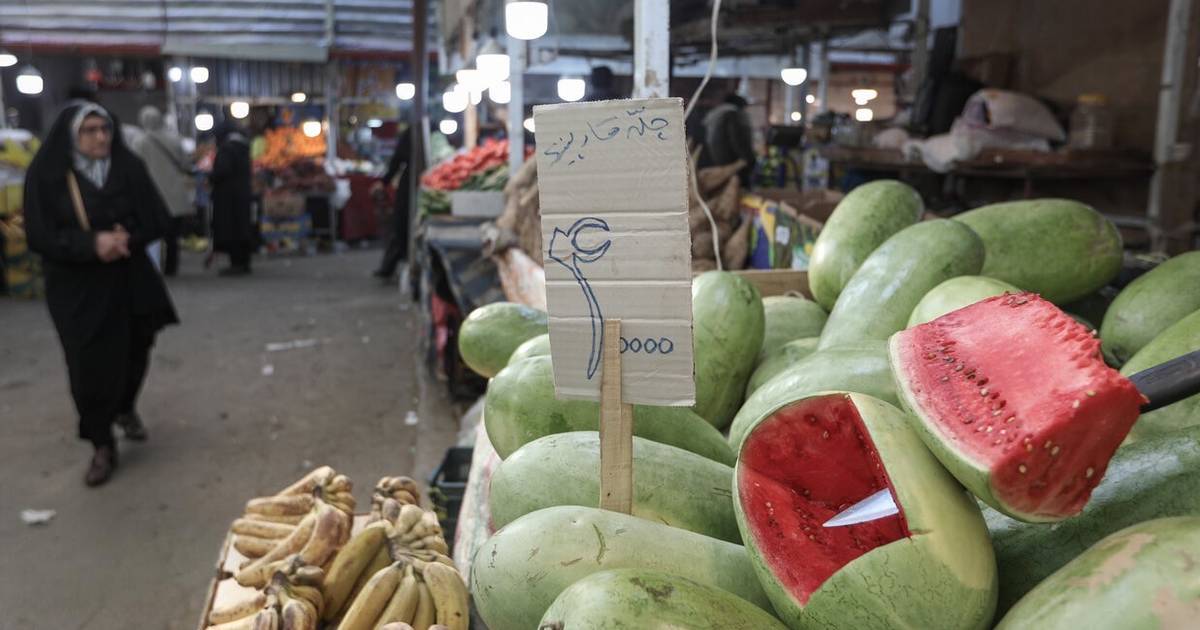
The session was held to share information between the government and lawmakers on how to address public grievances, Abbas Goudarzi, spokesperson for parliament’s presiding board, told reporters after the meeting.
He said a five-member joint committee had been formed between the government and parliament, with briefings delivered by the heads of the Planning and Budget Organization and the Central Bank of Iran.
Ineffective policies
Goudarzi cited oil sales, the return of export earnings and unresolved foreign-currency obligations as key factors shaping current economic conditions, saying their combined impact had produced the present situation.
He pointed to the allocation of about $10 billion in subsidized foreign currency for essential goods as an example of ineffective policy design, adding that roughly $8 billion was directed to livestock feed while consumers continued to pay market prices for basic items.
“There is no logic in allocating this volume of currency if it does not reach its target,” Goudarzi said, adding that existing mechanisms had failed to translate support into lower costs for households.
 Iranian government pins inflation on unbacked money printing
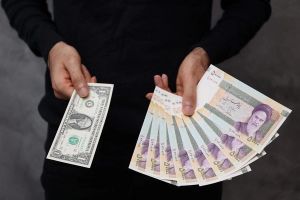 Inside Iran’s maze of multiple exchange rates
Iran introduced its preferential foreign-exchange system in April 2018 under then president Hassan Rouhani, fixing the dollar at 42,000 rials in an effort to cushion households from price shocks and ensure imports of essential goods and medicines using oil revenues.
As the gap between the official and market rates widened – and the rial slid to record lows above 1.32 million per dollar this week – the policy became increasingly costly.
The administration of Ebrahim Raisi dismantled the system as part of what it branded “economic surgery,” arguing that it fueled arbitrage, corruption among importers, and failed to benefit consumers.
Several months later, the government reinstated subsidized currency at 285,000 rials to the dollar, roughly half the market rate at the time. The scheme initially covered 25 categories of goods, though the list has since been pared back.
In recent months, preferential currency has been removed from imports of staples including rice, vegetable oil, red meat, animal feed, and some medicines.
 Iran health officials flag price rises as shortages loom over currency crunch
 Prices soar, basics scarce: Iranians struggle to fill the cart
Budget pressure builds
The Tuesday morning session, Goudarzi said, was held behind closed doors, with an open afternoon meeting scheduled with the president.
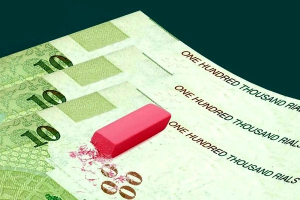
The government will submit the draft budget to Iran’s parliament on Tuesday for the first time based on the new rial, following the removal of four zeros from the national currency.
 Iran’s Central Bank ordered to slash four zeros from national currency
The new year’s budget bill is being submitted to parliament amid signs it has been drafted as one of the most contractionary budgets in recent years.
Goudarzi described the Tuesday meeting as an attempt to coordinate the executive and legislative branches to manage economic and currency challenges.
He outlined a compressed review timetable, saying the draft budget will be examined by the combined budget committee within three days before being sent to the plenary, whether approved or rejected.
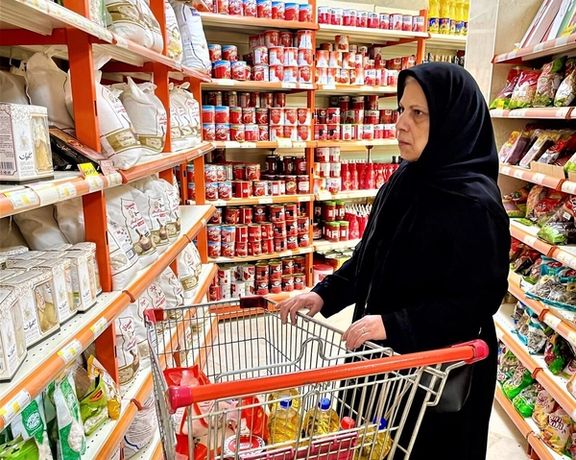 An Iranian shopper browses staple goods in a supermarket as inflation continues to erode purchasing power, pushing food prices further out of reach for many households.
If endorsed, it will then move to specialist committees for further study under strict deadlines before returning to the combined committee and, ultimately, the full chamber.
Goudarzi noted that under parliamentary rules the government was required to submit the budget on December 23, but did so a day later because no open session was held to formally trigger the review process.