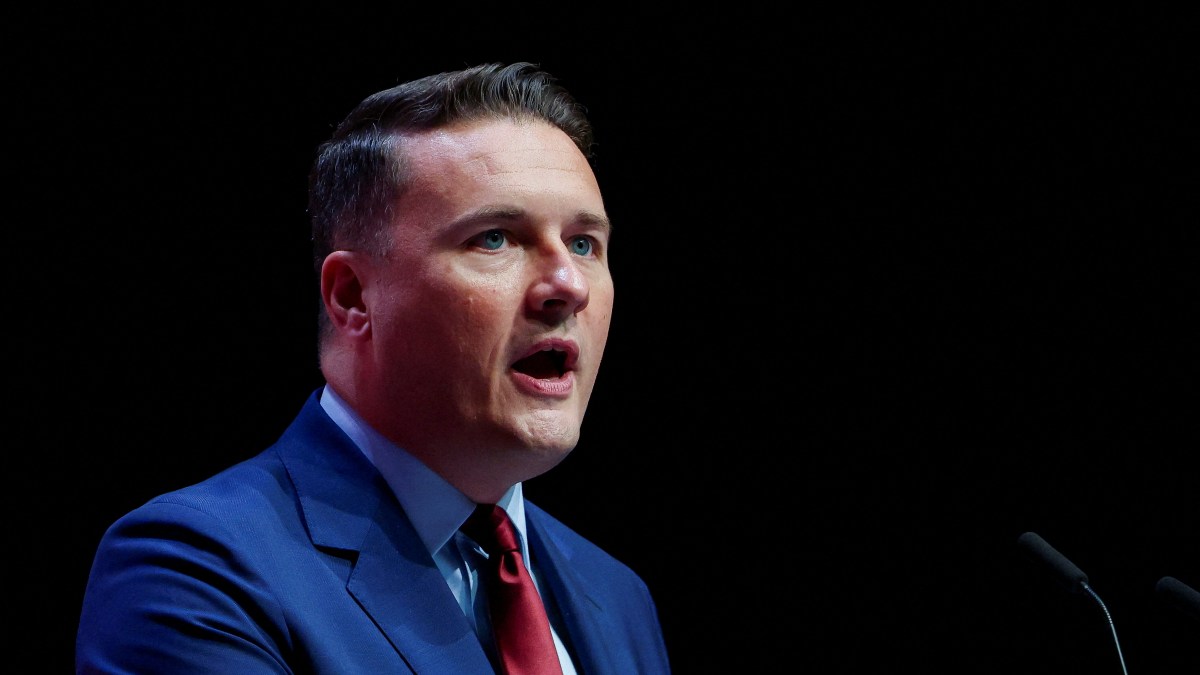

Wes Streeting, the health secretary, says he wants a closer trading relationship with Europe
HANNAH MCKAY/REUTERS
When one Labour cabinet minister talks up rejoining the EU customs union, it can be chalked up as an accidental overstep. When two have done so, it suggests that the ground is shifting within the party. Earlier this month David Lammy pointedly said that rejoining the customs union was “not currently our policy”, with the implication that he would like it to be in the future. On Sunday Wes Streeting echoed this sentiment, speaking of the “economic hit” of Brexit and stating that he wants a “closer trading relationship with Europe”. The deputy prime minister and the health secretary are challenging Sir Keir Starmer’s position.
It is no coincidence that this particular pair have entered waters that had been deemed unsafe for Labour MPs. Both were passionate supporters of the Remain cause. During the most contentious years of the Brexit process, Mr Lammy compared some Conservative MPs to Nazis, while Mr Streeting became an ardent advocate of a second referendum. In their hearts, it is likely that both would wish to reverse the 2016 referendum result and see rejoining the customs union as the first step towards achieving that goal. A recent spate of academic evidence has bolstered their case that closer trade ties with the bloc are necessary to alleviate the UK’s economic problems.
• Wes Streeting: Britain needs to join customs union with EU
There is also a more cynical explanation. Polling for this newspaper suggests that 80 per cent of those who voted for Labour at the last election would support negotiating a customs union with the EU. Another recent survey of Labour members found that 39 per cent support rejoining the single market and customs union, and a further 35 per cent would like to reverse Brexit entirely. With Mr Streeting and Mr Lammy’s leadership ambitions increasingly easy to spot, their posturing on the customs union would no doubt aid their chances if Sir Keir faced a leadership challenge, as some MPs expect could happen in the coming months.
But there are several challenges when it comes to the practicalities of joining the customs union. First, there is no indication that the EU would want the UK back. It has been five years since Brexit formally took place and the EU has not stood still. Bringing such a large economy back into the bloc’s orbit would risk distorting the delicate political equilibrium that has developed in its absence. Brussels would likely demand a high price to rejoin, if the recent negotiations on re-entering the Erasmus programme are anything to go by. Talks would also prove lengthy and the UK would find itself in a supplicant position.
Second, rejoining the customs union would damage other relationships. Since departing the bloc, the UK has negotiated trade deals with India, Japan and Australia. It has joined the Comprehensive and Progressive Agreement for Trans-Pacific Partnership and agreed the outline of a trade pact with America. The details of the latter have yet to be concluded but junking it would incur the wrath of Donald Trump. Given that the US president has shown little compunction in slapping tariffs on countries that displease him, jettisoning his trade deal to move closer to the EU would be unwise.
Rejoining the customs union would mean the UK would lose the regulatory freedoms it has gained, especially in growth sectors such as artificial intelligence. Becoming a rule-taker, not a rule-maker, would prove democratically unsustainable. Above all, there is no mandate for such a U-turn: Labour’s manifesto said “there will be no return to the single market, the customs union or freedom of movement”. Were Sir Keir (or a successor) to renege on this, Labour would incur an electoral price. Mr Streeting and Mr Lammy may be manoeuvring for their personal ambitions, but they may already be shifting the government’s stance in the minds of voters. The prime minister must be clear if he agrees with them, or not.