TEHRAN – Japanese officials have announced their willingness to expand cooperation with Iran in areas that are not subject to sanctions, particularly the environment and pharmaceuticals.
In this line, the Japan External Trade Organization (JETRO) signed a memorandum of understanding (MOU) with the Tehran Chamber of Commerce, Industries, Mines, and Agriculture (TCCIMA) on December 22.
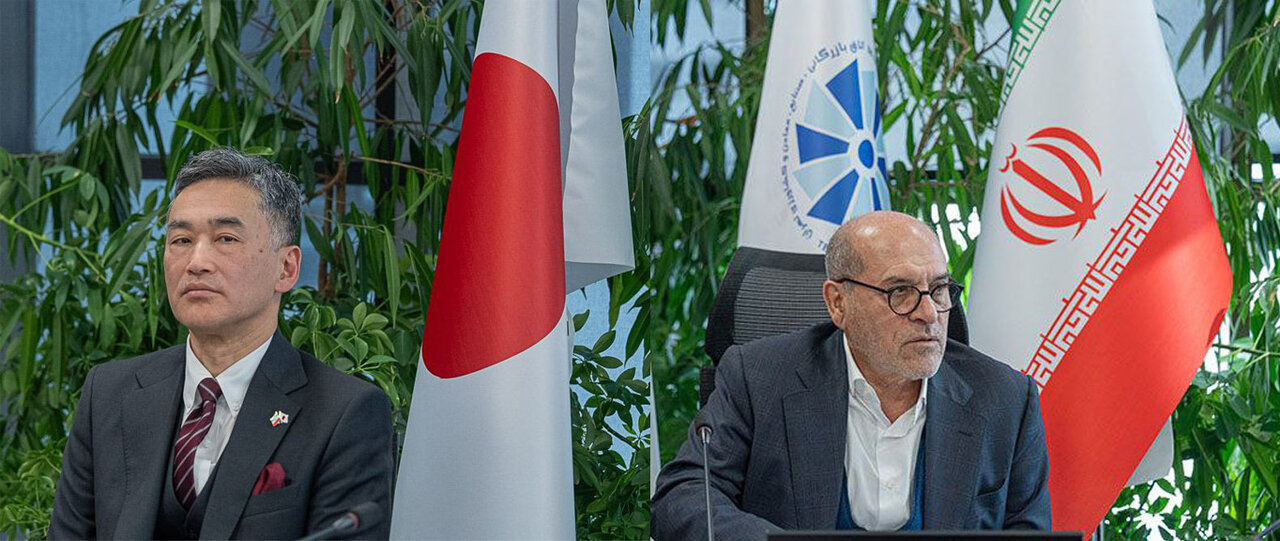
The MOU was signed at a meeting attended by senior Iranian and Japanese economic and political figures, including Mahmoud Najafi-Arab, the head of the Tehran Chamber of Commerce, Industries, Mines, and Agriculture; Hamid Qanbari, the deputy foreign minister for economic diplomacy; and Tamaki Tsukada, Japan’s ambassador to Iran.
The meeting also explored new areas of cooperation. Fereydoun Vardi-Nejad, the secretary general of the Tehran Chamber, pointed to non-sanctioned sectors with immediate cooperation potential, including pharmaceuticals, healthcare, education, food, agriculture, and technology, and said the chamber was ready to engage directly with the Tokyo Chamber of Commerce.
Food, education, and information technology are among other fields of interest to the Japanese side for enhancing collaborations, the TCCIMA website quoted Najafi-Arab as saying.
For his part, Tsukada said the two sides can also foster cooperation in the fields of culture, artificial intelligence (AI), and environment, particularly in decarbonization.
Saeed Tajik, head of the Tehran chamber’s energy and environment commission, for his part, called for renewed cooperation on air pollution management and environmental studies, citing past collaboration with the Japan International Cooperation Agency (JICA). About two decades ago, the Japanese conducted a comprehensive study on the source of the air pollution in Tehran. During the meeting, the officials decided to resume and update the studies in cooperation with the Department of Environment (DOE).
He also highlighted opportunities for joint efforts on greenhouse gas reduction and carbon certification.
Japan’s contributions
Over the past 10 years, Japan has made generous contributions to help Iran address environmental issues.
In November, Tsukada voiced his country’s readiness to implement environmental protection projects in the southwestern Khuzestan Province, particularly in areas related to water and waste management.
The environmental challenges, such as waste accumulation, water scarcity, and high sediment transport to urban and rural areas in Khuzestan, can be managed, Mehr News Agency quoted Tsukada as saying on Tuesday during a meeting with Khuzestan Governor General Mohammad-Reza Mavalizadeh
Japan’s financial aid has supported the implementation of different projects to restore wetlands and Lake Urmia.
In October, with the financial support of the Government of Japan, the Food and Agriculture Organization (FAO) of the United Nations and the United Nations Development Programme (UNDP) signed a cooperation document, aiming to help revive the drying Lake Urmia in north-western Iran.
Lake Urmia in West Azarbaijan province started to dry up in the 2000s. The lake was once the largest in West Asia and the sixth-largest salt lake in the world, with a water surface area of 5,000 to 6,000 square kilometers.
Titled “Enhancing Restoration Activities in Lake Urmia through the Effective Use of Agricultural Water,” the initiative aims to promote sustainable agriculture and support the restoration of one of the country’s most vital ecosystems — Lake Urmia.
On October 27, ICCIMA Head Samad Hassanzadeh met Tamaki to explore new avenues for trade cooperation between the two nations, emphasizing non-sanctioned sectors such as healthcare, agriculture, and food industries.
The envoy noted that Iran has achieved remarkable progress in nanotechnology and artificial intelligence, and expressed Japan’s willingness to host Iranian engineers and specialists in these areas, saying there are promising opportunities for them to work and innovate in Japan.
Hassanzadeh, for his part, proposed cooperation in pharmaceuticals, hospital construction, and food production, noting that ICCIMA has conducted research studies supporting deeper bilateral relations in these fields.
MT/MG
Photo: Mahmoud Najafi-Arab, the head of the TCCIMA (R) and Tamaki Tsukada, Japan’s ambassador to Iran (L)