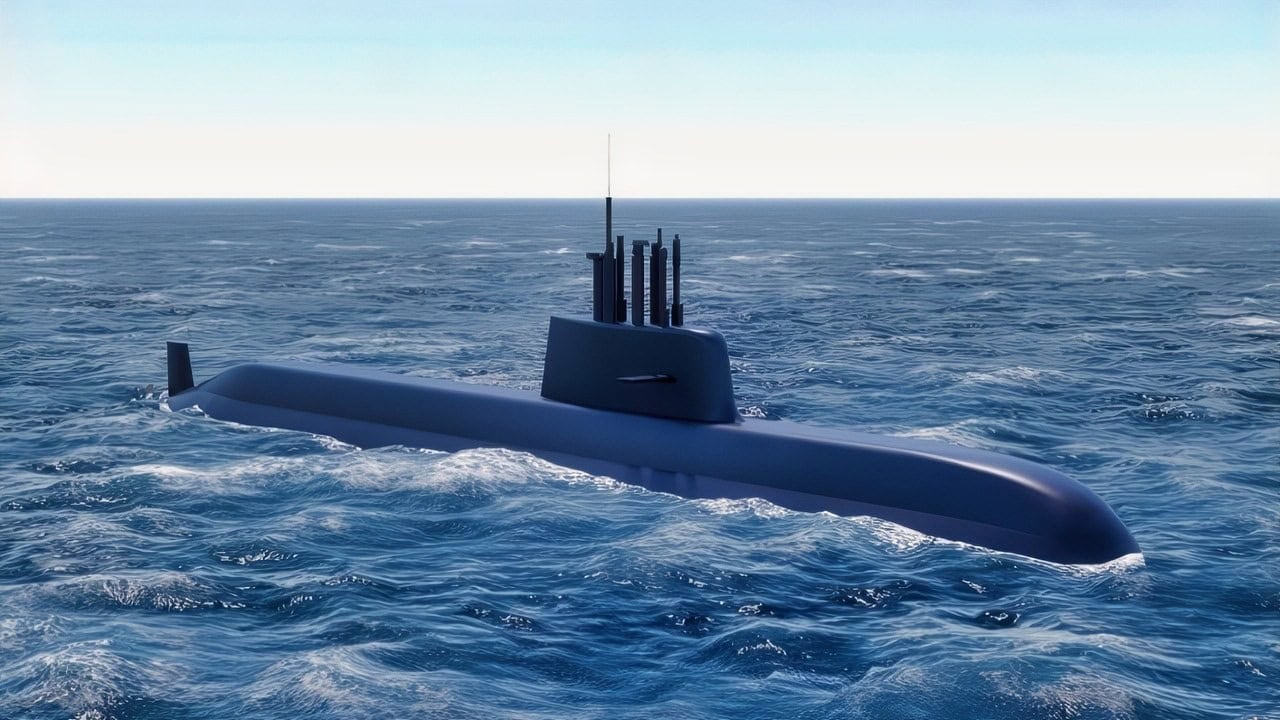
Key Points and Summary – South Korea’s KSS-III program marks its leap from license-built German designs to a fully indigenous, heavily armed conventional submarine.
-Featuring AIP, lithium-ion batteries, and vertical launch cells for Hyunmoo 4-4 SLBMs and land-attack cruise missiles, the class gives Seoul near-nuclear-style second-strike credibility against regional threats.
-Batch II upgrades add range, stealth, and improved combat systems, while Batch III promises even more advanced sensors and launch options.
-Beyond deterrence, KSS-III underpins South Korea’s growing ambitions as a global defense exporter, with Ottawa and others eyeing the design as they modernize their undersea fleets.
Inside KSS-III: The Conventional Submarine That Acts Like a Nuclear Boat
South Korea’s KSS-III program, also known as the Dosan Ahn Changho-class for Batch I and Jang Yeongsil-class for Batch II, marks a major milestone in the Republic of Korea Navy’s evolution from license-built submarines to fully indigenous designs.
This program is the third phase of South Korea’s long-term submarine development strategy, following the KSS-I Jang Bogo-class and KSS-II Son Won-il-class.
Unlike its predecessors, which were based on German Type 209 and Type 214 designs, the KSS-III is a homegrown platform that integrates advanced technologies such as air-independent propulsion (AIP), lithium-ion batteries, and vertical launch systems (VLS) for submarine-launched ballistic missiles (SLBMs).
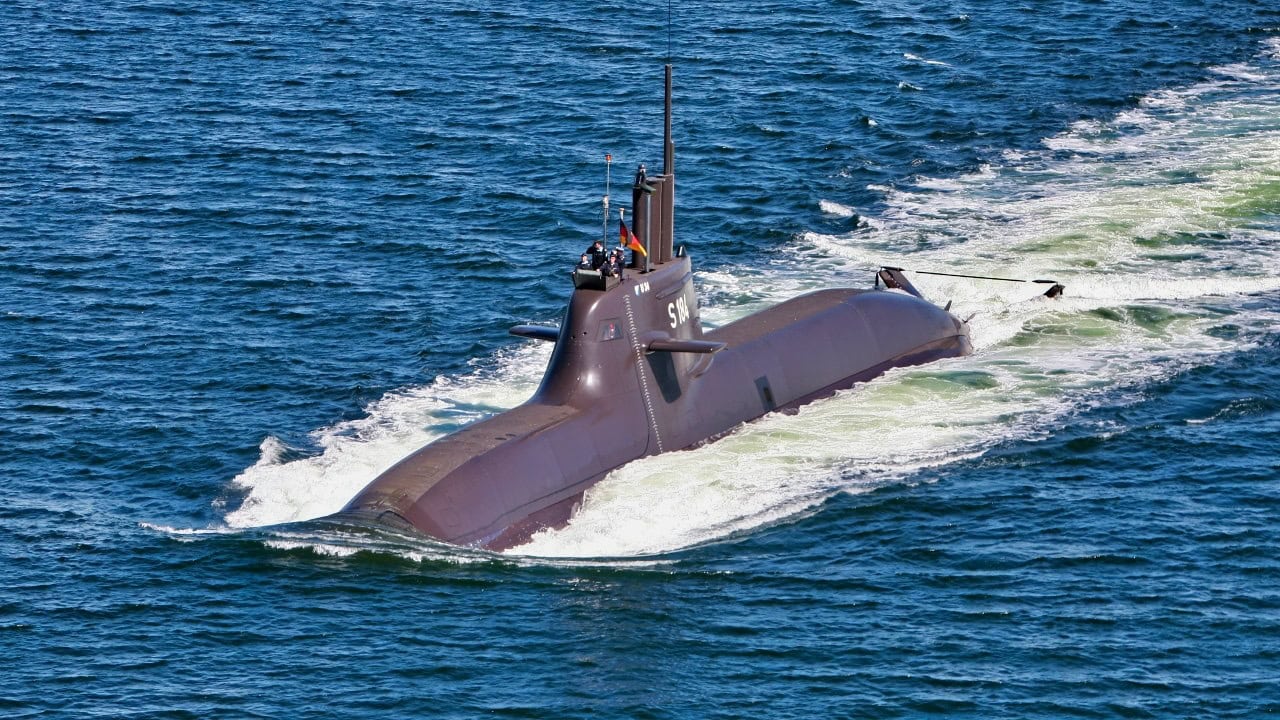
Type 212A Submarine from Germany.
Design and Development
The development of KSS-III began in earnest in 2014, with Hanwha Ocean and HD Hyundai Heavy Industries leading the design and construction.
The first submarine, the ROKS Dosan Ahn Changho, was launched in 2018 and commissioned in 2021. It was followed by the Ahn Mu in 2023 and Shin Chae-ho in 2024, completing Batch I. Batch II began with the launch of the ROKS Jang Yeongsil in October 2025. That ship is currently undergoing outfitting and trials and is expected to enter service by 2027. In total, nine submarines are planned across three batches, with Batch III expected to incorporate even more advanced features.
The KSS-III is a large conventional submarine, with Batch I displacing about 3,358 tons surfaced and 3,750 tons submerged, and measuring 83.5 meters in length. Batch II is slightly larger, at 3,600 tons surfaced and 4,000 tons submerged, with a length of 89.3 meters.
Both batches use diesel-electric propulsion combined with AIP systems, allowing extended underwater endurance. Batch I employs MTU diesel engines and Bumhan PEM fuel cells, while Batch II adds lithium-ion batteries developed by Samsung SDI. These batteries significantly improve energy density and enable longer submerged operations and higher-speed bursts. These features give the submarines an endurance of more than 20 days submerged and up to 50 days operational, rivaling some nuclear-powered submarines in mission flexibility.
Stealth and Electronics
The KSS-III was designed to be as stealthy as possible. The hull is constructed from HY-100 steel and coated with anechoic tiles to reduce acoustic signatures. Elastic mountings and vibration-damping systems further minimize noise, while the propeller design and auxiliary propulsion systems in Batch II enhance stealth performance. These measures make the KSS-III one of the quietest conventional submarines in service today.
The submarine is also fitted with state-of-the-art combat systems. Hanwha developed the integrated combat management system, which controls sensors, weapons, and navigation. The sonar suite includes hull-mounted, flank, and towed-array systems from LIG Nex1, supplemented by mine-avoidance sonar from Thales. Electronic support measures are provided by Indra, and the optronic mast comes from Safran. These systems give the submarine excellent situational awareness and targeting capability in complex underwater environments.
Offensive Capabilities
In terms of armament, the KSS-III is the first South Korean submarine class capable of firing ballistic missiles.
In addition to six 533-mm torpedo tubes capable of firing Tiger Shark heavyweight torpedoes and UGM-84 Harpoon missiles, the submarine features vertical launch systems for ballistic and cruise missiles.
Batch I carries six VLS cells for the Hyunmoo 4-4 SLBM, a conventionally armed missile with a range of approximately 500 kilometers. Batch II expands this capability to 10 cells, accommodating both SLBMs and Chonryong land-attack cruise missiles.
In September 2021, the Dosan Ahn Changho successfully test-fired a Hyunmoo 4-4 SLBM, making South Korea the first country to deploy ballistic missiles on a non-nuclear submarine. This capability provides a powerful deterrent against regional threats, particularly North Korea.
South Korea has improved its KSS-III submarines across new batches. Batch II introduces improved stealth features, upgraded sonar and combat systems, and lithium-ion batteries for greater endurance. These enhancements position the KSS-III as one of the most capable conventional submarines in the world, rivaling advanced designs from Japan and Germany.
Enhancing South Korea’s Navy
The KSS-III program strengthens South Korea’s deterrence posture and contributes to regional stability. The ability to launch SLBMs from a stealthy platform gives Seoul a second-strike capability, reinforcing its “massive retaliation” doctrine.
At the same time, the program has significant industrial and export implications. South Korea is actively marketing the KSS-III to countries such as Canada, the Philippines, Poland, and Peru. Ottawa is considering a proposal worth up to $24 billion for a fleet of KSS-III submarines as part of its future submarine program. These export efforts highlight South Korea’s emergence as a major player in the global defense market.
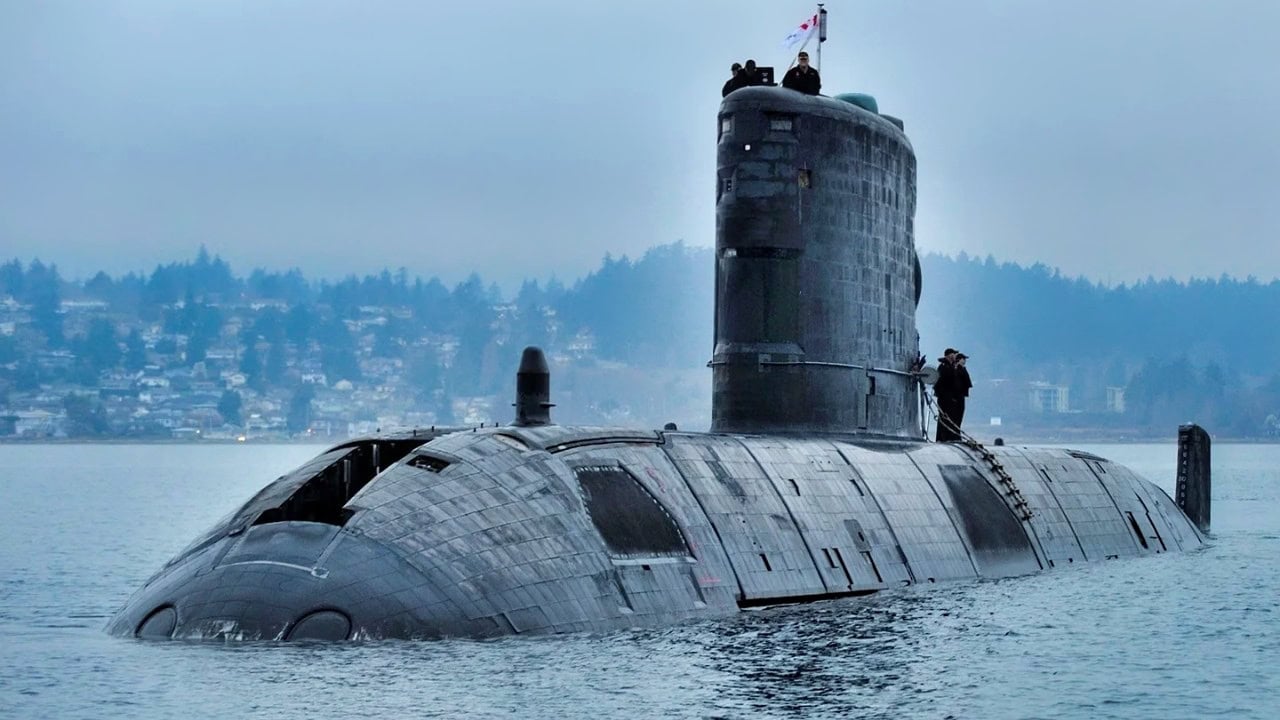
Victoria-Class Submarine Canadian Navy. Image Credit: Government Photo.
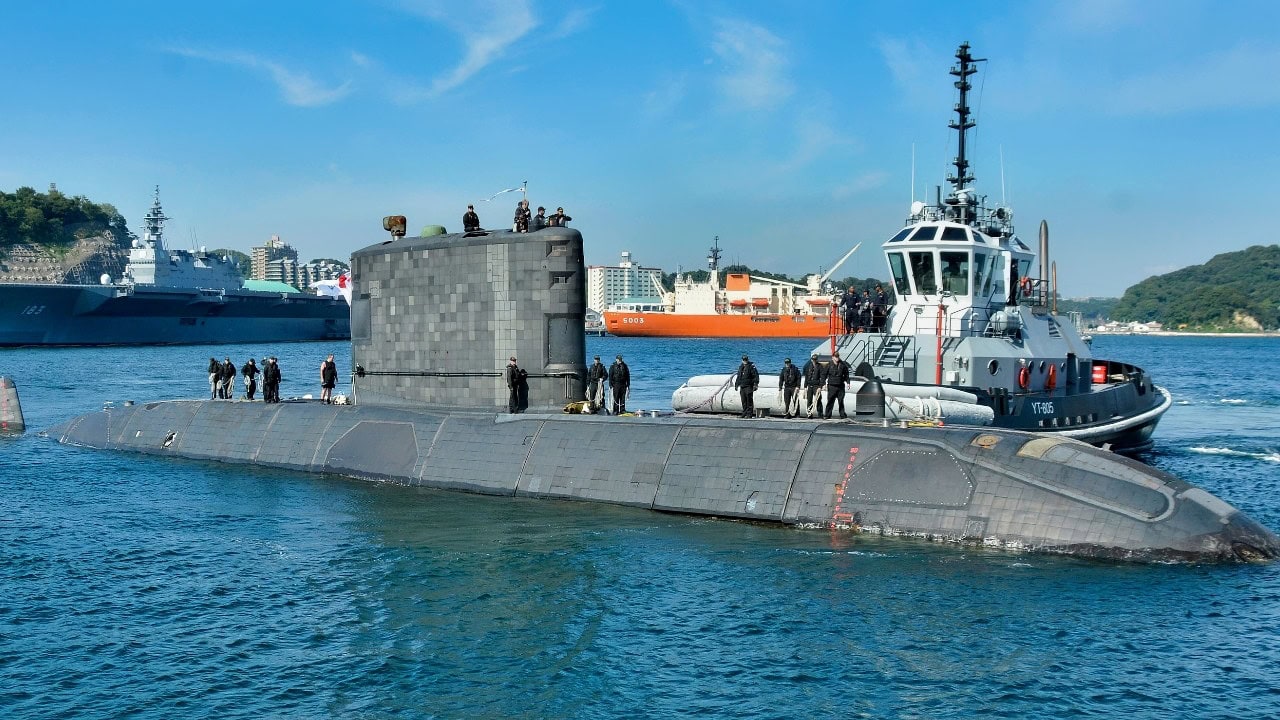
Canada Victoria-Class Submarine. Image Credit: Creative Commons.
Batch III is expected to incorporate even more advanced technologies, including next-generation VLS systems capable of launching heavier SLBMs from greater depths, improved lithium-ion battery technology, and enhanced sonar suites.
There are also discussions about transitioning to nuclear propulsion in collaboration with the United States, which would dramatically increase endurance and operational flexibility. If realized, this would mark another transformative step for South Korea’s naval capabilities.
About the Author: Isaac Seitz
Isaac Seitz, a Defense Columnist, graduated from Patrick Henry College’s Strategic Intelligence and National Security program. He has also studied Russian at Middlebury Language Schools and has worked as an intelligence Analyst in the private sector.