
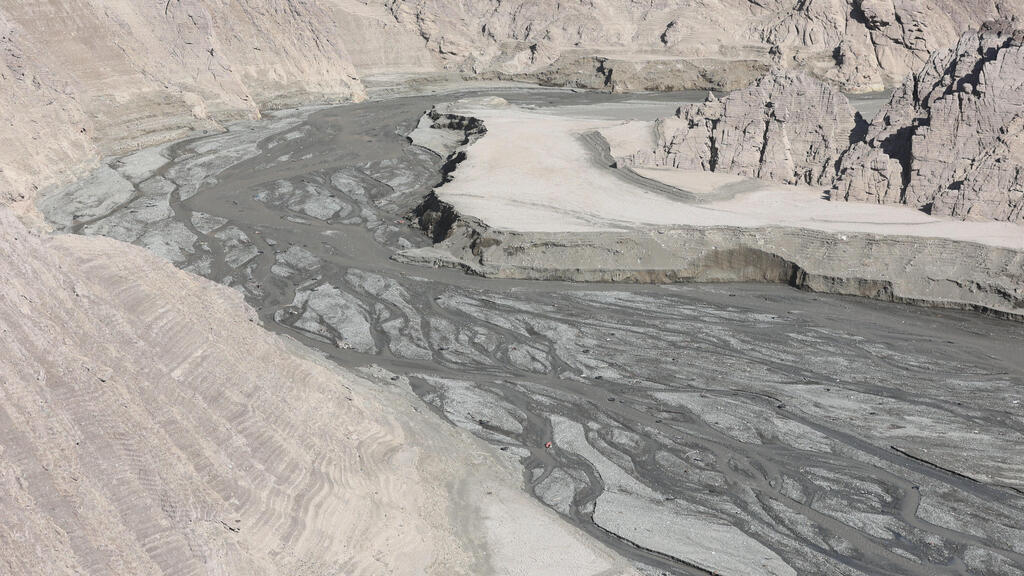
State media reported Tuesday that the reservoir at the Amir Kabir Dam, also known as the Karaj Dam and one of Tehran’s main water sources, remains largely depleted despite sporadic rainfall since the start of winter. Rain has fallen intermittently in Tehran since early December after months of dry conditions. Some of the city’s reservoirs have partially refilled, but water levels remain critically low.
Iran, largely an arid country, has endured years of heat waves and drought, a trend expected to worsen with climate change.
The Tasnim news agency reported that the Amir Kabir Dam currently holds about 6 million cubic meters of water out of a capacity of 205 million cubic meters, roughly 3% of its capacity. Hamshahri, a newspaper published by the Tehran municipality, said it is not possible to extract additional water from the dam’s current reserves.
The official IRNA news agency reported Tuesday that water levels at the Karaj Dam are down 88% compared with the same period last year. Water volumes at other dams around Tehran are also down by tens of percentage points compared with 2024 levels. According to IRNA, rainfall in Tehran and the neighboring Alborz province has fallen to a historic low.
3 View gallery
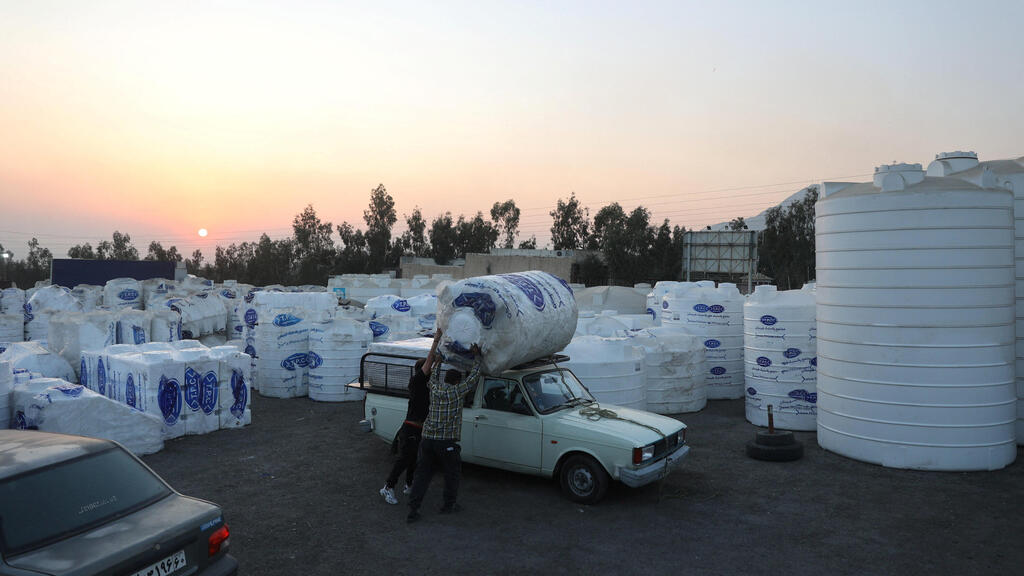
Iranians are purchasing water storage tanks to cope with the shortage
(Photo: Majid Asgaripour/WANA via Reuters)
Amid the rare rainfall and snowfall over the weekend, Iran’s ambassador to Lebanon, Mojtaba Amani, mocked Israeli Prime Minister Benjamin Netanyahu in a post on X. Referring to remarks Netanyahu made months earlier about water management, Amani wrote that while Netanyahu had accused Iran of water shortages and praised Israel as a model, “today, thanks to the prayers of the Iranian people, rivers have overflowed and mountains are covered with snow,” while Israel, he claimed, covets neighboring countries’ water resources.
3 View gallery

Iran’s ambassador to Lebanon, Mojtaba Amani, mocked Israeli Prime Minister Benjamin Netanyahu in a post on X