Hello,
I’m trying to make sense of the Lithuanian side of my family. The more I try to figure it out the more confused I get. Hopefully someone here would be able to help me make sense of the information I have and maybe help me figure out anything from before they came over (sometime before 1919.) Catherine/Katherine/Constance I’m pretty sure are the same woman even though her age and names are different depending on the record I’m looking at, based on what my grandmother was able to pass on to me years ago. She said her mother’s name was Stella Sutkitis, her grandmother who raised her after her mom died was Constance Visgirda – though she knew her as Grandma Brown.
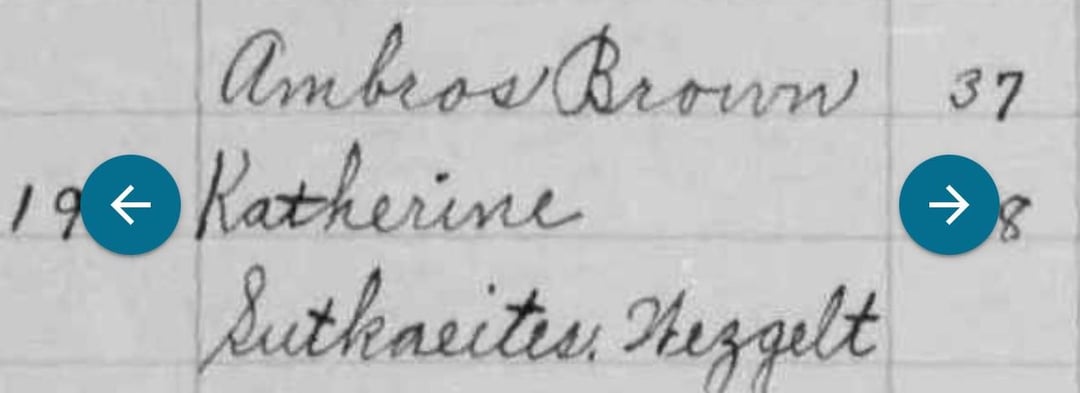
June 4 1919 marriage (photos from the records here, I’m making best guesses on spellings)
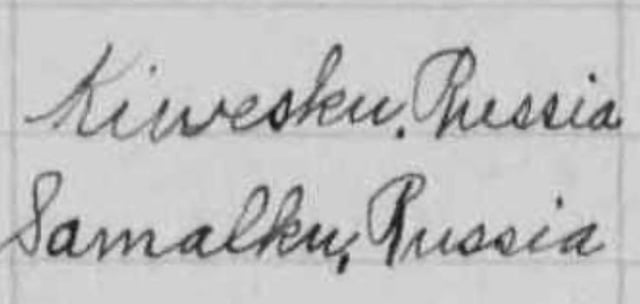
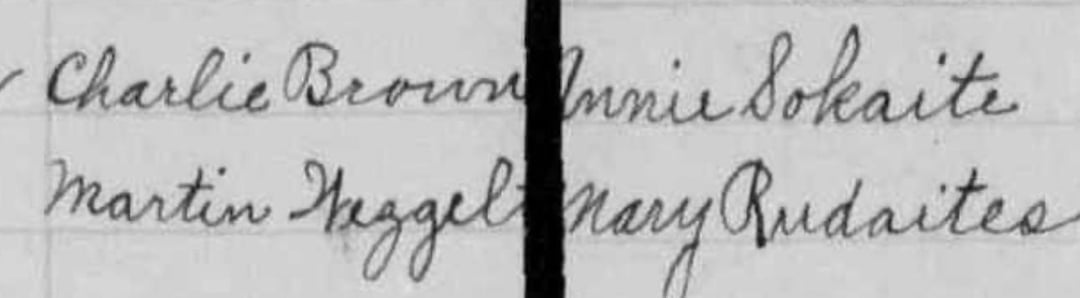
Katherine Sutkaites Weggelt age 38 of Samalku Russia, father Martin Weggelt, mother Mary Rudaites
Married to Ambrose Brown age 37 of Kievesku Russia, father Charlie Brown, mother Annie
Sokaite
1920 census
Katherine brown age 38, Ambrose Brown age 38
Daughter Stella age 1, son Albert age 1/12
1930 census
Catherine brown age 52, Ambrose Brown age 48
Daughter Stella age 12, son Albert age 11
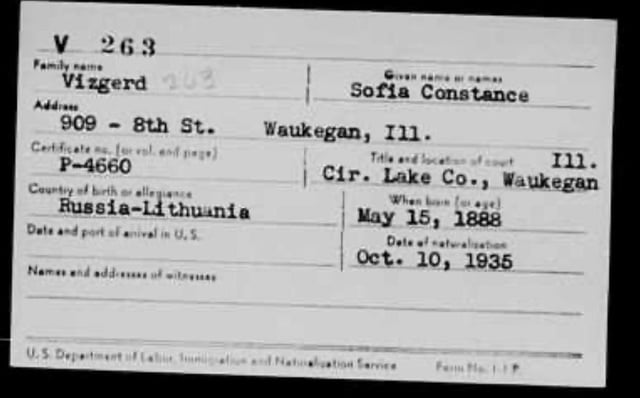
Naturalization index (this is the other photo – typed out but the name and age is much different than on other records)
Sofia Constance Vizgerd, born May 15, 1888 naturalized October 10, 1935
For Stella who died in 1939
Father listed as Ambrose H Brown, mother as Constance Vestuar
Victor Albert Brown (born 1919) social security info lists Ambrose Brown and Constance Vizguerda as parents
Based on any of this, would anyone be able to tell me anything about what their names actually would be, or where they were born? I can’t find anything about Samalku or Kievesku but I’m sure those are spelled wrong as a combination of me probably not reading the writing correctly and the person who recorded the information making best effort to spell those places phonetically. Being able to go back any further than the Anglicized names of Ambrose and Katherine’s parents is probably a long shot, but if anyone has any ideas on how to do that I’d appreciate it.
Also if this should be posted somewhere else please let me know! Thank you
by shawn703
3 comments
You have to know that lithuaniam family names sound different for man and woman, and not only that, it sounds different depending if she married or not. So Rudaitė is maiden name. Male name is Rudaitis and for married woman it would by Rudaitienė. Same with Visgirda(male), Visgirdaitė, Visgirdienė. I dont know why that woman was given male family name. Šokaitis, Šokaitė, Šokaitienė.
All these family names are still widely used in Lithuania.
I cant help with the name next to Russia. I cant recall any places in Lithuania with similar names.
I am no historian, nor any expert in anything, so don’t take my words for truth. These are just ideas, what might have impacted why there are different names all over the place.
Example of hypothetical boy’s full name:
“Jonas Kazimieras Dominykas Petraitis”.
“Jonas” – is an actual name that parents gave to a boy one he was born.
“Kazimieras” – is a holy name that was given by catholic church priest when accepting communion or whatever that event is called.
“Dominykas” – is the father’s name. Lithuanians themselves traditionally would not use them, but since it’s during Russian occupation and Russian officials would be writing based on Russian rules, they might add their father’s name in official paperwork.
“Petraitis” – a last name inherited most likely from a father, in rarer occasions from mother or might be other source.
1. Depending on who has written paperwork that might have affected which names would be included or omitted from official documentation.
Church documentation might have something like “Jonas Kazimieras Petraitis”.
Czar’s russian documents might have something like “Jonas Dominykas Petraitis”.
Letter in unofficial language might have something like “Jonas iš Petraičių šeimos”.
2. Some people would start using the equivalent name of the environment that are present in:
Lt “Jonas” – En “John”.
Lt “Kazimieras” – En “Casimier”/”Kazimir”.
Lt “Dominykas” – En “Dominique”.
Lt “Petraitis” – En “Peter”/”Petrite”.
3. Some people have pretty common name, that most people who know might use a nickname, often a variation of their original name. Example: “Jonelis”, “Jonce”, “Jonutis”, “Jonaitis” and so on. If this person has been called for so many years by that nickname, they might identify themselves more with that nickname rather than the original name, which might cause that when immigrating to another country for convenience they might say their nickname as if it’s their actual name.
4. Plenty of people get their names and last name gutted, because people who write their names write them as they hear it and it’s based on sounds they are used, and since the person who says it is from different language and culture says with different sounds and dialect/accent, certain sounds might be interpreted differently and therefore written differently than it was originally.
5. Many people would have written names in cursive, what is written by one person in cursive in one culture/environment, could be read and rewriten by another person in another culture differently.
6. It can be really difficult to look for documents of the past for the one specific person when the only identifier is the name and last name and when depending on situation different names could have been written in documents. You might looking at the same person record, or it could be a record of another person altogether who might not have been related at all. Therefore there are always a certain level of uncertainty when looking through historic documents.
7. In some cases some people would due to various reasons identify themselves as different people for all kind of reasons. That might have been due to persecutions or due to war or because some other situation.
8. People sometimes change their names.
I mean good luck. But you have to accept a high level of uncertainty when looking at those documents. Also that whenever you find an answer to one question, you will have nine more questions in its place.
Also my example is with a man’s full name, women have more variations related to marriage and taking husbands name.
A bit of a long shot, but ,,Sumalku” could be a butchered version of Suvalkai or Suvalkai governate. The other place name could be Kyviškės?? Im basing this on how it sounds to me and vibes.
Comments are closed.