In this issue of “Focus on Ag”, I am highlighting my “Top 5 Ag Topics” for 2025, based on issues that were discussed in the columns throughout the year.
Tariffs and the China Trade Deal
If there were a “2025 word of the year” in agriculture, it would probably be “tariff.” A tariff is typically a tax paid at the border on products that are being imported from another country. This could be for products that are sold directly to consumers or manufacturing companies, or are products that are processed into other products for sale. Generally, the added cost of the tariffs gets added on to prices that businesses or consumers pay for the end products, or it increases the cost of materials and inputs for manufacturers and farmers. Tariffs placed by other countries on products being exported from the United States increases the cost of those products by purchasers in the foreign countries; however, it does not usually change the original price that the farmer or producer of the product receives. If foreign tariffs are too high, it can discourage foreign buyers from purchasing U.S. products.
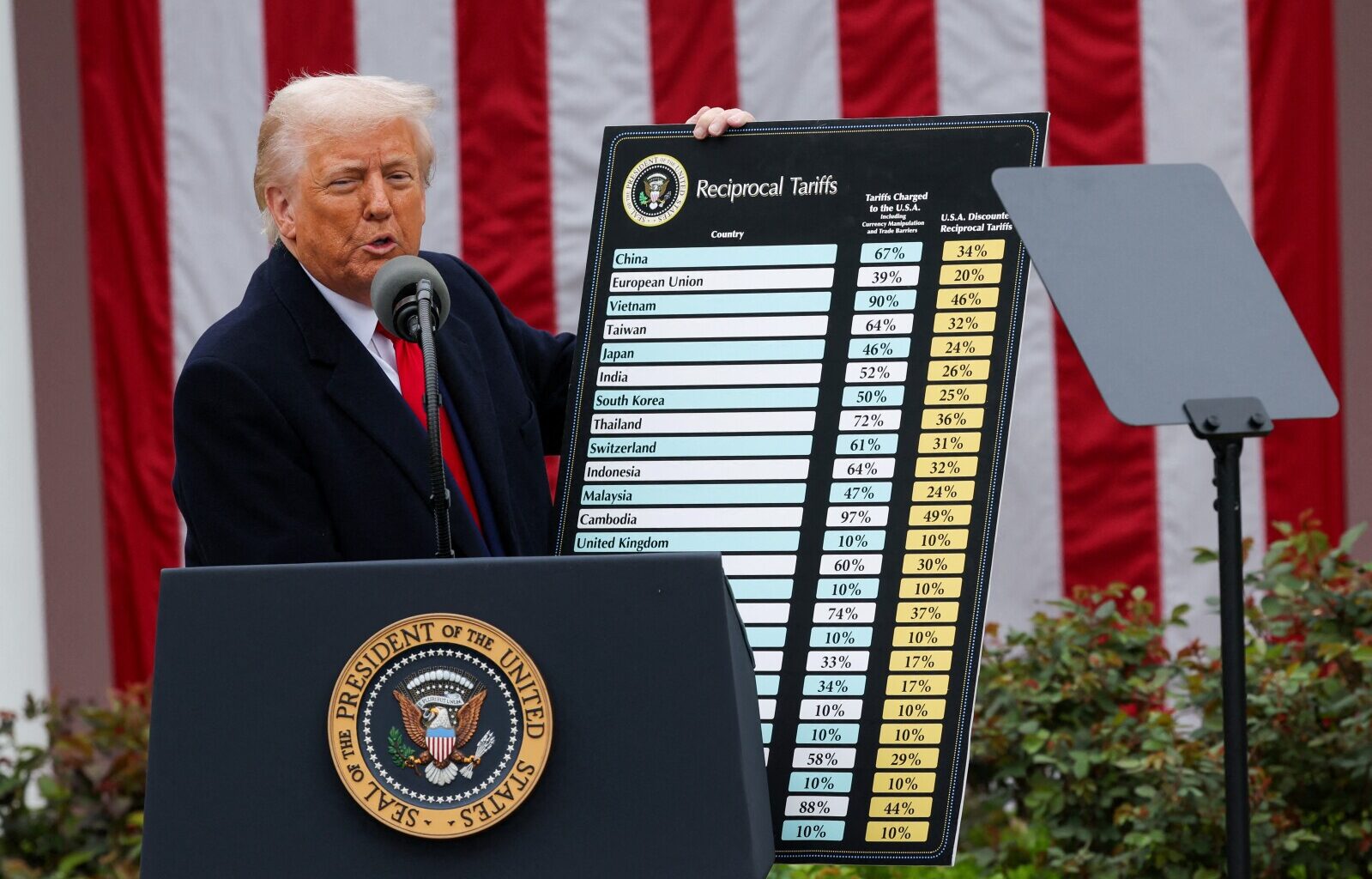
Earlier this year, President Trump announced increased tariffs on a variety of goods being imported into the U.S. from Canada, Mexico, and China; however, those added tariffs have been reduced or delayed on some products, following some trade concessions by the three countries. Three of the primary U.S. agriculture export products that could be impacted by retaliatory tariffs are soybeans, corn, and pork. This means that a potential trade war with China, Mexico, Canada, and other countries involving retaliatory tariffs on U.S. ag products could have a major impact on farmers and the ag industry in the Midwest, where most of these products are raised. In recent years, slightly over 40% of U.S. soybeans have been exported, along with about 20% of the corn and 25% of pork produced in the U.S.
After months of uncertainty, a new U.S. trade deal with China, announced in late October, provided some stability and certainty to the soybean market. Soybean market prices had struggled for most of 2025 due to a lack of soybean export sales commitments to China and other countries, as well as a fairly large 2025 U.S. soybean crop being projected by USDA. China committed to purchase 12 million metric tons, or 441 million bushels, of U.S. soybeans in the current 2025-26 marketing year, as well as a minimum of 918 million bushels annually for the following three years. The proposed three-year Chinese soybean purchases would bring the export level nearly back to the 2023-24 U.S. soybean exports to China of 992 million bushels. USDA also announced commitments of soybean sales totaling almost 700 million bushels of U.S. soybeans to other countries in the coming year, mainly to countries from southeast Asia.
Low grain prices and tight profit margins in 2025
For the third year in a row, most Midwest crop producers struggled with low grain prices and poor profit margins. The 2025 “new crop” corn prices in the upper Midwest have not offered many marketing opportunities during the entire year. The “new crop” corn prices in Southern Minnesota started the year near $4.10 per bushel and spent much of the first six months between $4 and $4.25 per bushel. Since mid-summer, local corn prices have remained below $4 per bushel at most local grain markets, with basis levels near $.50 per bushel below Chicago Board of Trade prices. Basis levels in North and South Dakota, as well as in western Minnesota, have been wider yet, resulting in even lower local corn price levels. Many crop producers likely had corn breakeven costs of $4.75-$5.25 per bushel for the 2025 crop year at average corn yields on cash-rented land. As a result, most farmers have not been able to “lock-in” a forward price at a profitable level on their 2025 corn crop. USDA is currently estimating an average “on-farm” corn price of $4 per bushel for the 2025-26 marketing year, which ends on Aug. 31, 2026.
The 2025 “new crop” soybean price in southern Minnesota started the year near $9.50 per bushel, and spent most of the year between $9.25 to $9.75 per bushel, until late October. Soybean prices have improved by about $1 per bushel following the announcement of the new trade agreement with China, but have declined again by early December. Some farmers were not able to benefit from the improved soybean prices, as a result of having already sold their 2025 soybean crop following harvest for needed cash flow purposes. The 2025 cost of production for soybeans on cash-rented land is likely near $10.75 to $11.50 per bushel at average yields for many producers. USDA is currently estimating an average “on-farm” soybean price of $10.50 per bushel for the 2025-26 marketing year; however, local soybean prices in many portions of the upper Midwest have trailed that level in the past few weeks.
High level of ad-hoc government farm program payments in 2025
Government farm program payments played a significant role in cash receipt levels for many crop producers in 2025. USDA estimates that approximately $40.5 billion in direct government payments will be paid to farmers in 2025, which would be an increase of 300% from $9.6 billion in 2024. The 2025 estimated government payments would represent nearly 25% of the projected total U.S. net farm income for the year. The 2025 payment level would be the second-highest level in the past few decades, trailing only the $46 billion that was paid out in 2020. The large federal government farm program payments in 2025 were the result of one-time 2024 economic assistance payments, 2023 and 2024 disaster assistance payments, and large 2024 regular farm program payments for corn and soybeans in some areas due to very low crop yields in 2024. There were also the regular CRP, dairy margin coverage, and other traditional government payments that some farmers received. Recently, USDA announced an additional $12 billion in payments that will be allocated through the “Farmer Bridge assistance” program to offset low profit margins for crop production in 2025.
Passage of the ‘One Big Beautiful Bill’

The so-called “One Big Beautiful Bill” that Congress passed this past summer contained some provisions that will enhance the “safety net” for many Midwest crop producers, beginning with the current 2025 crop year. This included updates to many of the reference price and crop insurance provisions that are normally addressed when a new farm bill is written. Most of the farm “safety net” provisions that were updated in the legislation have been in place since the 2014 Farm Bill and were continued in the 2018 Farm Bill until this year. For 2025 and the next five years, the statutory or minimum reference prices that determine potential farm program payments were increased from $3.70 to $4.10 per bushel for corn, from $8.40 to $10 per bushel for soybeans, and from $5.50 to $6.35 per bushel for wheat, with the ability to be increased on a year-to-year basis. For the 2025 and 2026 crop years, the reference prices are $4.42 per bushel for corn, $10.71 per bushel for soybeans, and $6.35 per bushel for wheat. For the current 2025 crop year only, eligible producers will receive the higher of any potential PLC or ARC-CO payments, regardless of which program they were enrolled in. Any potential payments will be paid in October 2026.
Record beef cattle prices in 2025
From a profitability standpoint, 2025 was more kind to livestock producers than it was to crop producers. Together with the large level of government farm program payments in 2025, the total cash receipts from livestock production in 2025 was largely responsible for the improved 2025 overall U.S. farm income projections released by USDA. Total 2025 livestock receipts in the U.S. are estimated at near $239.8 billion and are expected to increase by $30.6 billion or 11.2% from a year earlier. Receipts from cattle sales in 2025 showed the largest increase, with total receipts expected to increase by $17.5 billion or 16%, compared to a year earlier, reflecting the record cattle prices this year. Other 2025 increases in cash receipts compared to 2024 included hogs with an increase of $2.6 billion or 9.5%, turkeys at $1.1 billion, and chicken and eggs at $10 billion. Receipts from milk and dairy products is expected to decline slightly in 2025 compared to a year earlier.
Kent Thiesse is a Farm Management Analyst . Contact him by phone at (507) 381-7960 or by email at kentthiesse@gmail.com.