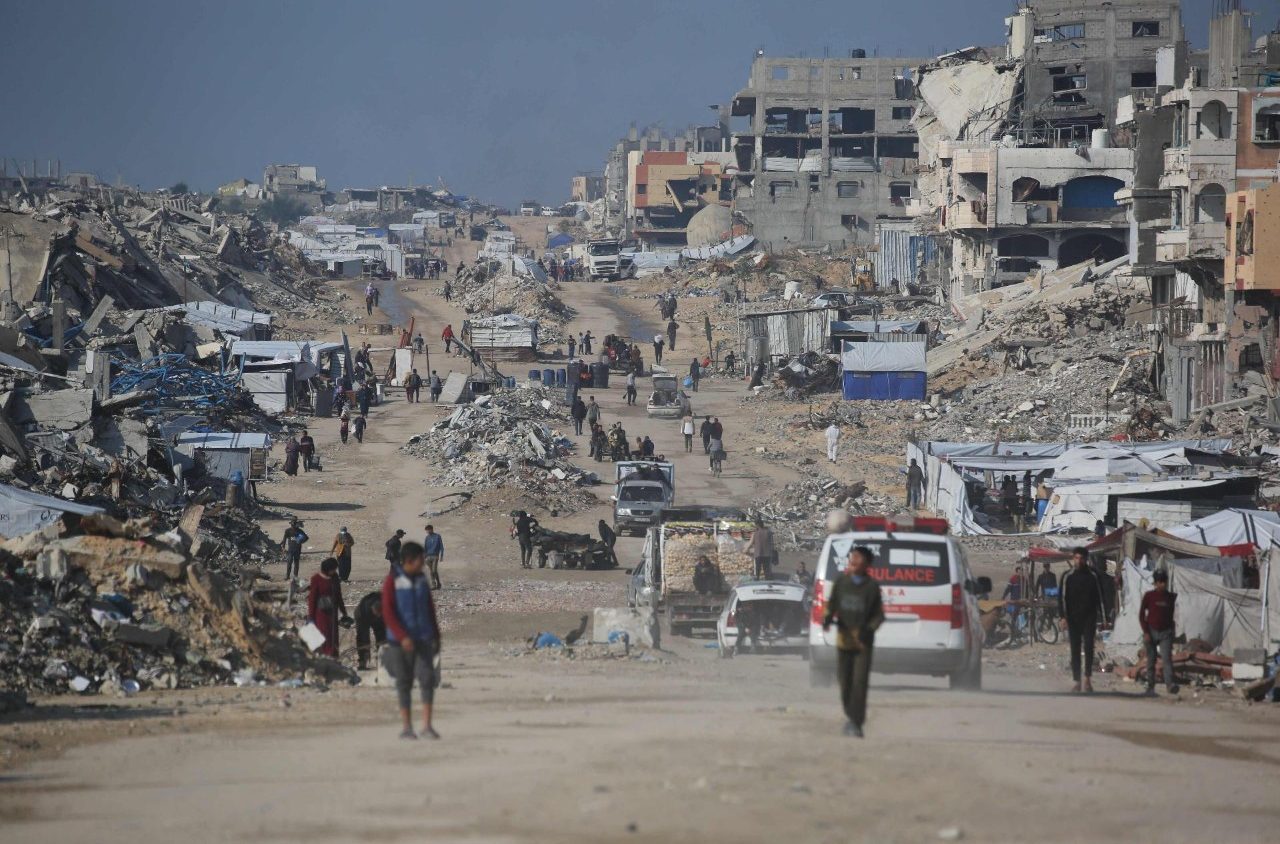
Despite a fragile US-brokered ceasefire between Israel and Hamas, the humanitarian situation in Gaza remains dire.
By Nathan Morley
The truce, in place since October after two years of hostilities, has brought a pause in fighting — but not in suffering.
Across the enclave, destruction and displacement are staggering. Families live in tents and improvised shelters, with the UN Development Programme warning of a critical need for safe, durable housing.
Food insecurity is acute. The World Food Programme reports that most households cannot afford basic staples, and daily consumption remains well below pre-war levels. While nutrition indicators have improved since August — when famine was detected — more than half a million people still face “emergency” levels of hunger. Over 100,000 are classified as living in “catastrophe,” the highest level of alert.
Beyond immediate needs, the scale of destruction is staggering. According to UN satellite analysis, 81 percent of Gaza’s structures were damaged as of October. Hospitals, schools and homes lie in ruins. The scale of reconstruction is immense.
The UN has described it as potentially the largest post-war rebuilding effort since World War Two, with recent estimates placing the cost at more than $70 billion — a task that could span decades.