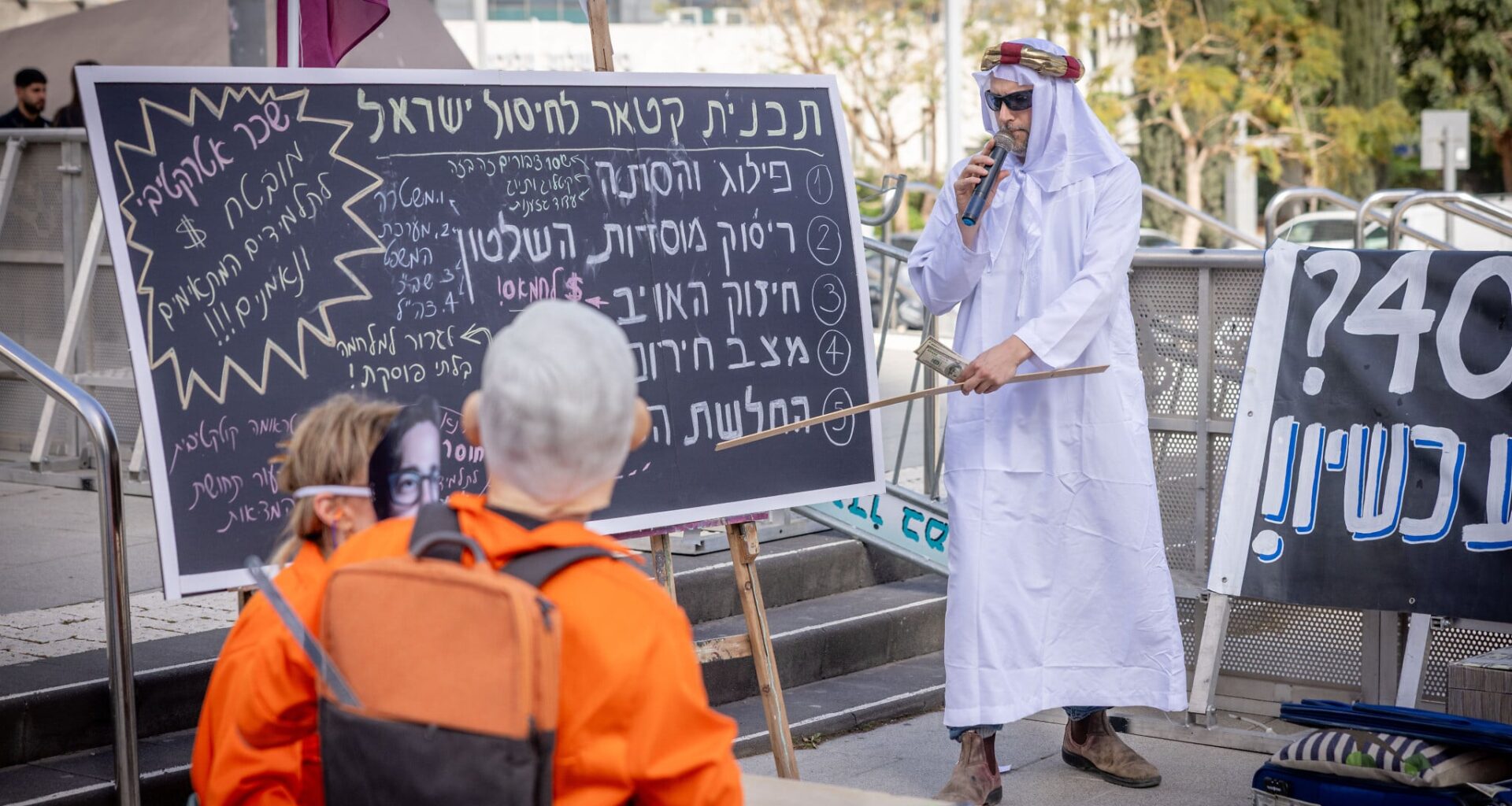
New revelations this week supercharged two scandals in Prime Minister Benjamin Netanyahu’s office, drawing unprecedented criticism from political allies.
At the heart of the controversy sit the so-called Qatargate scandal and an investigation into the leak of classified intelligence to the German Bild tabloid. Seemingly separate affairs, both involve Eli Feldstein, a beleaguered former spokesman for the premier, and Jonatan Urich, a close Netanyahu aide.
In the Qatargate affair, Urich and Feldstein are suspected of taking money to spread pro-Qatari messaging to reporters, in order to boost the Gulf state’s image as a mediator in hostage talks between Israel and Hamas, all while in the prime minister’s employ.
Feldstein has also admitted to leaking classified information to Bild, as part of an alleged scheme to sway public opinion and ease pressure on Jerusalem to reach a deal with Hamas. In comments aired this week, Feldstein alleged that not only was Urich — a suspect — also involved in the plot, but Netanyahu as well.
“In order to [publicize] such a document, the prime minister must be in the picture – from beginning to end,” Feldstein said in an interview with the Kan public broadcaster.
Get The Times of Israel’s Daily Edition
by email and never miss our top stories
By signing up, you agree to the terms
“[Netanyahu] is the one who ultimately was behind the leak,” Feldstein said emphatically, adding that he told interrogators the same thing repeatedly after his arrest and eventual indictment over the matter.
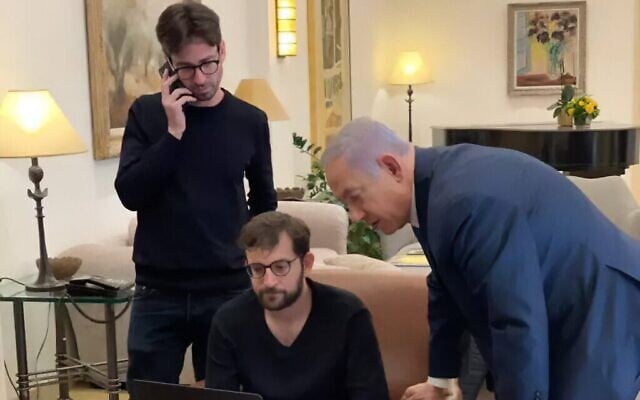
Aides Yisrael Einhorn (left) and Jonatan Urich (center) with Prime Minister Benjamin Netanyahu in 2019. (Courtesy/ File)
Feldstein made the accusations and raised other controversies he claimed existed within the PMO in a three-part interview aired by Kan between Monday and Wednesday, his first media appearance since his arrest in October 2024 and subsequent indictment over the Bild affair.
His bombshell allegations have been accompanied by a series of reports in Hebrew media claiming to reveal new details on the Qatargate scandal.
Netanyahu is not currently a suspect in either the intelligence leak or the Qatargate affair, and the PMO has denied Feldstein’s allegations, continuing to insist on the premier’s innocence in both cases.
But the scandals are creeping closer to the most powerful man in Israel, while he oversees military campaigns and fragile ceasefires with Iran and its armed proxies, and while he prepares for a bruising reelection campaign.
Feldstein talks
In a segment of the Feldstein interview that aired Tuesday, he alleged that Netanyahu was the one behind the leak of classified intelligence to Bild aimed at swaying the Israeli public’s opinion regarding ongoing hostage negotiations last year.
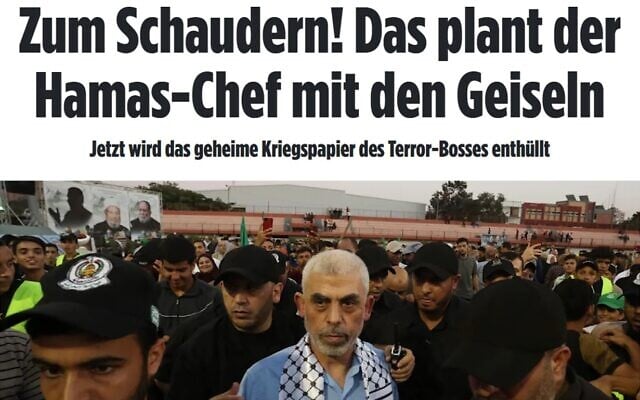
Bild’s September 6, 2024, story citing a document ostensibly found by the IDF on slain Hamas leader Yahya Sinwar’s computer.
The document in question was an internal Hamas memo purporting to show that the terror group wasn’t interested in the compromises necessary to reach a hostage deal. After it was leaked to Bild, Netanyahu used it to argue that only further military pressure would lead to the release of the hostages.
Media reports later revealed that Bild had seriously distorted the file to serve the interests of the Netanyahu government.
Beyond the document that did not actually prove anything about Hamas’s mindset was the fact that it had been branded as classified by the IDF.
Seeking to get it to the public anyway, despite concerns that an intelligence source in Gaza could be endangered by its release, Feldstein leaked it to an international news outlet, which, unlike Israeli outlets, is not beholden to Israel’s military censor.
While the tactic is not exactly unknown among Israeli government and security officials, the use of a classified military document for suspected political purposes was enough to trigger an investigation.
In the first segment of his Kan interview, Feldstein claimed that Tzachi Braverman, Netanyahu’s chief of staff and longtime confidant, learned of a secret IDF investigation into Feldstein’s leak to Bild months before it was publicized and reassured him in a private conversation that the probe could be quashed.
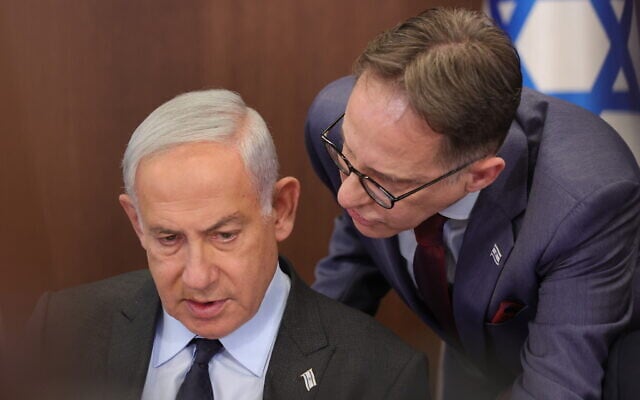
Prime Minister Benjamin Netanyahu (left) speaks with Cabinet Secretary Tzachi Braverman (R) during a weekly cabinet meeting in the Prime Minister’s Office in Jerusalem on April 30, 2023. (Abir Sultan/Pool/AFP)
Although Feldstein freely named Braverman in his interview with Kan, Channel 12 reported that he had initially refused to give up his identity during a Shin Bet probe into the leak, telling the agency that he had to “think about the future,” and that if he revealed his conversation with Braverman, “neither the Shin Bet nor any other body will be able to protect my family or me from being harmed.”
Law enforcement sources told Channel 12 that Feldstein has been a “problematic witness” whose testimony has shifted over time, though they admitted investigators have little choice but to examine his claims about Braverman and whether they justify probing the chief of staff.
Feldstein also revealed text messages that he said proved he remained deeply involved with Netanyahu’s media operation up until his arrest on October 26, 2024, despite the premier’s attempts to distance himself from the former aide.
While the Bild allegations revolve around uncomfortable questions regarding whether Netanyahu or underlings in his office were attempting to sway public opinion, the Qatargate affair raises even more sinister concerns regarding what else, or who else, might be wagging the dog.

Eli Feldstein at District Court in Tel Aviv on May 15, 2025. (Avshalom Sassoni/Flash90)
WhatsApp messages obtained by the Ynet news site in August revealed that former Netanyahu campaign adviser Yisrael Einhorn had crafted pro-Qatar messages and sent them via WhatsApp to Feldstein. Feldstein then forwarded the messages to Urich, who disseminated the messaging to journalists, in an alleged effort to improve Doha’s image in Israel.
When asked by Kan about the Qatargate affair, Feldstein acknowledged he received payments through a business tied to a foreign agent for Doha but speculated that this was because he had failed a security clearance and could not be paid directly by the PMO. “Is it possible that things I put out served, aided, helped, after-the-fact… some official in Qatar? It could be,” he told the network, though he insisted he was unaware of any real-time influence.
“They took me…and they used me,” he said of Urich and Einhorn, who is also being investigated.
Undercutting Feldstein’s claims of ignorance, i24News published on Tuesday what it said were texts showing that Feldstein had been in contact with Jay Footlik — a foreign agent for Qatar registered in Washington — praising his work advancing media messaging that suited Doha.
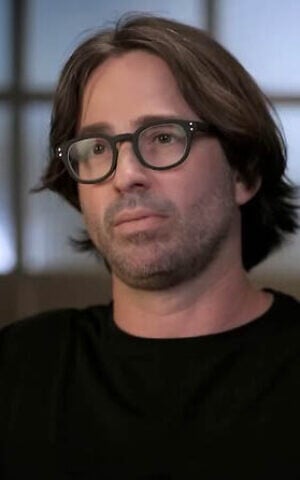
Benjamin Netanyahu’s former aide Yisrael Einhorn. (KAN screenshot).
The network said that Feldstein passed along the message to Urich, who, in turn, expressed his own approval.
On Sunday, i24 News reported that further correspondence between the suspects showed that they had shared fabricated information attributed to “senior security officials” and “senior American officials” that played up Qatar’s role in negotiations with Hamas while attempting to sideline Egypt, another mediator of ceasefire talks in the Gaza war.
The network also reported that the staffers worked together with a reporter from the pro-Netanyahu Channel 14 to massage a news report to fit their messaging.
Allegations about ties between Qatar and Netanyahu’s aides point to uncomfortable questions about Israel’s policies in the fight against Hamas — decisions that had profound implications for the lives of Israel’s soldiers fighting through Gaza’s cities and the hostages held in tunnels below.
Qatar, the partner and adversary
The possibility that top advisers to the prime minister were working for a foreign power during a war is alarming enough. The fact that the country is Qatar makes the implications of the scandals far more severe.
On the one hand, though Israel and Qatar never had formal diplomatic ties, they established trade relations in 1996. Qatar closed Israel’s trade office in Doha amid regional pressure during the Second Intifada in the early 2000s, but allowed it to reopen in 2005 in the wake of Israel’s 2005 disengagement from Gaza. It closed for good in 2009 after the Operation Cast Lead conflict between Israel and Hamas.
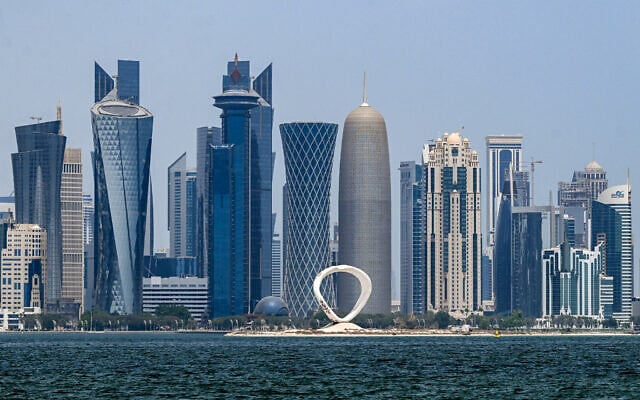
High-rise buildings are pictured in the Doha skyline on September 15, 2025. (Photo by Mahmud HAMS / AFP)
Despite tensions, Israeli athletes occasionally competed in Doha, and during the 2022 World Cup, a special arrangement allowed Israeli diplomats in Qatar to assist visiting nationals.
Since the Hamas invasion of southern Israel, Qatar’s skill as a mediator has been key in efforts to free Israeli hostages, broker ceasefires with Hamas, and shape a postwar future for the territory.
At the same time, Doha’s ability to mediate rests on its long-standing ties with Hamas, only one piece of the darker side of its role in the Middle East.
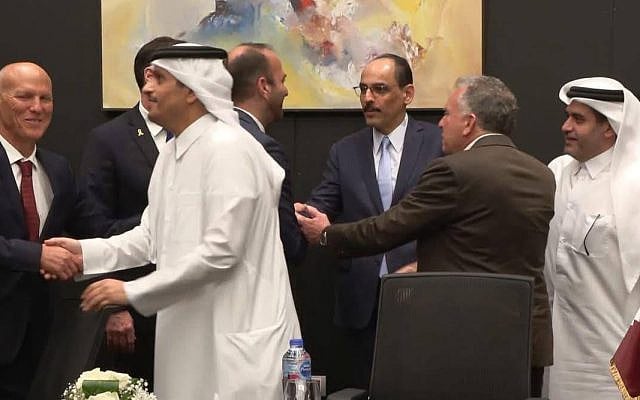
Israeli negotiator Nitzan Alon (far left) shakes hands with Qatar’s Prime Minister Mohammed bin Abdulrahman bin Jassim Al Thani in a photo indicating success in the mediated Israel-Hamas negotiations on a Gaza hostage-ceasefire agreement in Sharm el-Sheikh, in the early hours of October 9, 2025. Second from right with back to camera is US special Middle East envoy Steve Witkoff. (Telegram / used in accordance with clause 27a of the copyright law)
In 2012, after Hamas leaders were forced to flee Damascus after siding with anti-regime rebels in Syria, Qatar took them in, stating that the US had requested the move as it would be easier to keep an eye on the terror group if it was based in an allied country. Since 2018, with Israel’s quiet approval and at its behest, Qatar has funneled hundreds of millions of dollars into Gaza — sustaining both the population and Hamas’s rule.
Qatar also created and funds the Al Jazeera network, banned by Israel last year for incitement to terror, and is accused by the IDF of direct collaboration with Hamas based on documents showing communication and staff ties to terror groups.
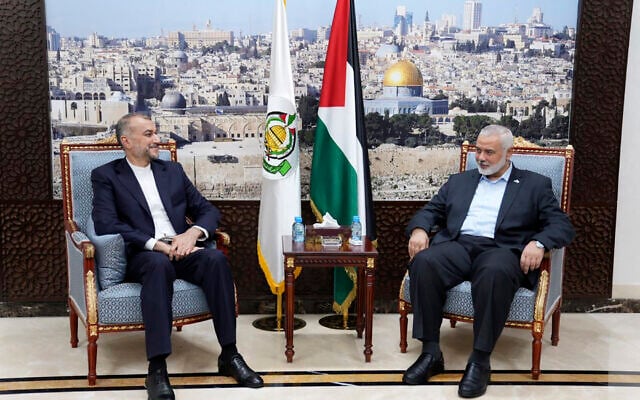
In this picture released by the Iranian Foreign Ministry, Iran’s Foreign Minister Hossein Amirabdollahian, left, meets with Ismail Haniyeh, a leader from the Palestinian terror group Hamas, in Doha, Qatar, October 14, 2023. (Iranian Foreign Ministry via AP)
Israel’s leaders have kept channels open with Doha while repeatedly denouncing the country as a leading “funder of terror” and initiating a range of legal and political moves against it. Netanyahu even reiterated these grievances — “from support for the Muslim Brotherhood to how Israel is portrayed on Al Jazeera to support for anti-Israel sentiment on [US] college campuses
Israel isn’t alone in treating Qatar, at times, as a threat. In 2017, Saudi Arabia, the United Arab Emirates, Bahrain, and Egypt did everything short of declaring war on Doha, launching a blockade and demanding that it cut ties to Islamists and terrorists, reduce cooperation with Iran, shutter Al Jazeera, and expel Turkish troops from a base there.
The crisis was resolved through a privately signed agreement in 2021, apparently driven more by exhaustion and pragmatic considerations in Washington than by Qatari concessions — a dynamic not unlike Israel’s own reluctant present accommodation.
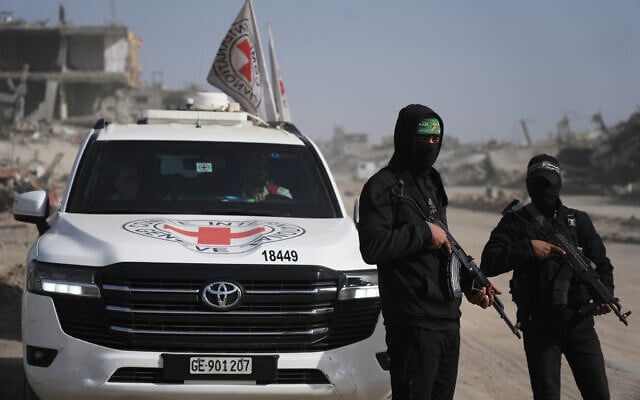
Hamas gunmen accompanied by members of the International Committee of the Red Cross head to Zeitoun neighborhood of Gaza City to search for the remains of the final hostage, December 8, 2025. (AP Photo/Jehad Alshrafi)
Documents seized in Gaza over the course of the war against Hamas and published by Channel 12 purported to shine a light on Qatar’s intensive collaboration with Hamas spanning a number of years, including attempts to thwart regional peace efforts by the US, marginalize Egyptian influence on Gaza, and bolster the roles of Turkey and Iran.
“The Qataris are the pleasant face of the Muslim Brotherhood,” said Danielle Pletka, senior fellow at the American Enterprise Institute. “The right thing would be, obviously, for them to be treated like the supporters of terrorism that they are.”
Yoel Guzansky, senior fellow at Israel’s Institute for National Security Studies, warned that Doha seeks “a foothold to influence what happens in Gaza [after the war],” and said that it “is obviously not good for Israel, because where there’s Qatar, there’s Hamas.”
Who’s convincing whom?
Nonetheless, throughout the war, Israel showed no consistent preference for Egyptian moderation, allowing Qatar to often take the lead in talks. The presence of people being paid by Doha in Netanyahu’s inner circle, raises troubling questions about how far their influence — and that of whoever was paying them — may have gone.

Bulldozers with Egyptian and Qatari flags wait to enter Gaza at the Rafah border crossing between Egypt and the Gaza Strip, Feb. 13, 2025. (AP/Mohamed Arafat)
Did Urich and Feldstein work to push Netanyahu’s view of Qatar in a more positive direction? Did their briefings to Israeli media pave the way for Israel to see Qatar as a partner it can trust in negotiations? And given Qatar’s history of support for Islamists and its ties with Iran, did giving Qatar such a central role in talks affect the outcome?
There are more questions as well.
According to Haaretz, shortly after the October 7, 2023, attacks by Hamas, the Foreign Ministry prepared a plan to damage Qatar’s public image. But the plan was blocked by Mossad chief David Barnea, according to the report. Barnea argued that Israel would need Qatar’s mediation to get hostages out of Gaza.
And what of the Israeli government’s attacks in the media against Egypt?
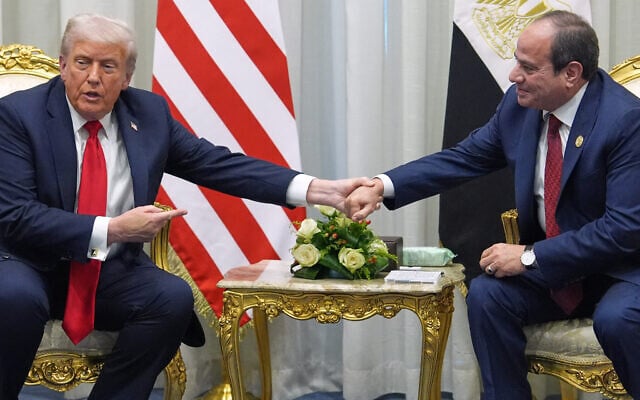
US President Donald Trump, left, meets with Egypt’s President Abdel-Fattah el-Sissi during a summit on Gaza in the Egyptian resort town of Sharm el-Sheikh, October 13, 2025. (Evan Vucci / POOL / AFP)
Israel’s relationship with Egypt is one of its most important. Though they are often strained, the ties have ensured that no conventional Arab coalition makes war against Israel, and have paved the way for close security and intelligence cooperation against terrorist groups.
Ties have soured during the war. Egypt was unhappy with what it saw as Israeli plans to push Gazans into the Sinai. It also vehemently opposes Israeli control over the Philadelphi Route on the border between Gaza and Egypt.
But it was statements from top Israeli officials that have really angered the Egyptians. Both Netanyahu and Strategic Affairs Minister Ron Dermer criticized Egypt publicly in interviews for failing to stop the smuggling of weapons from the Sinai Peninsula into Gaza, with Dermer mentioning Sissi by name.
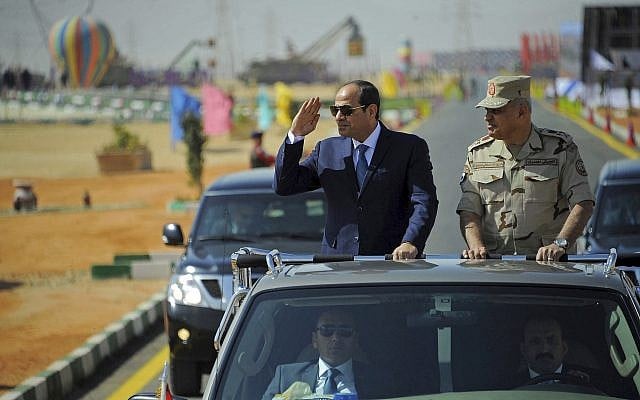
In this photo provided by Egypt’s state news agency, MENA, Egyptian President Abdel-Fattah el-Sissi salutes as he inspects troops with Minister of Defense Sedki Sobhy, in the Red Sea port city of Suez, Egypt, Sunday, Oct. 29, 2017. (MENA via AP)
Then came even harsher claims against Egypt. The right-wing, pro-Netanyahu Channel 14 in January began airing reports on Egypt allegedly violating the peace agreement between the countries and pouring troops into the Sinai. An organized social media campaign appeared in parallel.
Israel’s new US ambassador also pushed the same message. “Egypt is in very serious violation of our peace agreement in the Sinai. This is an issue that is going to come to the fore because it’s not tolerable,” Yechiel Leiter told American Jewish leaders. “We have bases being built that can only be used for offensive operations, for offensive weapons — that’s a clear violation.”
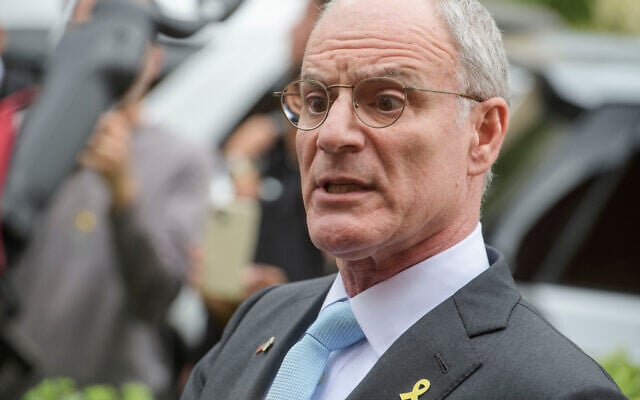
Israeli Ambassador to the US Yechiel Leiter talks with reporters on May 22, 2025, in Washington. (AP Photo/Rod Lamkey, Jr.)
According to Haaretz, defense officials struggled to understand who was coordinating the reports.
“They said they could not discount the possibility that Qatari figures were behind the reports in an attempt to undercut Egypt’s status vis-à-vis the United States in Middle Eastern and Gazan affairs,” according to Haaretz.
It would fit the accusations revealed by the judge in the Qatargate case, who said last week that Urich and Feldstein allegedly placed stories in Israeli media designed to harm Egypt’s image.
The reports damaged the trust between Egypt and Israel. If they came from the two Netanyahu aides, then the pair were actively damaging a strategic relationship between Israel and its oldest Arab partner, one which borders not only Israel but Gaza as well.
‘A knife in the heart’
Netanyahu, who has testified in the Qatargate probe, has decried it as a “witch hunt.”
His opponents, meanwhile, have used it to go after the prime minister. In a statement to the press recently, former prime minister Naftali Bennett, among Netanyahu’s most potent rivals in upcoming elections, called the scandal “a knife in the heart of our heroic soldiers and a knife in the heart of the entire people of Israel.”
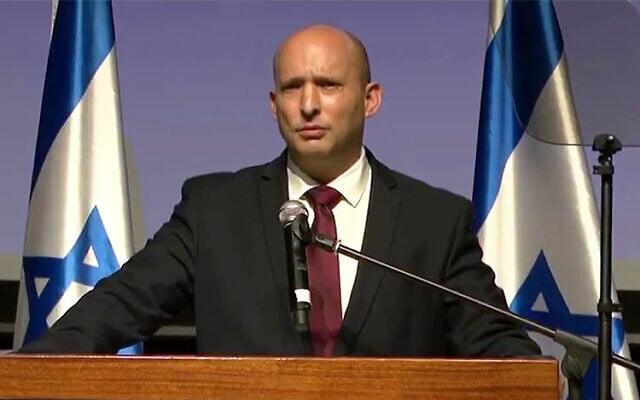
Former prime minister Naftali Bennett gives a video statement on December 23, 2025. (Screen capture/X)
“Three of Netanyahu’s closest advisers were in effect paid agents of Qatar and Hamas at the height of the war, while our soldiers were fighting and being killed by Hamas bullets purchased with Qatari money,” Bennett said, adding that this “can certainly explain why the Israeli government failed in the ultimate goal it set for itself in the war: the destruction of Hamas.”
And it’s no longer only his opponents. While many of Netanyahu’s allies continue to deride the investigation as partisan, cracks are starting to show in the phalanx of government officials that closed ranks around the prime minister. Diaspora Affairs Minister Amichai Chikli said Wednesday that the Qatargate affair must be fully investigated, in what appeared to be the first time a minister in Netanyahu’s government has publicly backed the ongoing probe.
“There is no way to defend this – it’s shocking. These matters must be investigated to the fullest,” he told Kan
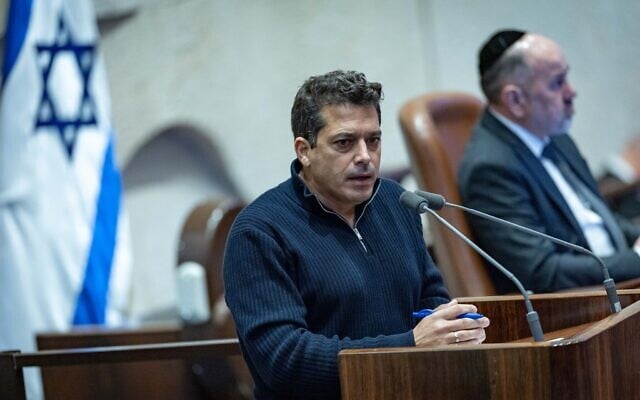
Diaspora Affairs Minister Amichai Chikli at the Knesset on December 24, 2025. (Yonatan Sindel/Flash90)
Then on Thursday, Finance Minister Bezalel Smotrich said that if employees in the Prime Minister’s Office had done work on behalf of Qatar, they should be sent to prison for many years.
Even if the premier didn’t know about it, “it’s a problem,” Smotrich said in a reply to a question.
But he also indicated he was still behind the prime minister.
Netanyahu, he said, acted only “with a higher purpose, 100% only with relevant considerations, 100% for the good of the State of Israel and its security and future and existence.”
Times of Israel staff contributed to this report.