Published on
December 26, 2025

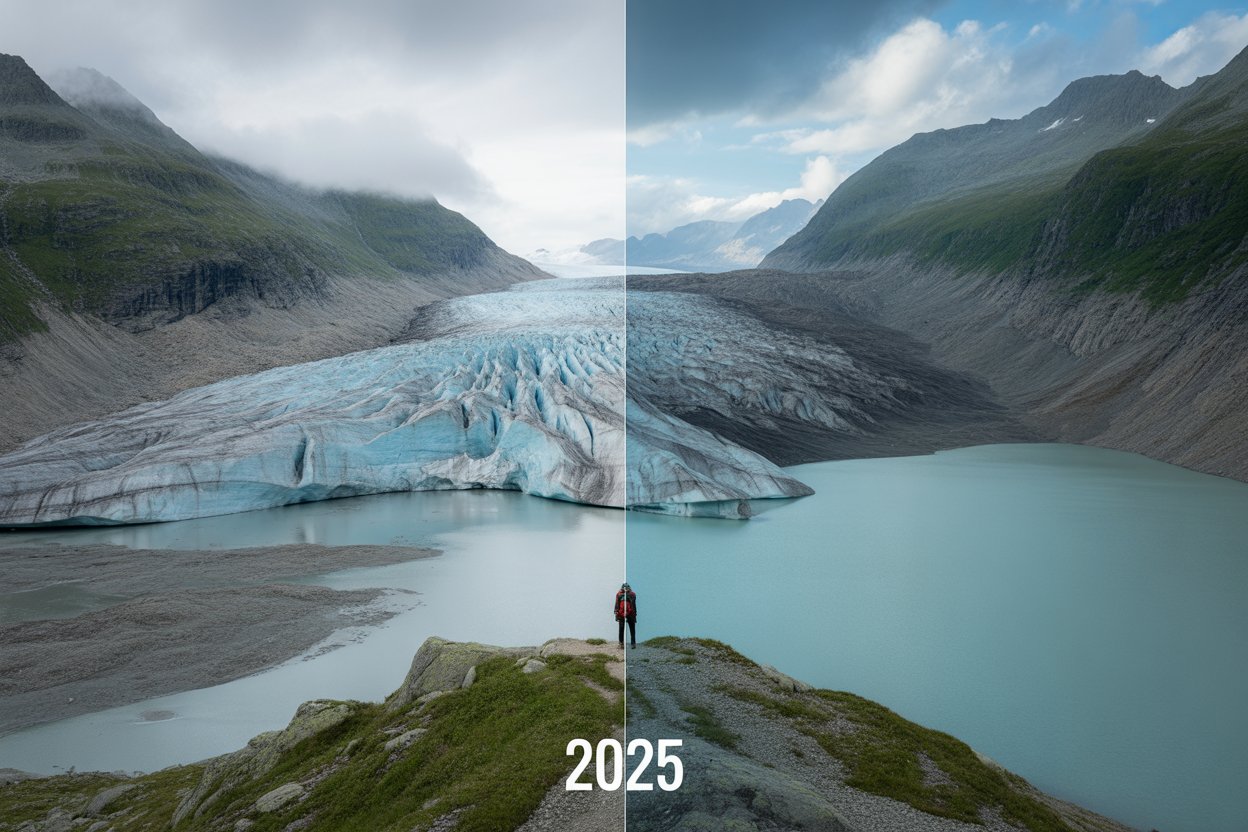
The “Eternal Ice” of the Austrian Alps is proving to be far from permanent. As of December 26, 2025, new data from the Austrian Alpine Club and recent glaciological studies reveal a landscape in a state of “massive decay.” What was once a slow retreat has accelerated into a full-scale ecological crisis, threatening not only the postcard-perfect vistas of Central Europe but the very foundation of Alpine tourism, wildlife, and safety.
In a landmark year for climate science, researchers from ETH Zurich and the Anadolu Agency have highlighted that regions like the Alps are losing more than half of their small glaciers in just a decade. For a nation where the mountains are both a cultural heart and an economic engine, the stakes have never been higher.
The Great Retreat: 24 Meters a Year
The numbers coming out of the Austrian Alps are sobering. In the 2023/2024 glaciological year, Austrian glaciers retreated by an average of 24.1 meters, marking the third-largest retreat in 134 years of record-keeping.
The Pasterze Glacier, Austria’s largest, is the most visible casualty. Its tongue is retreating so rapidly that a lake nearly 50 hectares in size has formed where ice once stood. In some areas, the ice is thinning by up to two meters per year.
Key Drivers of the Melt:The Snow Gap: 2025 saw a critical lack of winter snow. When glaciers aren’t “recharged” with snow in the winter, the “bare ice” is exposed to the midsummer sun much earlier.Saharan Dust: Fine sand from the Sahara Desert has increasingly settled on the Alpine peaks. This “darkening” of the ice reduces its albedo (reflectivity), causing it to absorb more solar energy and melt faster.Persistent Heatwaves: Freezing levels have risen to record heights, meaning that even at night, glaciers continue to melt at high altitudes.Tourism Under Pressure: From Skiing to “Last-Chance” Travel
For decades, the Austrian economy has leaned heavily on its glacier ski areas. However, as the ice thins, the viability of these resorts is being called into question.
The Mountaineering Danger Zone
As the ice retreats, it leaves behind unstable moraines and loose rock. Permafrost—the “glue” that holds mountain peaks together—is thawing. This has led to an increase in rockfalls and landslides, making traditional mountaineering routes increasingly hazardous. In 2025, several high-altitude huts reported structural instability as the frozen ground beneath them began to shift.+1
The Paradox of Last-Chance Tourism
A strange phenomenon has emerged: Last-Chance Tourism (LCT). Travelers are flocking to the Pasterze and Grossglockner regions specifically to see the glaciers before they disappear. While this provides a short-term economic boost, it creates a “carbon paradox,” as the travel emissions of these visitors contribute to the very warming that is destroying the ice.
“We are witnessing the end of an era,” says a local mountain guide in Tyrol. “Routes I have climbed for thirty years are no longer there. The ice is gone, and the rock is falling.”
The Silent Victims: Alpine Wildlife
The retreat of the glaciers doesn’t just change the view; it reshapes the entire ecosystem. Species that have adapted to the cold, high-altitude environment for millennia are being squeezed out.
Flora and Fauna Shifts: As the ice recedes, “thermophile” (heat-loving) species are moving higher up the mountains, outcompeting native Alpine plants.The Water Crisis for Wildlife: Glaciers act as “water towers,” releasing cool meltwater during the hot summer months. As this source diminishes, smaller streams are drying up, threatening fish populations and the amphibians that rely on cold, oxygen-rich water.Habitat Fragmentation: The “Ibex” and other high-altitude mammals are finding their grazing grounds altered. Early spring melts lead to a mismatch between when plants grow and when young animals are born, leading to higher mortality rates.A Future Without Ice?
By 2100, scientists warn that if current climate trajectories continue, 97% of the glaciers in Central Europe could be gone. Only tiny fragments of the mighy Aletsch or Rhône glaciers might remain.
However, there is still a sliver of hope. If global warming is limited to 1.5°C, nearly half of the world’s glaciers could be preserved. The year 2025, designated by the UN as the International Year for the Protection of Glaciers, has served as a rallying cry for more aggressive CO2 reductions and the protection of “glacier forelands”—the areas left behind by retreating ice that serve as vital new habitats for resilient plants and animals.
