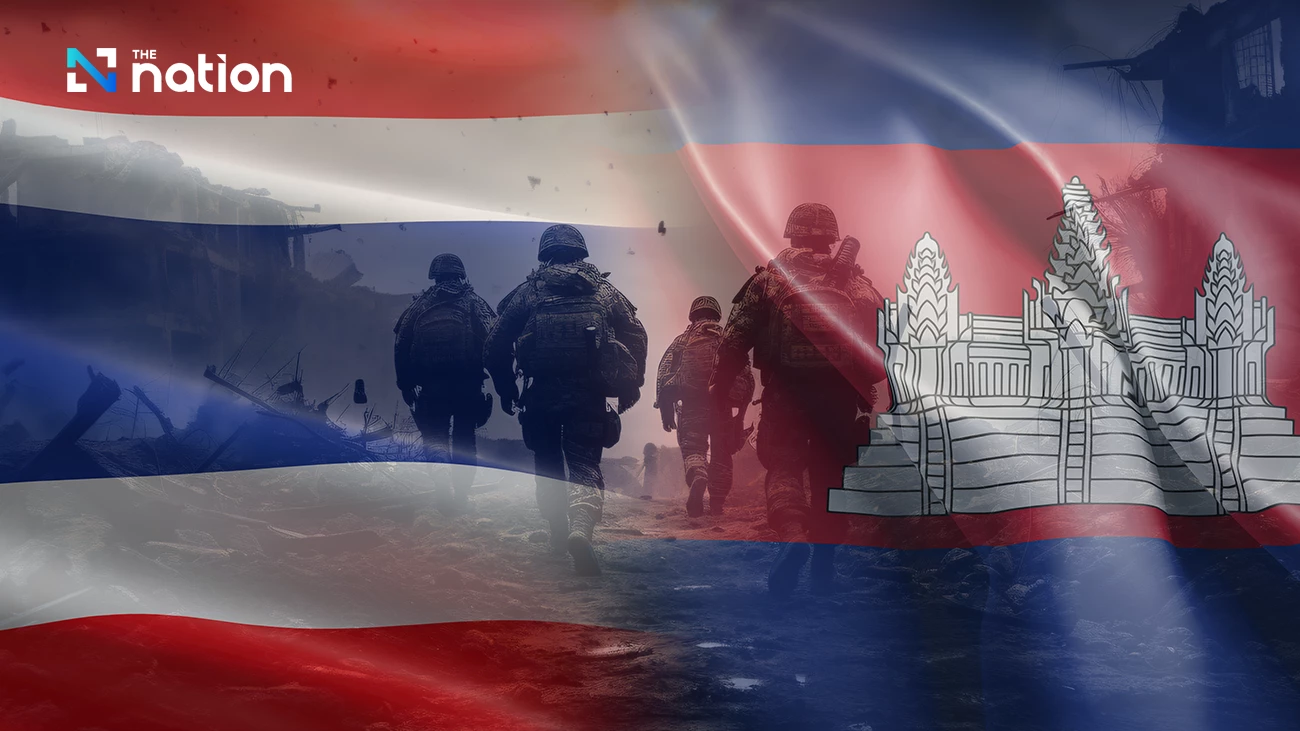
This position is clearly stated in a letter from Cambodia’s Defence Minister, General Tea Seiha, to Thailand’s Defence Minister, General Nattaphon Narkphanit, with the hope that both countries will cease fire simultaneously.
Thailand’s Chief of Defence Staff, General Chaiyapruek Duangprapat, reiterated that Cambodia has consistently signalled an intention to declare a ceasefire, but has sought to avoid doing so first by pushing for Thailand and Cambodia to announce a ceasefire simultaneously—an approach he said was aimed at shaping domestic opinion.
He stressed that Thailand was not the party that caused the situation to arise, and that the country’s position remains firm: Cambodia must be the first to declare a ceasefire.
The ongoing Thai–Cambodian General Border Committee (GBC) meeting from December 24–27 is crucial. It remains to be seen how much pressure Cambodia can withstand, given its weakened economy and dwindling military resources.
The longer Cambodia holds out, the more it plays into Thailand’s hands. Yet declaring a ceasefire first could carry domestic political costs for Phnom Penh.
The GBC meeting, before the Defence Ministers of both countries sign the ceasefire agreement on December 27, will be filled with conditions and negotiations. Nattaphon has made it clear that if Cambodia refuses to accept Thailand’s conditions or if the ceasefire agreement remains vague, he will not attend the signing on December 27.
Thailand has learned from previous experiences where a ceasefire on paper did not translate into real action. Cambodia’s provocations, such as the destruction of barbed wire fences and landmine attacks, which caused several Thai casualties, have not gone unnoticed.
Meanwhile, the agreed three-phase weapons withdrawal plan has been underway since November 1, 2025—starting with long-range rocket systems such as the BM-21, followed by artillery from November 22 and then armoured vehicles and tanks from December 13.
Despite Cambodia’s claim to honour the agreement, its weapons have been moved merely within the same border area, and some are even hidden within civilian communities. The Thai government, Ministry of Foreign Affairs, and military are pushing for Cambodia to agree to the three ceasefire conditions.
If the meeting succeeds, a ceasefire could lead to a significant shift. However, if the negotiations break down, the clashes are likely to continue until Cambodia submits entirely.