Poland has warned several incidents regarding airspace during the holiday season may signal a provocation.
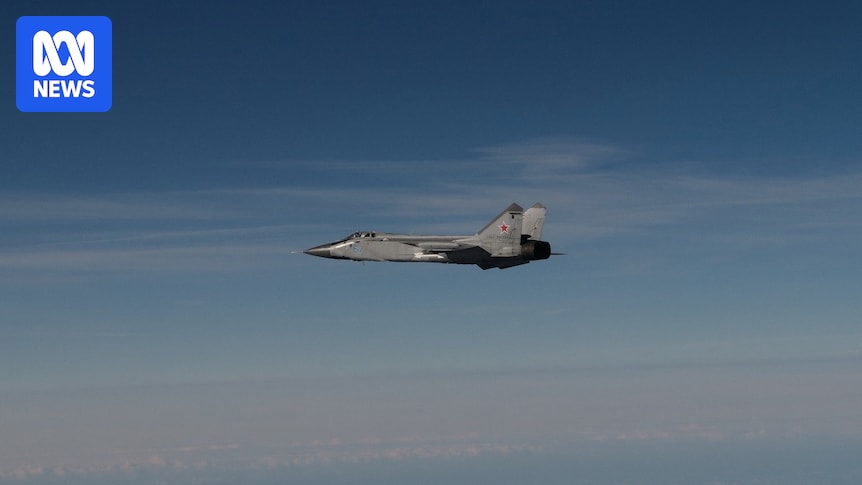
The country’s army said on Thursday it had intercepted a Russian reconnaissance plane over the Baltic Sea, which was flying close to its airspace.
“This morning, over the international waters of the Baltic Sea, Polish fighter jets intercepted, visually identified, and escorted from their area of responsibility a Russian reconnaissance aircraft flying near the borders of Polish airspace,” it said in a statement.
Dozens of objects also entered Polish airspace from the Belarusian side, Poland’s National Security Bureau said.
Four discovered so far were identified as likely being smuggling balloons.
“The mass nature of the violation of Polish airspace, its occurrence during the special holiday season, the assessment of the Russian aircraft’s activity in the Baltic Sea, and the fact that similar incidents have recently occurred in Lithuania, may indicate that this was a provocation disguised as a smuggling operation,” it said.
Countries on NATO’s eastern flank have been on high alert for potential airspace incursions since September, when three Russian military jets violated Estonia’s airspace for 12 minutes just days after more than 20 Russian drones had entered Polish airspace.
Russian warplanes breach NATO airspace over Estonia
Belarusian and Russian embassies in Warsaw did not immediately respond to Reuters requests for comment.
Smuggler balloons from Belarus have repeatedly disrupted air traffic in Lithuania, forcing Vilnius airport closures.
Lithuania says they are sent by smugglers transporting cigarettes and constitute a “hybrid attack” by Belarus, a close ally of Russia. Belarus has denied responsibility for the balloons.
The Polish army said part of the airspace over north-east Poland’s Podlaskie region, which borders Belarus, was temporarily closed to civilian traffic to ensure security.
Reuters