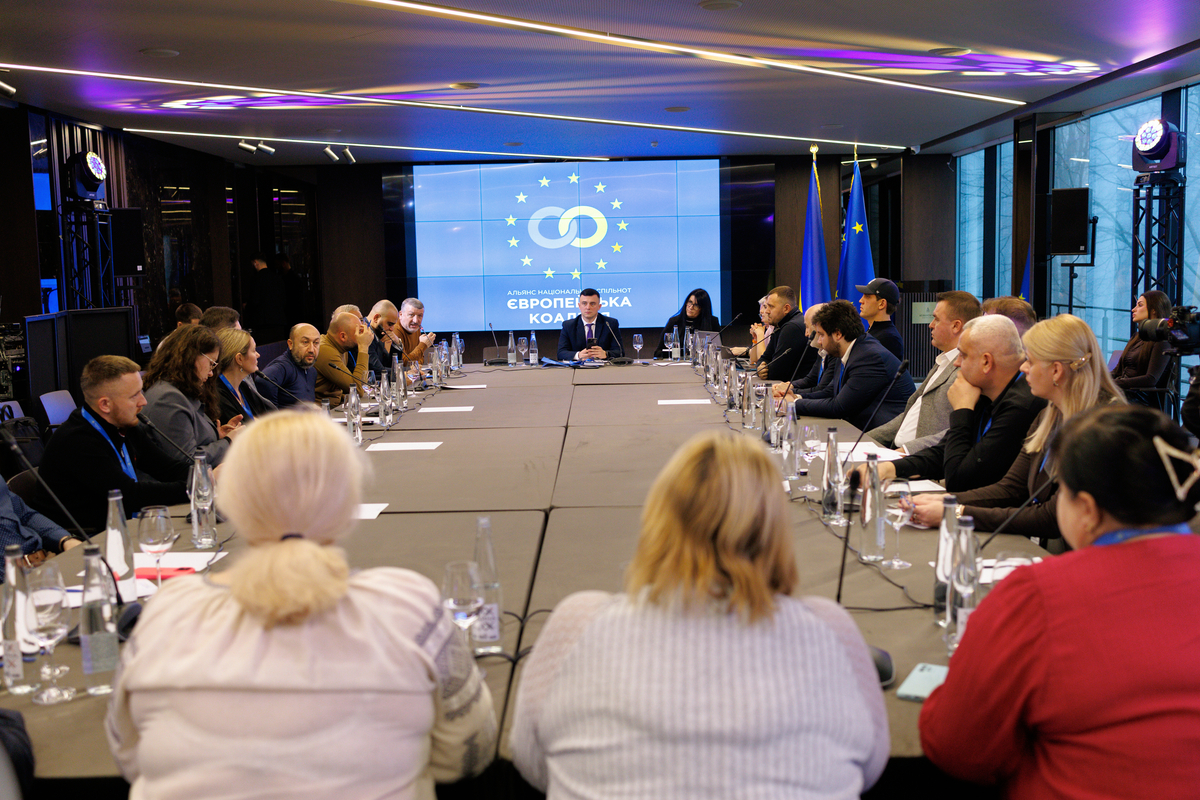
Leaders of national communities warned that Russia is exploiting ethnic minority issues to spread propaganda and incite division, aiming to portray Ukraine as intolerant and “Nazi,” at the forum near Uzhhorod in Ukraine’s Zakarpattia region on Dec. 20-21.
The All-Ukrainian Forum for the Unity of National Communities of Ukraine, held close to the Hungarian border and organized by the Alliance of National Communities “European Coalition,” brought together leaders of national communities, representatives of Ukrainian diasporas, diplomats, government officials, and civil society figures from across the country.
Follow our coverage of the war on the @Kyivpost_official.
The event was organized by Roland Tseber, a deputy of the Zakarpattia Regional Council and chairman of the Alliance.
In 2025, Tseber became the subject of an international controversy after Hungarian authorities, led by Prime Minister Viktor Orbán, accused him of interfering in Hungary’s domestic politics and imposed sanctions effectively banning his entry to Hungary and other EU states.
The accusations were linked in part to Hungary’s internal political struggle and the government’s efforts to weaken opposition politician Péter Magyar, with whom Tseber maintains friendly relations.
The timing of the event was particularly significant, as Budapest continues to accuse Ukraine of oppressing ethnic Hungarians in Transcarpathia amid Hungary’s own election campaign. However, Tseber rejected claims that the forum was a political provocation or a message aimed at Orbán, saying the unification of national communities is a necessity for Ukraine’s European future.
Other Topics of Interest
Ukrainian ‘Baba Yaga’ Drones Wipe Out Russian Grad Launchers in Donetsk Region
Grad systems can strike targets up to 20 kilometers away and have been among Russia’s most frequently used weapons since the start of the full-scale invasion.
“Ukraine is fighting not only for territory, but for European values,” he said, adding that unity among communities is critical in the face of Russian aggression.
Opening the forum, Tseber said the war had exposed Ukraine’s true nature as a multinational country standing shoulder to shoulder in defense of the state.
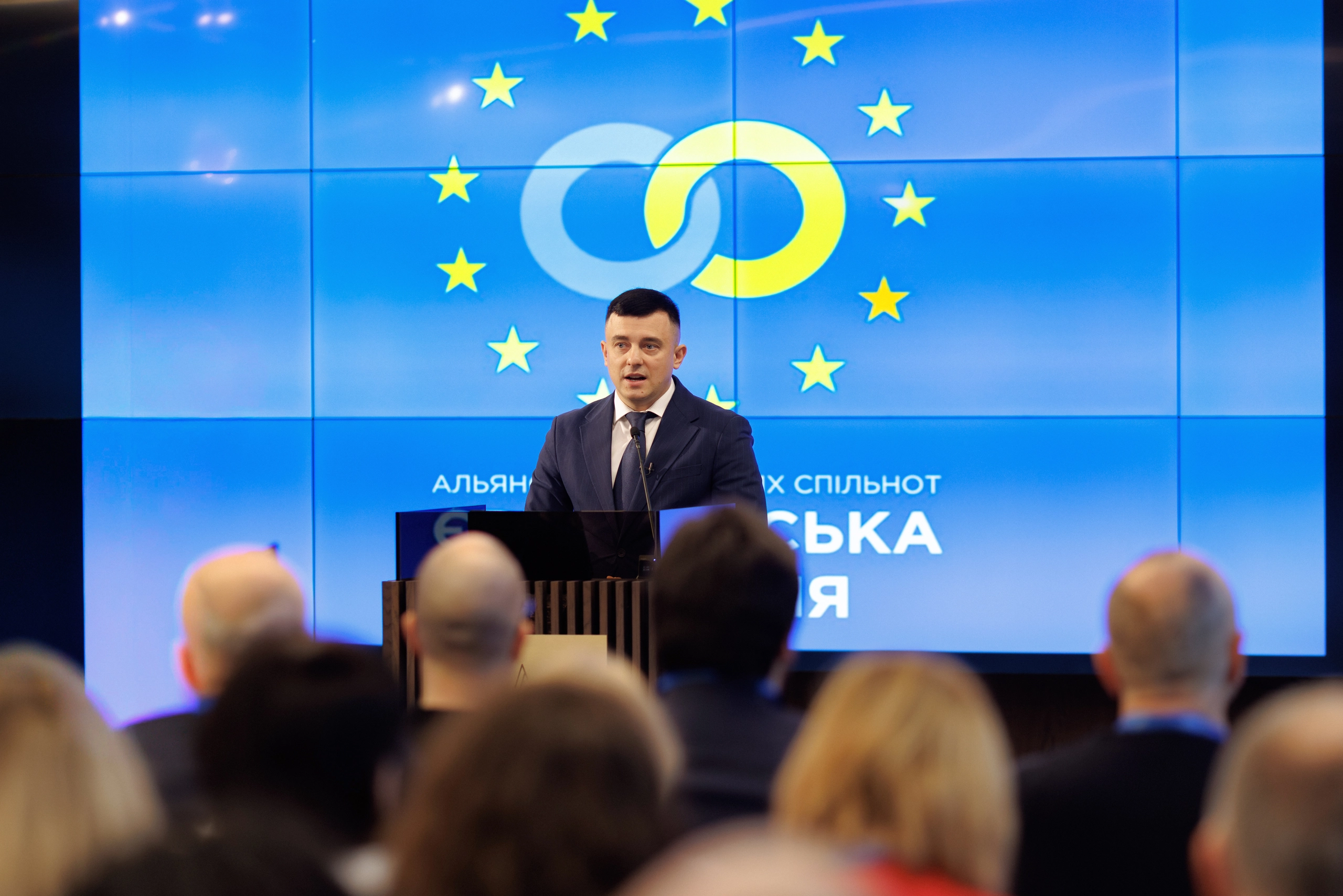 Roland Tseber, a deputy of the Zakarpattia Regional Council, chairman of the Alliance of National Communities “European Coalition.” (Photo by Yuri Kifor)
“Ukrainians are standing side by side on the front line – Roma, Hungarians, Jews, Georgians, Azerbaijanis, Greeks, Crimean Tatars, Gagauz and dozens of other national communities. They are fighting for Ukraine,” he said.
At the same time, Tseber acknowledged that distrust and long-standing prejudices between communities still exist, and that national minorities often lack equal opportunities to influence political decisions.
“In cultural and educational life, opportunities are not always equal, and periodic outbreaks of hate speech on social media can be deeply damaging – sometimes more painful than missiles themselves,” he added.
Petro Yatsenko, a representative of Ukraine’s Defense Intelligence Directorate (HUR), said ethnic identity becomes irrelevant on the battlefield:
“At the front – in a trench or a platoon stronghold, hiding together from a drone in a ravine or forest belt – no one asks about nationality.”
He recalled that when Russia launched its full-scale invasion in February 2022, unprecedented unity among Ukraine’s diverse communities played a decisive role in stopping the advance.
“Then everyone gathered – Crimean Tatars, Armenians, Hungarians, Georgians, Jews, and Mingrelians, both large nations and smaller communities – but we were all united, sharing a single goal: to protect our common land, our freedom, and our values.”
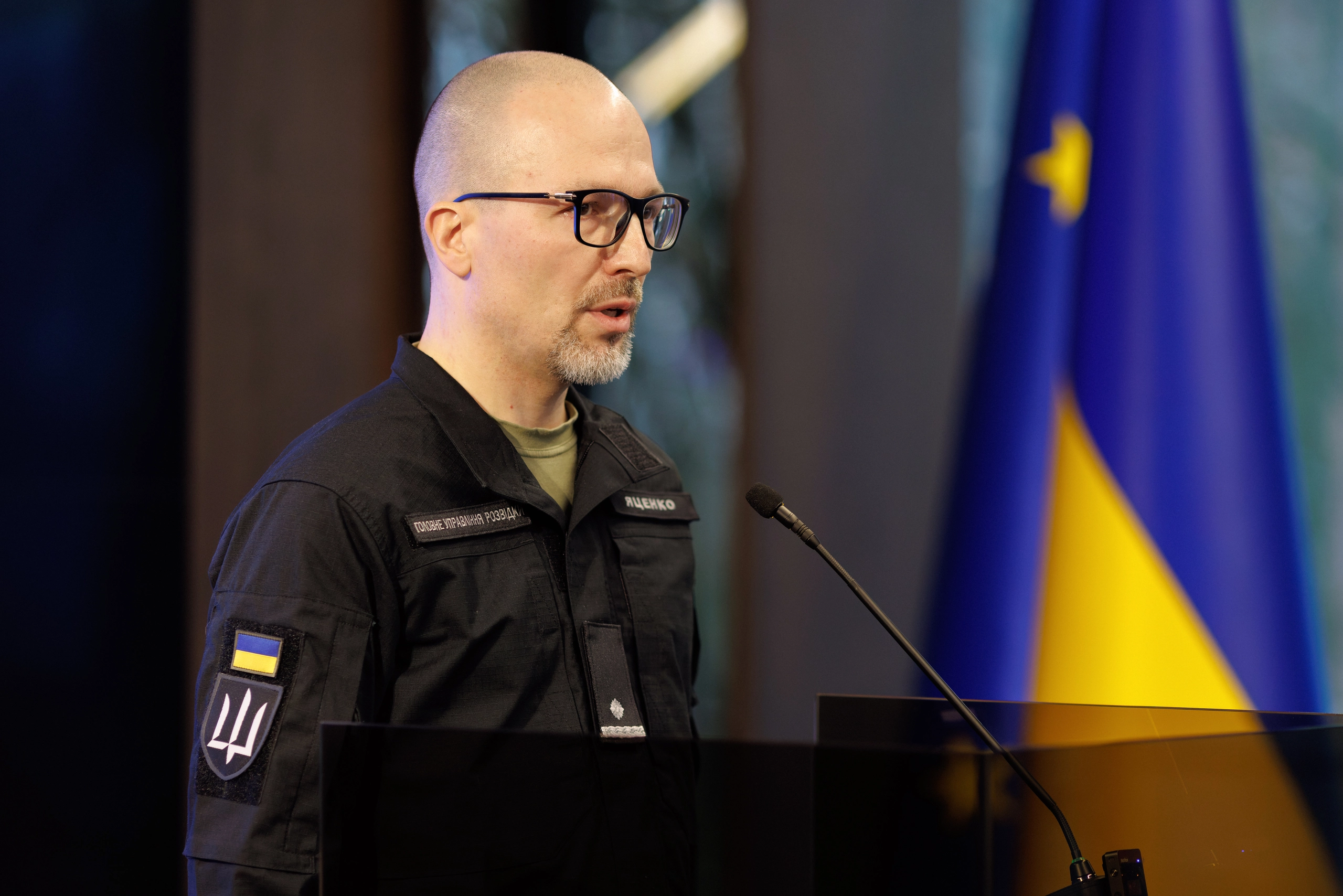 Petro Yatsenko, a representative of Ukraine’s Defense Intelligence Directorate. (Photo by Yuriy Kifor)
Today, he said, that unity is even more crucial as Russia’s forces have grown to more than 700,000 troops.
Roman Saray, chairman of the Zakarpattia Regional Council, recalled that before the European Parliament voted to open accession talks with Ukraine, a wave of disinformation alleged violations of minority rights in Transcarpathia.
After visiting the region, ambassadors from EU countries concluded unanimously that Ukraine is a multinational, multicultural, and multi-confessional state deserving EU membership, he said.
During a panel discussion “Unity of Ukraine’s National Communities: Challenges and Prospects”, Ihor Verner, deputy head of Ukraine’s State Service for Ethnopolitics and Freedom of Conscience, revealed that Russia continues information and psychological operations aimed at splitting Ukrainian society along ethnic lines.
The lawmaker Yevheniya Kravchuk said the issue of minority rights is routinely weaponized by Russia on international platforms, including the Parliamentary Assembly of the Council of Europe (PACE).
She noted that similar narratives are now being used by Hungary to obstruct Ukraine’s European integration.
“We fulfill all obligations, but we do not accept minority rights being used as a political tool to block our EU path,” Kravchuk said, adding that such actions ultimately harm ethnic Hungarians living in Ukraine.
She stressed that so-called “Russian world” ideology poses a threat to all national communities, not only ethnic Ukrainians.
“Russia is erasing all diversity – religious, because only the Russian Orthodox Church is allowed, and cultural, because there is supposed to be only one people and one Russian language. The Russian world threatens national communities just as much as it threatens those who speak Ukrainian and strive to preserve their Ukrainian identity,” Kravchuk added.
Servicemen and veterans from minority communities echoed the message that Russia and Hungary often weaponize minority rights, though on the frontlines, nationality doesn’t matter.
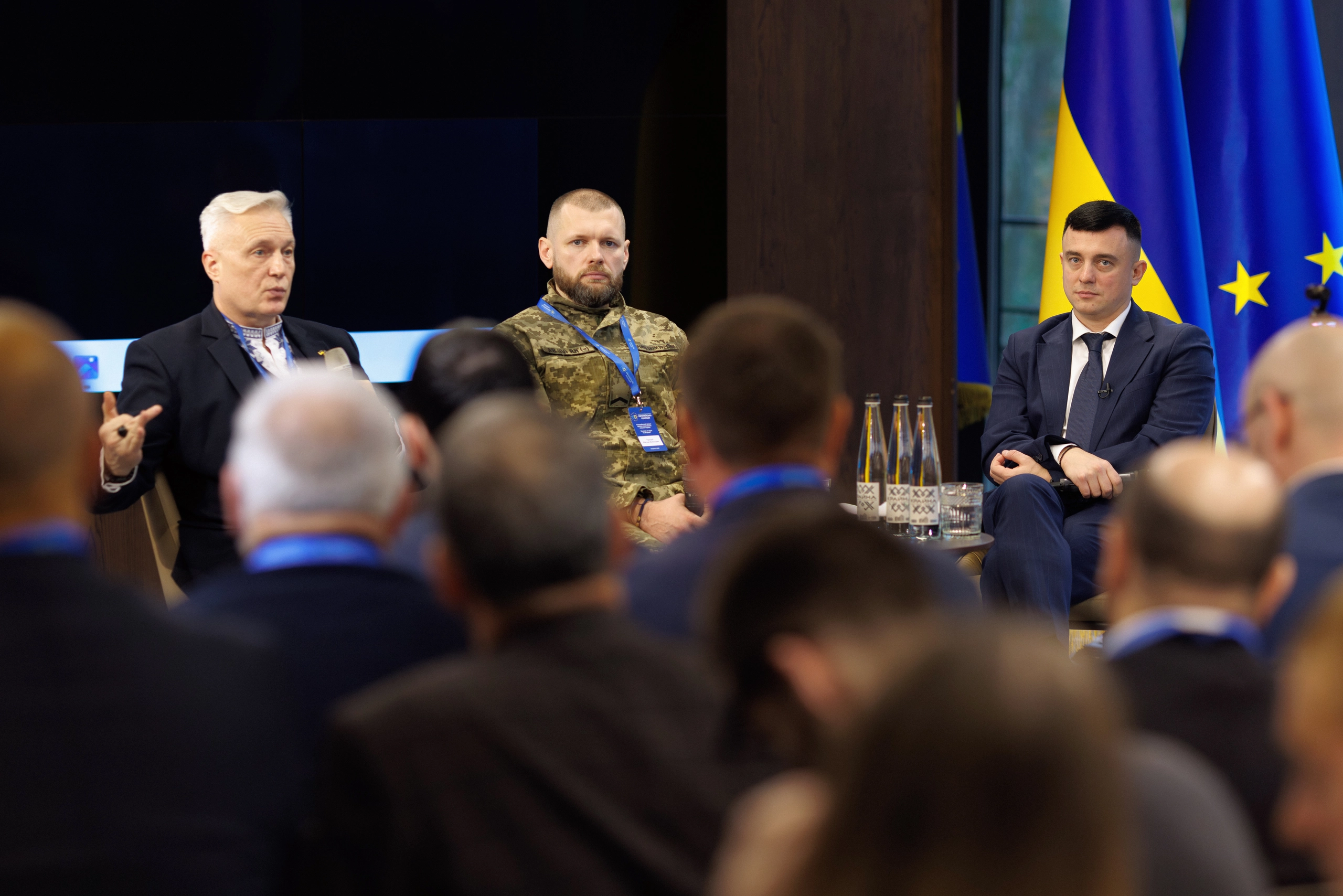 From left to right: Ihor Verner, Viktor Troshki, and Roland Tseber during a panel discussion. (Photo by Yuri Kifor)
Viktor Troshki, an ethnic Hungarian serving in the 128th Mountain Assault Brigade, said trust and reliability matter far more at the front than nationality or language.
Journalist and Crimean Tatar activist Imran Useinov said Russia has long exploited ethnic issues, including the Crimean Tatar and Hungarian factors, through information operations, but Ukraine’s legislation on indigenous peoples has significantly undermined those efforts.
Vidadi Israfilov, war veteran and deputy head of the United Diaspora of Azerbaijanis in Ukraine, highlighted that ethnic Azerbaijanis in Ukraine face no discrimination and want to show both Russia and Europe that they are part of a multicultural, multiethnic, and multi-religious European nation.
Mamuka Mamulashvili, commander of the Georgian National Legion, emphasized that Ukraine is already a multinational country resisting aggression, and that uniting communities strengthens the country more than remaining divided.
István Szent-Iványi, President of Connect Europe Association and former Member of the European Parliament, noted that there is a significant part of the Hungarian population that supports Ukraine, despite current government positions.
“There are not only residents who back Orbán’s ideas, but also those who support Ukraine. I have great hope that next year we will have a new government supportive of Ukraine, developing friendly relations between our two states,” he said.
“You are on the right path to joining the EU, and this part of Hungary strongly supports your efforts,” he added.
Hungary accused of blocking Ukraine’s European integration
Tseber directly accused the Hungarian government of blocking Ukraine’s European integration efforts.
“The Hungarian government is blocking our path to Europe, blocking European integration steps. And he refers to the fact that Ukraine violates human rights, the rights of the Hungarian national community. From my experience, I declare with full responsibility that Ukraine is always ready to look for common ground and does so,” he said.
In an odious interview with Tucker Carlson, Russian President Vladimir Putin claimed that Hungary has territorial claims on Ukraine, particularly Zakarpattia, and suggested that Hungarians in the region support joining Hungary.
Answering a question from Kyiv Post about the risks of separatist movements in Zakarpattia, Tseber clarified:
“There are no separatist sentiments as such. There are no separatists. But there are people who are hurt by this Trianon, the 1920s, when great Hungary was divided because they chose the bad side of history, just like now. I told Orban that you are choosing the wrong side for the third time, and the fourth time may not happen,” he said.
“I said that, and then there were publications that I threatened him,” he added.
From his prospective, economic factors also do not favor separatist sentiment, as it would not be profitable for the region to join Hungary.
Tseber stressed that, despite attempts by ultra-right groups in Hungary to destabilize the region, official Budapest has no plans to annex Zakarpattia. He added that Hungary’s NATO membership also serves as a safeguard against such moves.