Editor’s note: Abulfaz Babazadeh is a scientist and Japanese scholar, political observer, member of the Union of Journalists of Azerbaijan. The article expresses the author’s personal opinion and may not coincide with the views of News.Az.
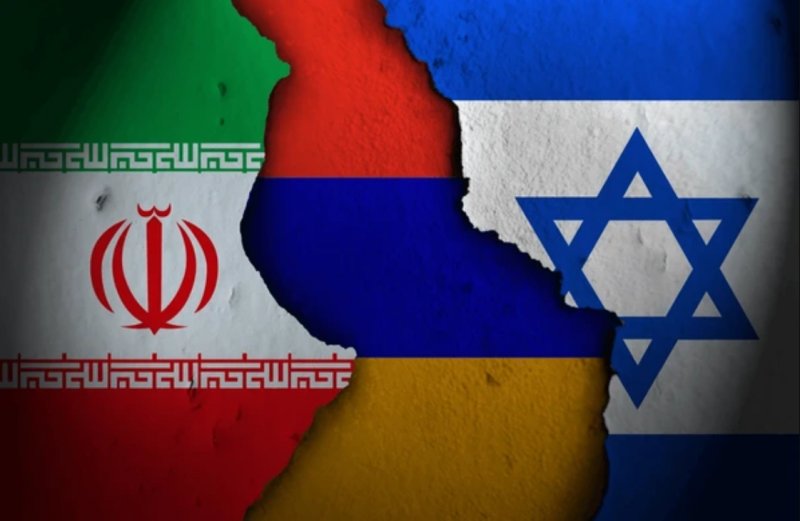
Armenia is currently experiencing a slow, yet noticeable transformation in its foreign policy, a shift that began after the Second Karabakh War. It is not loud or revolutionary, but gradual, cautious, and in many ways inevitable. Regional conflicts, the loss of former security guarantees, and the weakening of traditional alliances have placed Yerevan in a situation where it must search for new strategic foundations. One of these new directions appears to be Israel, a country with which relations historically remained cool, contradictory, and far from trustful. Tehran has taken note, and what it sees has triggered clear concern on a strategic level.
The reason for discussion may seem trivial at first glance: economic diplomacy, official meetings, polite communiqués. Armenia’s Minister of Economy Gevorg Papoyan held talks with Israel’s Ambassador Yoel Lion. The agenda included economic cooperation, investment, agriculture, water resources, tourism — all seemingly harmless subjects. The Armenian side presented the TRIPP project and the “Crossroads of Peace” initiative, outlined plans to unblock communications in the region, and invited the Israeli ambassador to the 2026 investment summit. Everything looked routine. Yet many analysts immediately saw a deeper political context beyond the economic facade. And this reaction is not accidental, as Yerevan has increasingly been using language that irritates its long-standing partner Iran.
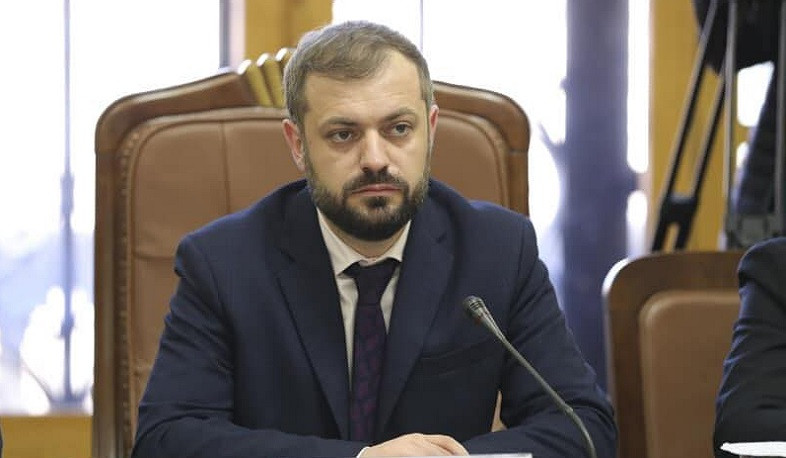
Armenia’s Minister of Economy Gevorg Papoyan. 1Lurer
The main trigger is what many now refer to as the “Trump Route.” Tehran has openly declared that it sees no fundamental difference between TRIPP and the Zangezur Corridor and strongly opposes their implementation, viewing them as a threat to Iranian strategic interests. Iran has consistently resisted the Zangezur idea even when the U.S. had nothing to do with it, and Armenia used this position to delay the project for years. The country, isolated for decades due to the occupation of its neighbor’s territories, gradually became dependent on Iran and turned into one of its key geopolitical assets.
Under sanctions and with tense relations with nearly all its neighbors, Iran enjoyed the only land corridor to Russia through Armenia. Most importantly, Armenia served as a buffer zone preventing the formation of a continuous Turkic arc stretching from Central Asia to Türkiye.
The situation escalated further after the visit of Armenia’s Deputy Foreign Minister Vahan Kostanyan to Israel in November. Iranian media — from Tehran Times to Mehr News — actively discussed the trip, connecting it directly to the Zangezur issue. Publications stressed that cooperation with Israel in technology, medicine, agriculture, and tourism is a classic instrument of soft but long-term influence, one that may eventually lead to the establishment of stable institutional and even intelligence networks near the Iranian border. Tehran began to suspect that Armenia is preparing to slip away from dependence on Iran and Russia and move closer to the West and Israel. As a result, pressure on Yerevan increased, with expectations to reaffirm commitment to Iran’s “red lines.”
Notably, the pressure does not come from Iran’s official executive authorities, but from its religious and political elite. One of the key voices is Ali Akbar Velayati, adviser to the Supreme Leader and former foreign minister. During a meeting with Armenia’s ambassador, he stated once again that Tehran decisively opposes the “Trump plan for the Caucasus,” emphasizing its resemblance to the “notorious Zangezur Corridor.” Such persistent interference appears increasingly unwelcome to Armenian authorities, who view Tehran’s fears as exaggerated and unhelpful.
Still, Iran may have inadvertently achieved the opposite of what it intended. By resisting regional corridors so aggressively, it has effectively invited the United States into the game, and Washington will not tolerate Armenia maintaining close relations with Iran. It is worth recalling that the previous U.S. leadership openly criticized the Araz Corridor being constructed by Azerbaijan and Iran, yet this did not affect Baku’s determination. The project continued, even accelerated.
Armenia, however, does not possess the same degree of sovereignty and room for resistance. Between Iran and the United States, it has almost naturally leaned toward Washington. And by distancing itself from Iran, it now opens the possibility of rapprochement with Israel — an option that previously was simply unavailable.
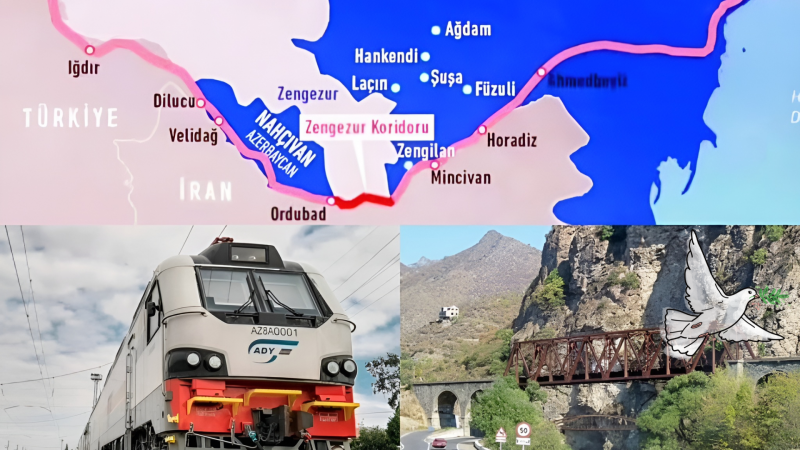
Source: ADY
Israel is increasingly seen in Yerevan as a window of opportunity — a technologically advanced state with global influence, strong political networks, and serious weight in international affairs. For a long time, Israel, which maintains close relations with Azerbaijan, kept Armenia at arm’s length. But as former rivals now move toward normalization, the Israeli side may view Armenian interest more favorably.
Inside Armenia, society remains divided, as became evident during the brief Israel-Iran confrontation in the summer. Some Armenians took a clearly pro-Iranian stance; others supported Israel. Voices arguing that distancing from Israel deepens Armenia’s geopolitical isolation have grown louder. The argument that “Israel supports Azerbaijan, therefore Armenia must avoid it” is no longer dominant. More Armenian experts openly consider this approach a dead end. Against this background, the careful but steady warming of Armenian-Israeli relations appears deliberate rather than accidental. Economic initiatives, cultural interaction, the gradual emergence of a real Jewish community in Yerevan, diplomatic activity — all of this reflects a deeper reformatting of foreign policy.
Yet a shift away from the Tehran-Moscow axis may bring challenges if Yerevan is not careful. For now, Armenia finds itself somewhat protected under the emerging U.S. umbrella, while Azerbaijan watches calmly. Baku has no reason to oppose warm Armenian-Israeli relations — Israel will remain Baku’s primary partner in the region for many fundamental reasons that Armenia cannot compete with.
At the same time, Armenia’s pivot could paradoxically unlock the long-awaited Zangezur Corridor, delayed for five years largely due to Iran. With the United States and Israel involved, Velayati’s concerns are unlikely to influence Yerevan as they once did.
For Iran, these developments are a deeply troubling signal. Yet Tehran might unexpectedly find sympathy from Türkiye, a long-time critic of Israel. Armenia, however, faces real risk. The country must calculate every step with caution, avoiding a situation in which its southern neighbor — politically cornered and sensitive to the mere word “Israel” — reacts harshly. To Tehran, Israel is a red rag before a bull.
Armenia stands at a crossroads. Its shift does not yet equal a full geopolitical realignment, but the direction is evident. Gradually, step by step, the distance between Yerevan and Tehran grows, while the distance to Jerusalem shrinks. If this trajectory continues, the political architecture of the South Caucasus, and the future of the Zangezur Corridor, could look very different from what the region has known for the past three decades.
(If you possess specialized knowledge and wish to contribute, please reach out to us at opinions@news.az).