
Published
27/12/2025 às 14:06
Updated
27/12/2025 às 14:07
Refined oil production at Replan accelerates in the second half of 2025, surpasses 2024 performance, and reinforces the refinery’s strategic role in national supply.
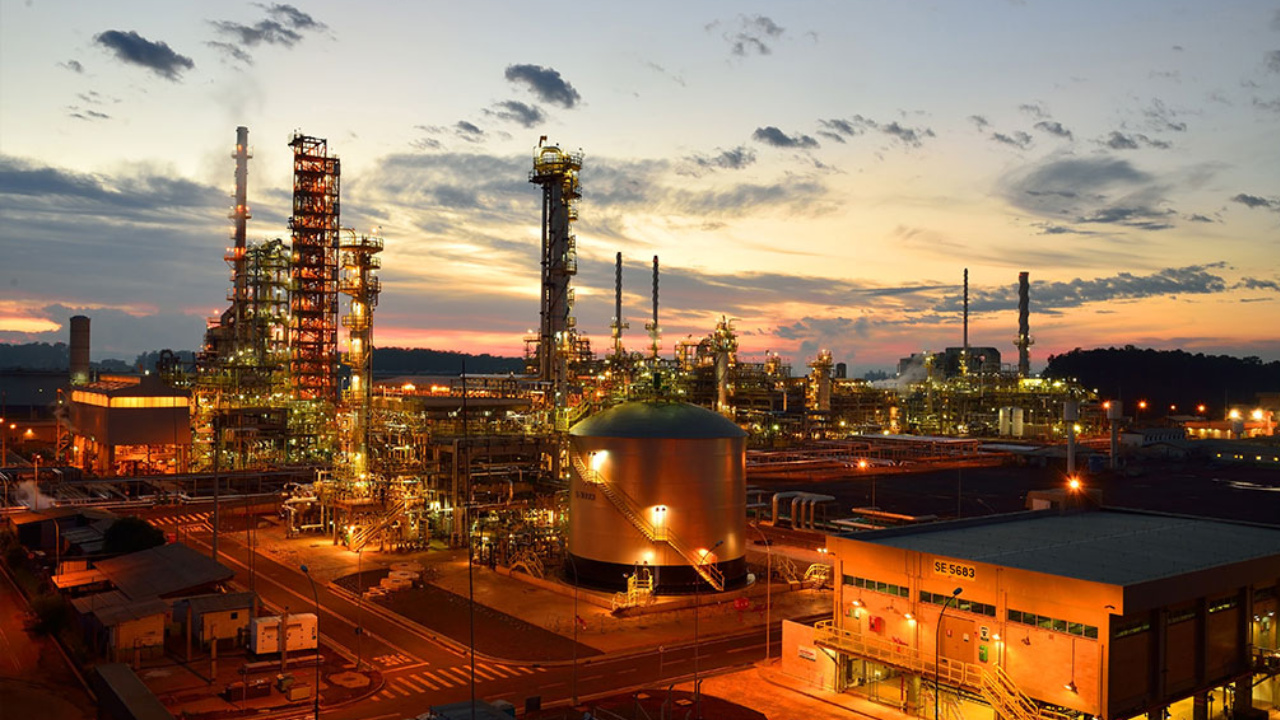
The production of petroleum derivatives in Paulínia Refinery (Replan) It showed a consistent recovery throughout 2025. After a start to the year marked by performance below that recorded in 2024, the unit accelerated its pace in the second half of the year and managed to surpass, for the first time this year, the accumulated volume of the previous period.
According to data from the National Agency of Petroleum, Natural Gas and Biofuels (ANP), between January and November, 22,1 billion liters of petroleum derivatives were produced. This result represents a 0,2% increase compared to the first 11 months of 2024, signaling an operational turnaround throughout the year.
Refinery gains momentum after months of below-expected performance.
For almost the entire first half of the year, Replan’s production remained below the levels observed last year. However, starting in the second half of the year, the refinery began to register a gradual increase in productivity, which allowed for the recovery of the accumulated volume.

The progress over the months led the plant to reach, in November, a level higher than that of the same period in 2024. This movement reinforces the importance of the second half of the year for the unit’s annual performance.
Processing capacity reinforces strategic role.
According to Petrobras, the Paulínia Refinery has the capacity to process up to 69 cubic meters of oil per day, equivalent to 69 million liters or approximately 434 barrels per day. With this structure, the unit serves approximately 30% of Brazilian territory.
This volume makes Replan the largest refinery in the country and one of the main suppliers of fuels and other derivatives in various regions.
Diesel leads the production of petroleum derivatives.
Diesel remains the main refined product in Paulínia. In 2025 alone, Replan processed approximately 9,4 billion liters of the fuel, mainly destined for distributors serving the domestic market.
In addition to diesel, the refinery produces gasoline, aviation kerosene (QAV), liquefied petroleum gas (LPG), fuel oils, and asphalt. The list also includes sulfur, used in the cosmetics industry, and propene, an essential raw material for the manufacture of plastics.
Other byproducts also have applications in diverse industrial chains, such as tire production, which broadens the refinery’s economic impact.
Distribution serves multiple regions of the country.
The petroleum derivatives produced at Replan are distributed to different regions. The interior of São Paulo state accounts for the largest share, receiving approximately 55% of the total volume.
Furthermore, the supply reaches southern Minas Gerais and the Triângulo Mineiro region, as well as states in the Midwest and North, such as Mato Grosso, Mato Grosso do Sul, Goiás, Rondônia, Acre, and Tocantins. The Federal District is also among the destinations for the production.
This logistical reach reinforces the role of the Paulínia Refinery as a key component in the national system for refining and distributing petroleum products, especially in a year marked by a gradual recovery in production.