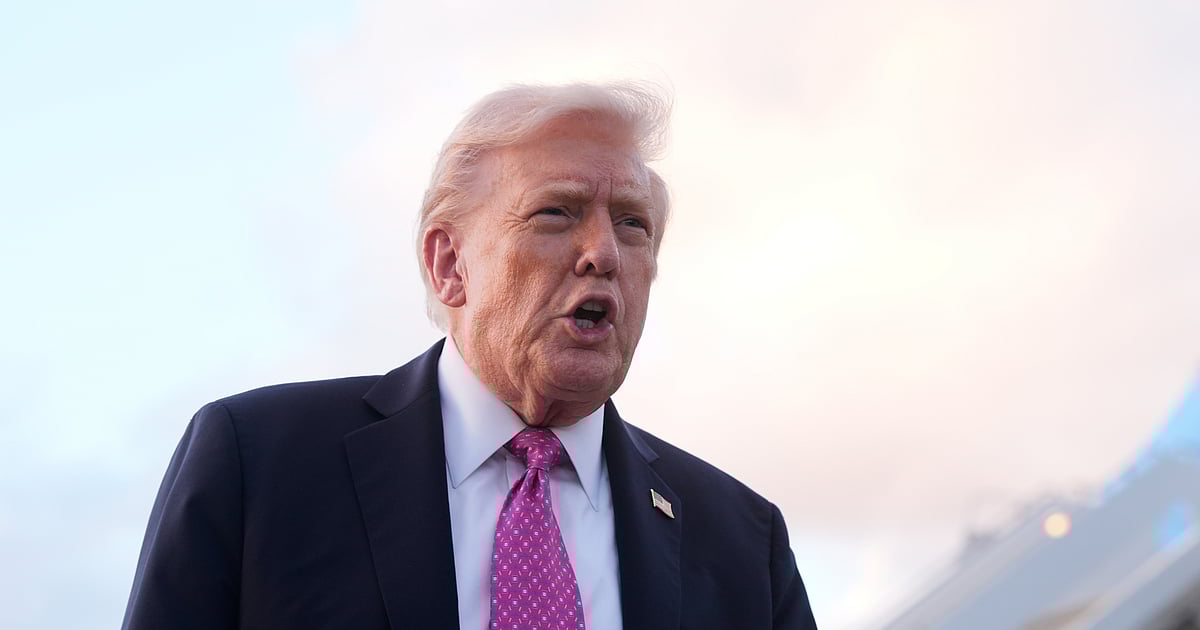
The deal with India, supposedly round the corner, awaits Trump’s okay. The parade of delays has implications for the US-India relationship. A deal with the EU is signed but not delivered as talks are stuck on the regulation of tech giants. As for Mexico and Canada—the biggest trade partners of the US—there is no sign of the USMCA treaty’s renewal.
Yes, trade and deficit with China are lower, but both are higher with Mexico; following suit are Vietnam, Taiwan and Ireland. Two data points stand out. China’s trade surplus passed the $1-trillion mark despite a 29 percent drop in shipments to the US. And notwithstanding all the sanctions, Russia’s rouble has appreciated to 79 to a dollar, levels last seen before the February 2022 invasion of Ukraine.
Trump wants to rearrange the global economy as he imagines it. He may stumble at the Supreme Court, but is unlikely to change course. The question is whether tariffs are serving the US economy’s interests. As of now, a part of tariffs are being eaten by companies and the impact is showing in lower and slower hiring. Rising debt, Kenneth Rogoff points out, may render the dollar less desirable.
Does the talk-peace-and-wage-war approach serve US interests? Already, the world is engaging to reimagine a multi-polar world scaffolded by interests, not ideologies. It is useful to remember that the powerful are also dependent. As Eliot wrote, “There will be time, there will be time/ To prepare a face to meet the faces that you meet.”
Read all columns by Shankkar Aiyar
Author of The Gated Republic, Aadhaar: A Biometric History of India’s 12 Digit Revolution, and Accidental India
(shankkar.aiyar@gmail.com)