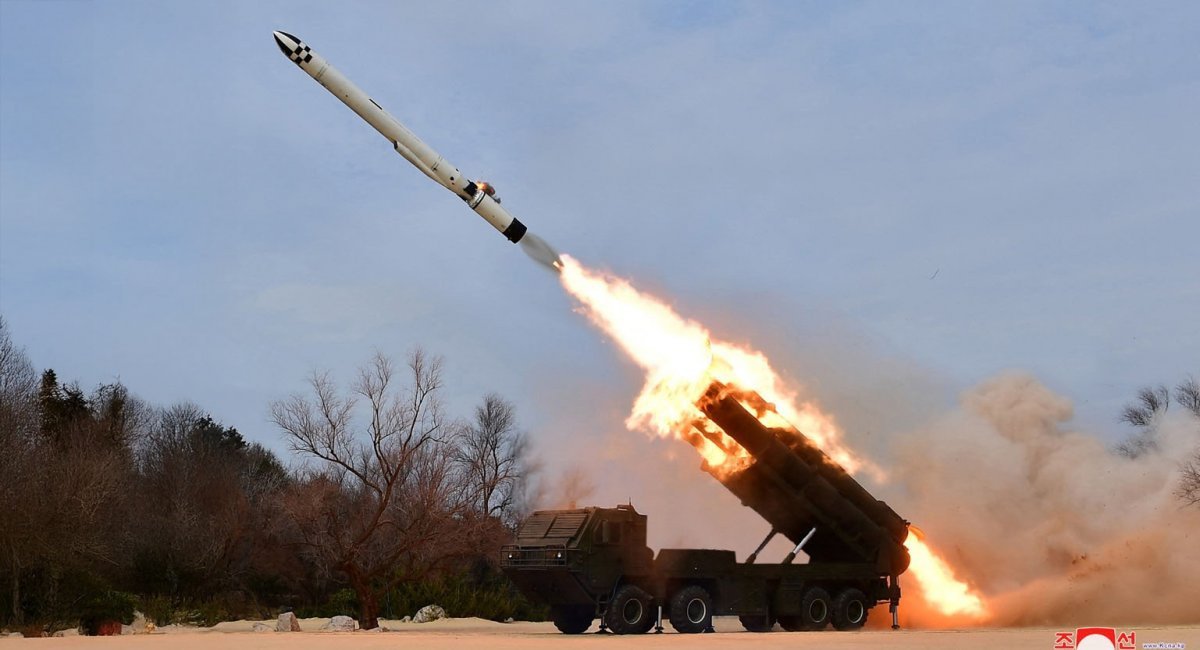
russia may reportedly receive Hwasal-1 cruise missiles in the Ra-3 variant from North Korea for use in its war against Ukraine. According to the OSINTWarfare resource, these missiles are capable of carrying a one-ton warhead to a range of 130 to 250 kilometers.
An accompanying assessment suggests that, should the aggressor state indeed obtain these cruise missiles from the DPRK, russia’s ability to strike Ukrainian infrastructure would be significantly enhanced. The post was illustrated with a photograph from one of the test launches of a north Korean cruise missile of this type.
Read more: north Korea Shows Su-25 Armed with Storm Shadow Copy for the First Time: A New Step in Its Cargo-Cult ApproachSome Russian sources report that a variant of the North Korean Hwasal-1 Ra-3 strategic cruise missile, equipped with a 1-ton high-explosive warhead and an estimated range of 130–250 km, could be employed by the Russian Armed Forces in the war against Ukraine. pic.twitter.com/cJ9vww9lm5— OSINTWarfare (@OSINTWarfare) December 25, 2025 Which Missiles russia Wanted from north Korea but Did Not Receive
No primary sources were cited, making it difficult to assess the reliability of this information. It is therefore possible that these claims reflect little more than russian ambitions, similar to earlier reports about Moscow’s alleged interest in acquiring the 600-mm KN-25 multiple rocket launch system, a topic repeatedly amplified by hostile propaganda outlets.
A comparable case emerged in December 2024, when there were indications that russia might receive KN-15 medium-range ballistic missiles on tracked launchers from north Korea. That assessment ultimately proved unsubstantiated.
Nevertheless, in this instance it is prudent to proceed from a worst-case scenario—namely, that russia could indeed receive Hwasal-1 Ra-3 cruise missiles from north Korea for strikes against Ukrainian territory. These missiles also carry the Western designation KN-27.
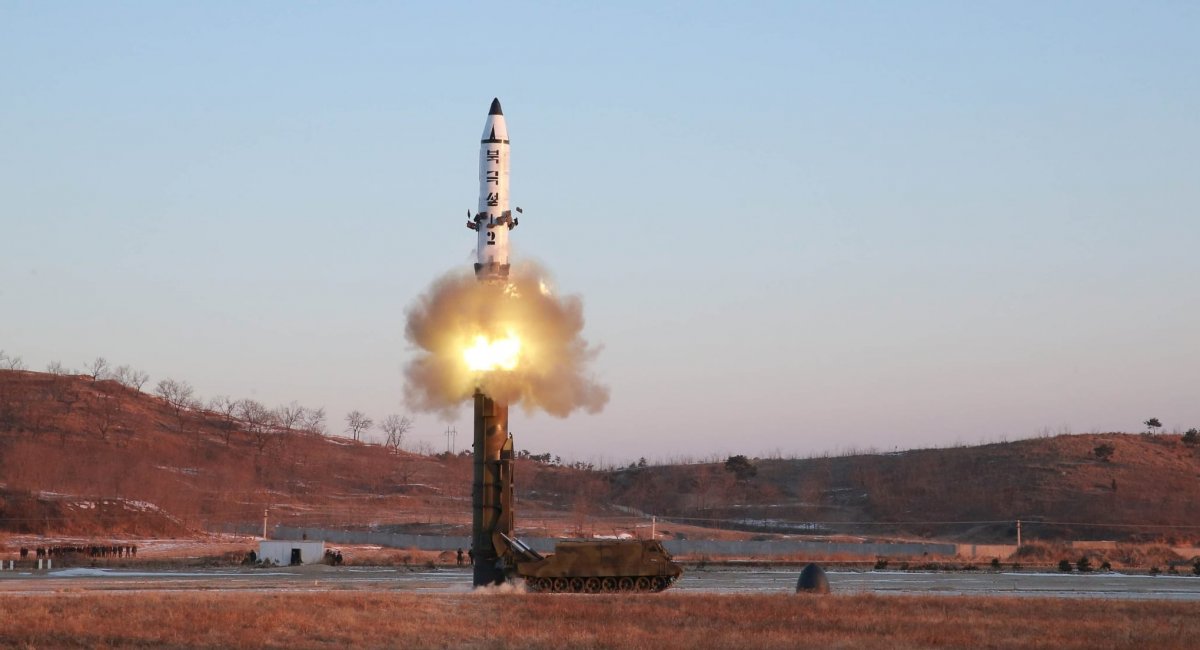 KN-15 / Open-source illustrative photoWould a Brigade Be Formed Around Hwasal-1 Ra-3 Missiles?
If this threat materializes, the aggressor state would gain an additional tool to intensify strikes against critical infrastructure in border and frontline regions.
Due to the large mass of the warhead, the operational range of these north Korean cruise missiles is expected to be relatively limited. Even if their maximum range is assessed at 130–250 km, the effective depth of strikes would likely be reduced by roughly 50 km to maintain a safe distance from the forward edge of the battlefield.
A more precise assessment of the threat is constrained by the lack of key data, including the number of launchers and the size of the Hwasal-1 Ra-3 missile stockpile that north Korea could potentially transfer to russia.
These factors, in turn, would directly determine whether russia would form a dedicated missile brigade equipped with Hwasal-1 Ra-3 systems, as was likely the case following the acquisition of KN-23 missiles. Another open question concerns the time required to train personnel to operate these north Korean cruise missiles once transferred to the russian Armed Forces.
A Copy of the Kh-55 or an Iskander-K?
Open-source data indicate that the Hwasal-1 cruise missile was repeatedly demonstrated between 2021 and 2025, was designed as a potential nuclear delivery system, and features subsonic speed with a declared range of up to 1,500 kilometers.
This raises the question of why north Korea would develop the Hwasal-1 Ra-3 variant with a significantly heavier warhead, as such a modification implies a substantial redesign of the missile. A comparable example is the Kh-555, which was developed as a conventional version of the Kh-55. This suggests two possible explanations: the missile was either designed for north Korea’s own needs or developed “to order” for russia.
This issue becomes even more relevant given the precedent revealed in July 2024, when it became known that russia had provided north Korea with materials and technical documentation for the production of KN-23 missiles later used in strikes against Ukraine.
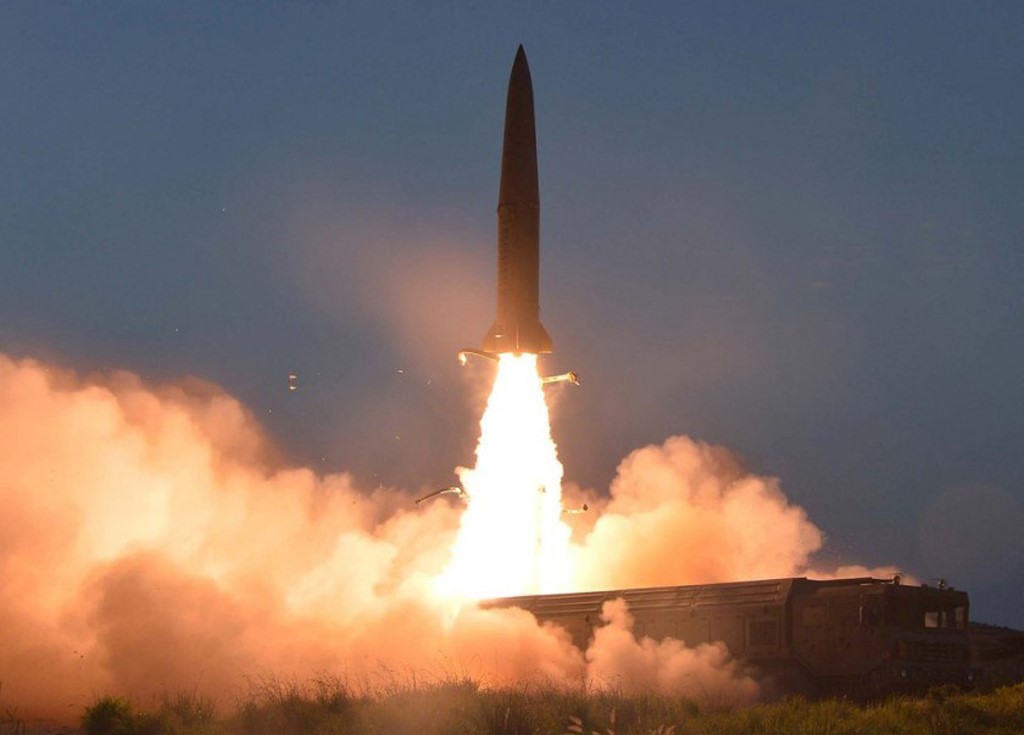 KN-23 / Open-source illustrative photo
Another unresolved question is what technological basis underpins the Hwasal-1 Ra-3: the russian Iskander-K, the Chinese CJ-10 (itself effectively a copy of the Kh-55, including a ground-launched variant), or even developments related to the Soviet RK-55 Relief, which Pyongyang could theoretically have obtained from Moscow.
Conclusions
Even if russia were to receive Hwasal-1 Ra-3 cruise missiles equipped with a 1,000-kg warhead, these systems would first need to be integrated operationally. This would require trained personnel and the formation of dedicated units at the battalion or brigade level.
Given that the Hwasal-1 Ra-3 is a subsonic cruise missile, countering this threat ultimately depends on the sustained and timely supply of Western-made surface-to-air missiles to Ukraine’s air defense forces.
Ivan Kyrychevskyi, serviceman of the 413th Raid Regiment of
the Unmanned Systems Forces of Ukraine and weapons expert at Defense
Express.
Read more: Kim Jong Un Inspects North Korea’s First Nuclear-Powered Submarine