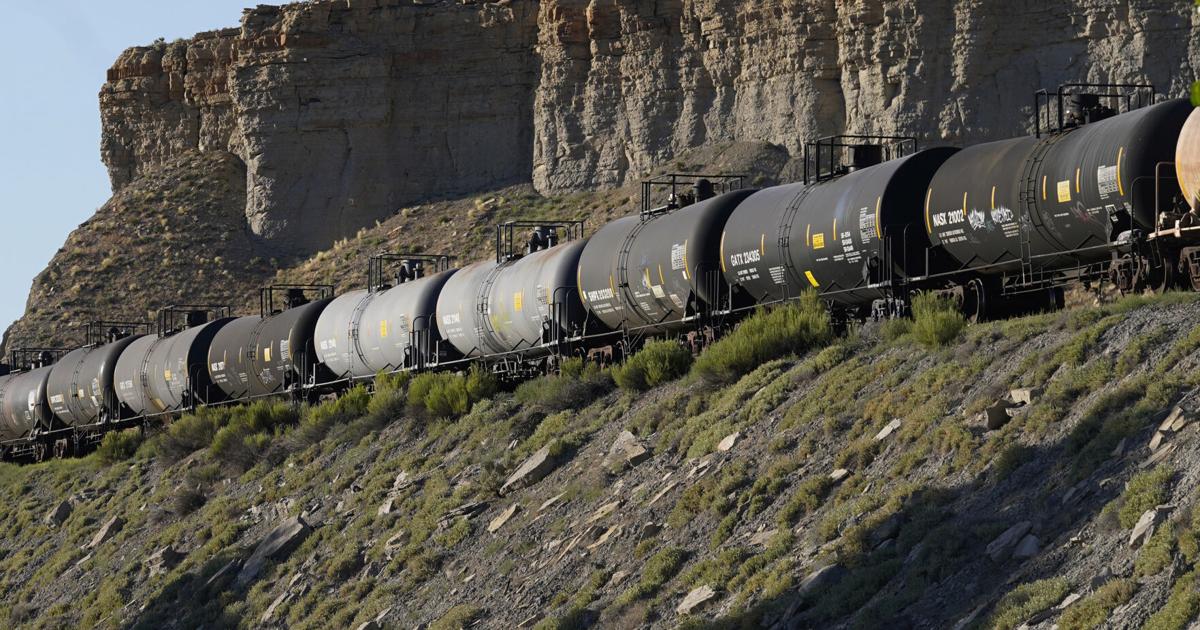
A U.S. Supreme Court ruling this year had big implications for both western Colorado and national application of an environmental law.
In May, the court unanimously reversed aspects of a federal appeals court ruling overturning an agency’s approval of an 88-mile railway in northeastern Utah that would facilitate shipments of oil through Colorado and to the Gulf Coast.
The ruling was a victory for the Seven County Infrastructure Coalition in northeast Utah and a Utah railway company, and also lays out limits on the reach of the National Environmental Policy Act.
The Utah entities had argued that the Surface Transportation Board, when it approved the project, didn’t need to take into account the environmental impacts of the oil and gas development in Utah that would generate traffic on the rail line, or things such as impacts along rail lines in western Colorado that would see increased oil train traffic or to Gulf Coast communities where the oil would be taken to be refined.
The high court opinion was written by Justice Brett Kavanaugh and held that the appeals court ruling failed to afford the Surface Transportation Board “the substantial judicial deference required in NEPA cases and incorrectly interpreted NEPA to require the Board to consider the environmental effects of upstream and downstream projects that are separate in time or place from the Uinta Basin Railway.”
Kavanaugh was joined in his opinions by four other conservatives on the court, with Justice Neil Gorsuch recusing himself from the case. The court’s three liberal justices joined in a concurring opinion also reversing the lower-court ruling, but based on differing reasoning.
The oil train project would connect oil produced in the Uinta Basin with the national rail network, and could result in as much as 350,000 barrels a day of waxy crude oil being shipped through western Colorado and to Gulf Coast refineries. It would eliminate the need for oil to continue to be trucked through mountainous terrain to a railway in Utah.
The project had been challenged in court by Eagle County in Colorado and by some conservation groups.
A concern in western Colorado is potential impacts such as wildfires and oil spills into the Colorado River as a result of increased oil traffic. Grand Junction joined some other Colorado communities in a brief filed with the high court arguing that NEPA requires analysis of things such as the potential for such impacts along the Union Pacific Line in Colorado.
Kavanaugh’s opinion argued, “A relatively modest infrastructure project should not be turned into a scapegoat for everything that ensues from upstream oil drilling to downstream refinery emissions.”
The high court’s “decision undermines decades of legal precedent that told federal agencies to look before they leap when approving projects that could harm communities and the environment,” Sam Sankar, an Earthjustice senior vice president, said in a news release after the ruling. “The Trump administration will treat this decision as an invitation to ignore environmental concerns as it tries to promote fossil fuels, kill off renewable energy, and destroy sensible pollution regulations.”
Responding to written protests related to public health in the case of a Colorado oil and gas lease sale in September, the Bureau of Land Management cited the oil train ruling. It said that based on the ruling, the burning of fossil fuels related to the leases or the fuels’ use to make products constitute separate projects over which it has no regulatory authority, and it isn’t required to analyze the effects of those end uses, including public health impacts. But it said it nevertheless considers best management practices and standards protective of human health and the environment when managing land uses.
The high court didn’t review some other findings by the lower court that went against the Utah rail proponents, including its finding that the Surface Transportation Board violated the Endangered Species Act by failing to account for spill impacts.
“The Surface Transportation Board must still decide other environmental issues that weren’t part of this case,” Colorado Attorney General Phil Weiser, who had led 16 state attorneys general in filing a high-court brief supporting Eagle County, said in a statement after the ruling. “We’ll remain vigilant and deploy every tool available under the law to protect Colorado’s land, air, and water and hold federal agencies accountable to their oversight obligations.”