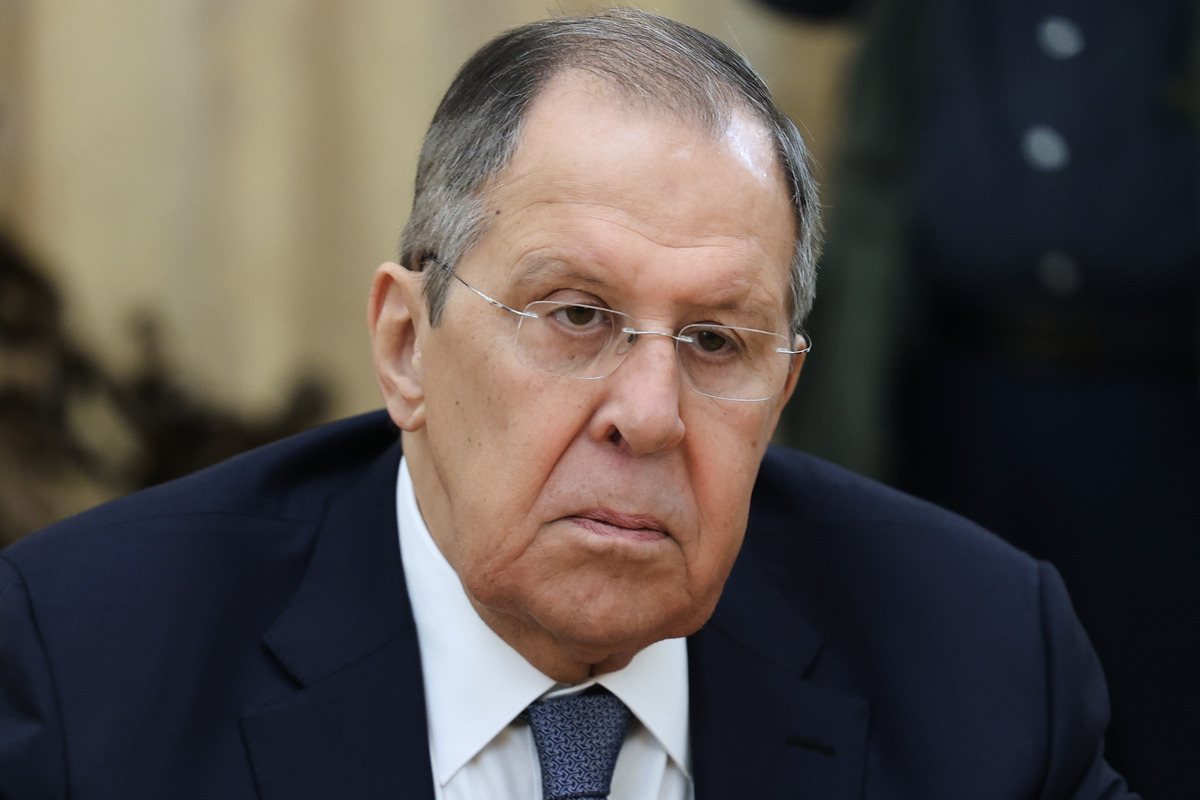
European nations are preparing for war with Russia, Moscow’s foreign minister has said, ahead of a planned meeting between U.S. President Donald Trump and Ukrainian President Volodymyr Zelensky in Florida.
Why It Matters
Several European officials have repeatedly said the continent is not at war with Russia, but that the peacetime conditions that have been in place since the end of the Cold War are over.
European countries, many of which are part of NATO, have pledged to dramatically raise defense spending in the face of Russia’s vast investment in its own military as it plugs away with its full-scale invasion of Ukraine. Alliance officials say Moscow could be able to launch an armed attack on NATO before the end of the decade and rapid rearmament is the only way to deter a conflict.
NATO countries are obliged to treat an attack on one member state as an assault on all and respond accordingly.
What To Know
“After a new administration came to power in the United States, Europe and the European Union emerged as the main obstacles to peace,” Russia’s veteran Foreign Minister Sergey Lavrov told Russia’s Tass state news agency in an interview published on Sunday. “They are making no secret of the fact that they are getting ready to fight it out with Russia on the battlefield.”
European countries watched on with some anxiety as the Trump administration took office in January and pursued a rapprochement with Moscow, largely a pariah state for many nations in Europe since Russia launched its full-scale invasion of Ukraine in early 2022.
Concern has continued to mount in European capitals and Kyiv that U.S.-backed peace talks could end up producing a deal to end the war that puts Ukraine on the back foot and could be seen as rewarding Moscow.
Alongside the negotiations, fears have risen in the alliance, particularly along NATO members on the eastern flank pressed up against Russia, that Moscow could use an end to fighting to regroup and prepare an attack beyond Ukraine. Russian President Vladimir Putin has dismissed this as “nonsense.”
NATO pledged back in June to raise defense spending to 3.5 percent of GDP on “core” defense capabilities like tanks or other hardware, and another 1.5 percent on related security and defense spending, such as infrastructure. This was a major surge from recent years, when NATO members struggled to dedicate 2 percent of GDP to defense. Experts say Russia spends above 7 percent of its GDP and about a fifth of all government money on its military.
“We are not at war, but we are no longer at peace,” Germany’s Chancellor Friedrich Merz said in September this year. “We are no longer in the time that was so beautiful and so quiet and so peaceful.”
European officials have raised the alarm over “hybrid attacks” often blamed on Russia. This refers to operations that fall short of open warfare, like weaponizing migration, carrying out cyberattacks or damaging critical infrastructure.
Zelensky is expected to meet Trump at the Republican’s Mar-a-Lago resort in Florida on Sunday after fresh rounds of talks were hailed by Washington and Kyiv as productive. The Ukrainian leader last traveled to the U.S. in October.
Currently on the table is an updated, 20-point peace proposal that Ukraine’s government made public earlier this week. It’s not clear how Russia has responded to the new potential terms.
What People Are Saying
European countries “dream about the Russian economy crumbling under the pressure of their sanctions,” Russian Foreign Minister Sergey Lavrov told Russian state news agency Tass in an interview published on Sunday.
NATO chief Mark Rutte said at the start of 2025 that he was “deeply concerned about the security situation in Europe,” adding: “We are not at war, but we are not at peace either.”