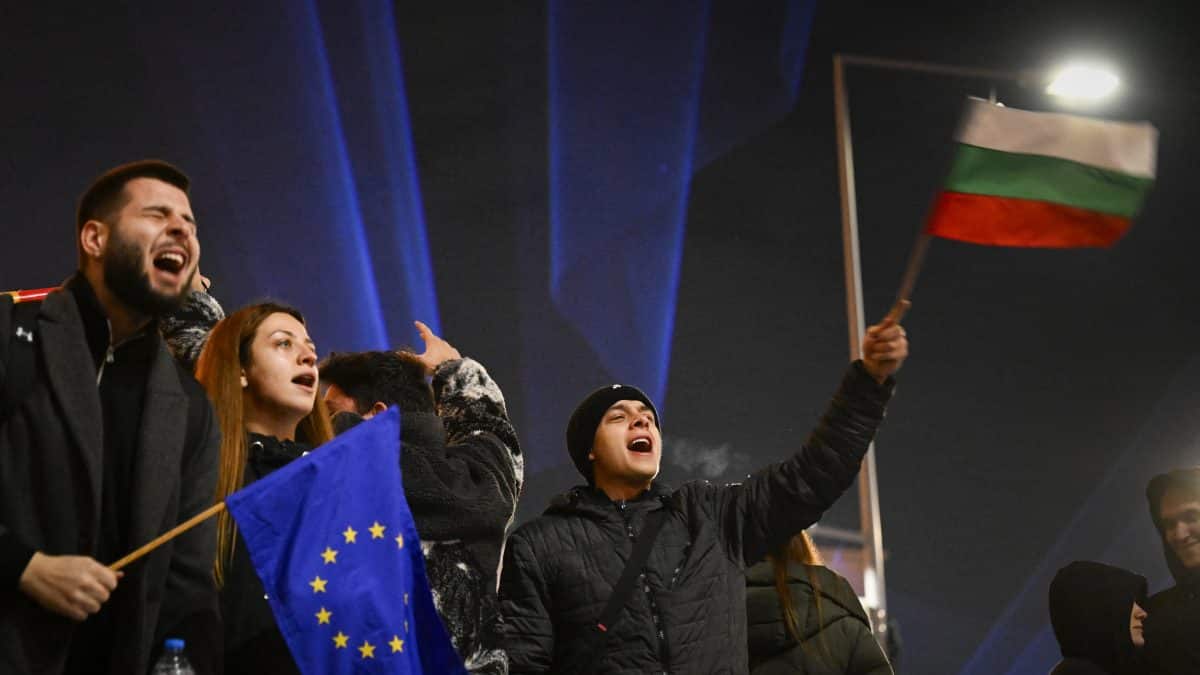
Bulgaria is about to take a big step by adopting the euro on January 1, a move leaders say could strengthen the economy and tie the country closer to Europe. But on the ground, the mood is mixed. Many Bulgarians worry about rising prices, losing a sense of national identity and the political forces shaping the debate, as disinformation and sharp divisions cloud what should be a milestone moment
Bulgaria is just days away from a big shift in its economic story. It is trading its long-standing national currency, the lev, for the euro on January 1, 2026, which will make it the 21st member of the eurozone.
Policymakers in Sofia and Brussels are presenting the switch as a chance to boost the economy of the EU’s poorest state and further anchor it within Europe’s political and financial heart.
Yet despite official optimism, the mood on the streets, in town squares and in parliament is far from united. The move has exposed deep divisions among Bulgarians about what joining the euro really means for their wallets, identity and future, as reported by the Guardian.
What leaders are saying
European Commission President
Ursula von der Leyen has championed the decision, arguing that “thanks to the euro”, Bulgaria will have more trade, more investment and more “quality jobs and real incomes”.
Valdis Dombrovskis, the EU’s economy commissioner, has echoed the same sentiment, noting that the decision comes at a time of geopolitical tension that “underlines the importance of European unity”.
Supporters argue that joining the eurozone will strengthen Bulgaria’s economic standing, increase foreign investment and offer more predictable business conditions, and long-term gains that could help lift living standards for many citizens.
Fears over identity and cost
But not everyone is convinced. A recent survey by the ministry of finance found Bulgarians sharply split, roughly half support adopting the euro while nearly as many are opposed.
At the human level, the concerns are tangible. Pensioner Maya Neshev, who spoke to the Guardian, said: “The uncertainty is evident and I have concerns because I am retired… Does it make sense? How will it happen in January?”
“For many Bulgarians, the lev isn’t just money—it’s part of our identity,” said 26-year-old engineer Elena Vasileva, as quoted by the Guardian. “It’s like losing your identity. It’s a pity,” she added.
Politics and disinformation
The debate has been fiercely contested in parliament, where far-right, pro-Russian lawmakers have tried to block the transition, seeing the euro as a symbol of Western influence.
Investigations have also unearthed networks of Russian-linked social media campaigns spreading disinformation aimed at undermining support for the euro.
Asked about this alleged influence, Dombrovskis said it was “no secret” Russia was conducting “provocation, acts of sabotage… and… spreading disinformation”.
Despite fears and division, many Bulgarians still see the euro as a positive step for the country’s future.
End of Article