Every effort to safeguard Nigerians is pro-growth, pro-investment
The Federal Government yesterday said its concerted efforts and international collaboration in tackling terrorism would have no negative effect on the overall economy.
Such decisive actions, it believes, have the potential to reinforce investor confidence and economic growth.
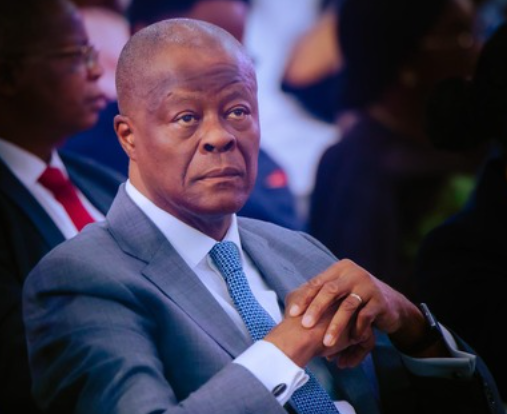
Minister of Finance and Coordinating Minister of the Economy, Mr. Wale Edun, in a statement, said the country’s security operations were designed to strengthen security rather than create uncertainty in financial or investment circles.
Edun spoke against the background of concerns in some quarters on the joint security operation conducted by Nigeria and the United States (U.S.) against identified terrorist elements in Sokoto on Thursday.
He explained that the context of the operation was crucial to understanding its broader economic implications.
According to him, the collaborative mission between Nigerian security forces and the United States was strictly directed at terrorist elements threatening national safety and economic activity.
Details of the airstrikes’ outcome are still sketchy, but the effect has sent shock waves to terrorists and bandits.
“What Nigeria is decisively confronting, alongside trusted international partners, is terrorism.
“This distinction is important, and it is fundamental to understanding the positive economic implications of recent actions,” Edun said.
He noted that the Sokoto operation was precise, intelligence-led, and focused exclusively on terrorist elements that threaten innocent lives, national stability, and economic activity.
“Far from destabilising markets or weakening confidence, such actions strengthen the foundations of peace, protect productive communities, and reinforce the conditions required for sustainable growth.
“Security and economic stability are inseparable; every effort to safeguard Nigerians is, by definition, pro-growth and pro-investment,” Edun said.
He highlighted that under the leadership of President Bola Ahmed Tinubu, the country had recorded tangible progress in both security and economic reform, with measurable outcomes reflected in recent macroeconomic indicators.
“In the third quarter of 2025, Nigeria recorded Gross Domestic Product (GDP) growth of 3.98 per cent, following a strong 4.23 per cent growth in the second quarter.
“We expect a stronger fourth quarter 2025 GDP performance.
“Inflation has decelerated for the seventh consecutive period and is now below 15 per cent, reflecting improving price stability and the effectiveness of coordinated fiscal and monetary actions,” Edun said.
He pointed out that Nigeria’s financial markets remain steady, with domestic and international debt platforms operating efficiently under prudent fiscal management.
He noted that the country has secured credit rating upgrades from Moody’s, Fitch, and Standard & Poor’s, which were independent validations of policy direction and reform outcomes.
“We have maintained fiscal discipline, prioritised efficiency, and protected macroeconomic stability, demonstrating resilience in the face of external shocks,” Edun said.
He reiterated President Tinubu’s last week’s national address, which emphasised that the government’s priority for 2026 is to consolidate the gains recorded in 2025, build stronger economic resilience, and sustain the momentum toward an economy driven by inclusive and durable growth.
“The actions we take today on security, reforms, and fiscal discipline are aligned with that goal.
“As markets reopen on Monday, 29 December 2025 (today), investors can be confident that Nigeria remains focused, reform-driven, and committed to stability.
“The fundamentals are strengthening, the policy direction is clear, and the resolve of this administration to protect lives, secure prosperity, and grow the economy is unwavering.
“Nigeria remains open for business, anchored in peace, and firmly focused on the future,” Edun said.
The Nigerian stock market closed for the week, on the eve of the Sokoto strike, with a net capital gain of N953 billion to strengthen its year-to-date return to 49.17 per cent, one of the five highest returns globally.
Foreign investors have shown considerable positive sentiment for the Nigerian market.
The latest foreign portfolio investments (FPIs) report had shown that the rate of participation by FPIs in the Nigerian market increased by some 479 basis points, with retained funds or surpluses from foreign transactions so far this year nearly half of their total transactions in the previous year.
The proportion of foreign to domestic participation has shifted from the previous 15.98-84.02 per cent to 20.77-79.23 per cent, underscoring the stronger influence of FPIs.
Growing foreign participation and steady domestic demand had seen turnover at the Nigerian stock market rising to a new record of N10.54 trillion.
Trading data at the Nigerian Exchange (NGX) showed that total transactions have more than doubled to N10.54 trillion over the past 11 months, driven by increased participation by foreign investors.
As against the previous trend where outflows were more than inflows, there has been a considerable increase in inflows compared to outflows under the new bullish sentiment.
A breakdown of the 11-month trading data showed that total turnover at the Nigerian Exchange (NGX) increased from N4.91 trillion by November 2024 to N10.54 trillion by November 2025.
Total transactions by FPIs jumped by 178.8 per cent from N785.28 billion to N2.189 trillion.
Foreign inflows had grown by 218.9 per cent from N370.15 billion to N1.18 trillion, while outflows were slower at 142.89 per cent from N415.13 billion to N1.001 trillion.
Nigerians across the broad spectrum continued to stake high on the overall economic outlook, with total domestic transactions rising from N4.12 trillion to N8.35 trillion.
Domestic retail investors’ turnover rose from N2.11 trillion to N3.22 trillion, while domestic institutional investors traded N5.13 trillion in 2025 as against N2.02 trillion in 2024.
Nigeria’s inflation rate has dropped consecutively for the past eight months to stand at 14.45 per cent.
Gross Domestic Product (GDP) recorded its highest growth this year in the third quarter as sustained improvements in the non-oil sector supported the economy to a 3.46 per cent growth.